0
0

Peace treaties almost always fail or are short-lived, despite the hype surrounding them. There have been numerous efforts to redirect humanity towards peace. One of the earliest and most influential was German philosopher Immanuel Kant’s 1795 essay ‘Perpetual Peace’, which later influenced the League of Nations (founded in 1920) and the United Nations (founded in 1945). It included in its recommendations a coalition of independent nations and the gradual dismantling of standing armies.
Instead, we see a 41 percent rise in global military expenditure over the past decade, reaching a record $2.9 trillion according to the Stockholm International Peace Research Institute. Ukraine tops the list in percentage terms, spending 40 percent of its GDP on military expenditure. Increasingly destructive weapons continue to be invented, along with the less visible funding of propaganda and espionage. The United States remains the world’s largest arms exporter by a wide margin, accounting for roughly 42 percent of all global arms exports.
The intention is clear. There is no evidence of planning for world peace. Instead, there is preparedness for war. Perhaps the failure lies in the focus on peace — an abstract aspiration, rather than an actionable strategy. Peace is not simply the absence of war. There can be no true peace in an unequal world.
Norwegian sociologist Johan Galtung proposed “negative peace” as the absence of war and violence, and “positive peace” as a more lasting peace, built on creating an environment where everyone can flourish. This seems unachievable in the current polarisation of world politics.
Lasting stability depends less on the pursuit of an idealised peace than on mutual respect, negotiated compromise and the willingness to preserve the dignity of all sides
History has shown that genuine negotiations, treaties and agreements are more effective strategies, whether for personal, tribal or state conflicts. The role of a diplomat, negotiator and promoter of peace has always commanded the highest esteem among Native American tribes. For instance, the Great Peacemaker’s name, Skennenrahawi, means “two river currents flowing together” — not uniting, but flowing together. In 550 BC, Cyrus the Great established the first multinational, multi-faith empire, known for its cultural tolerance.
While the Treaty of Hudaybiyyah halted conflict for a specified time, Shurut Umar [Conditions of Umar] established rules of governance to protect the rights of minorities, and the Treaty of Baqt ensured an environment of peaceful trade. Muslim Morocco became the first country to recognise American Independence and signed the 1778 Treaty of Marrakesh, the longest, still-unbroken, diplomatic relationship in US history.
Conflicts are best resolved through mutual concessions rather than surrender of one to the other. Symmetrical sacrifice ensures no one party bears the entire burden of loss, allowing mutual face-saving agreements that uphold the dignity of each side.
Settling for mutual respect rather than perfect peace is a highly pragmatic and realistic goal. Mutual respect evolves from the ability to listen without contempt. People are much more likely to collaborate when they feel heard and respected.
Muhammad Ali Jauhar, who used journalism to fight colonialism, wrote, “We may believe in the gulf, but refuse to believe it as unbridgeable. Remove pride and suspicion on the one side, and prejudice and suspicion on the other, and it will not be difficult to throw the cantilever bridge across the yawning chasm. There is no gulf between races that individuals cannot bridge.”
The range of vocabulary a language contains influences social and cultural attitudes. As an example, Arabic and Sanskrit have the most nuanced words for types of peace. Sanskrit focuses on individual inner peace, such as shanti, chaina [mental calmness], samah [stillness], with only ayuddha denoting freedom from armed conflict.
Arabic has more action-based words. Salaam is an all-encompassing word for peace. Aman grants protection, sulh is reconciliation and negotiated settlement between two disputing parties. La’am is dressing a wound or repairing, and muwadda is harmonious friendship. Sakeena is a deep spiritual tranquility, itminaan is calm, while hudoo is calming the storm, becoming quiet.
Literature has been a powerful vehicle for promoting peace, whether the literary masterpieces of Leo Tolstoy and Mahmoud Darwish, or phrases such as “Jeeyo aur jeenay do [Live and let live]” encountered on Pakistani streets.
An art student wrote in the midst of Karachi’s violent 1990s: “Zindagi ke kuchh din yun bhi guzaarein ke nafratein tamaam hon aur mohabbaton ka qayaam ho [Spend a few days of your life such that hatred is ended and love comes to stay].”
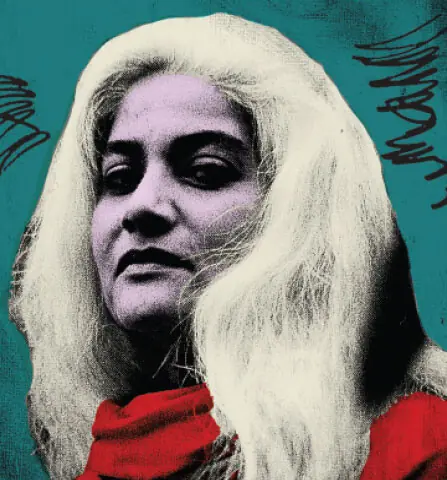
Durriya Kazi is a Karachi-based artist.
She may be reached at
durriyakazi1918@gmail.com
Published in Dawn, EOS, July 19th, 2026