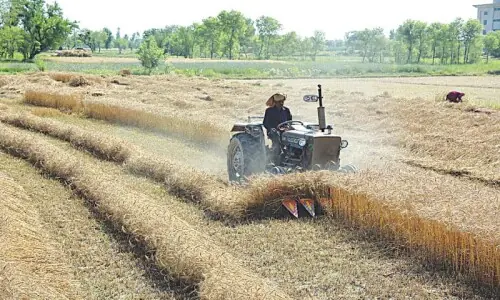
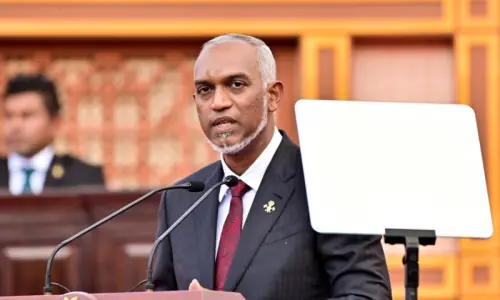
PRIME Minister Shehbaz Sharif’s assertion that agriculture and livestock hold the key to Pakistan’s quick economic revival is spot-on. The sector contributes almost a quarter of GDP, employs well over a third of the labour force and remains the largest source of livelihoods. Livestock alone accounts for more than 60pc of agriculture’s value addition, while Pakistan ranks among the world’s largest milk producers, and possesses considerable untapped potential in both milk and meat exports.
Few sectors offer comparable opportunities to generate growth, reduce poverty, improve food security and earn foreign exchange simultaneously. But the PM’s declaration that the economy can be revived within a year through agriculture highlights the gap between ambition and policy execution. The agricultural crisis has never been about the absence of potential. It is the consequence of decades of policy neglect and inconsistency, institutional decay and distorted incentives.
While successive governments have acknowledged the sector’s importance, budgetary allocations, research spending, extension services, water management, market reforms and investment priorities have not reflected that recognition. The current year’s federal and provincial budgets are no exception. Despite repeated references to economic transformation, agriculture barely figures in official priorities. This contradiction is becoming increasingly costly.
Pakistan now imports billions of dollars’ worth of food and raw materials for its textile and clothing industry, and its food exports have weakened over time. This is eroding precious foreign exchange at a time when the economy remains dependent on external financing. Rising production costs, unpredictable pricing, market manipulation, inadequate storage and weak value chains continue to undermine farmers’ incomes. Farmers are expected to increase production while bearing risks that neither markets nor public policy adequately mitigate.
Mr Sharif’s emphasis on technology, AI, disease control and value addition must be lauded. Yet technology cannot compensate for dysfunctional policy. Farmers will not invest simply because AI is introduced into agriculture if fertilisers remain expensive, energy costs continue to rise, water becomes increasingly scarce and markets fail to offer remunerative prices. With industry struggling and exports stagnating, agriculture remains one of the few sectors capable of driving inclusive growth.
But this demands actual reforms. It requires strengthening research, developing indigenous vaccines, improving traceability systems, correcting market distortions, expanding rural credit, investing in climate resilience, enhancing irrigation efficiency and creating incentives for private investment across agricultural value chains.
Every government promises to transform agriculture; few are willing to undertake the reforms needed to achieve that aim. Declarations that agriculture can revive the economy will remain aspirational so long as the authorities continue to avoid policy reforms.
Published in Dawn, July 17th, 2026