Radio Pakistan was a haven for poets, writers, musicians, artists, broadcasters and journalists of the highest calibre. Some of the writers and artists were employed in different categories of production, presentation, technical services and administration. Others would congregate in the offices of those serving there or in the canteens of radio stations across the country.
Over the last many years, I have visited a few stations, besides being part of some recordings done in Hyderabad, Multan, Lahore and Islamabad. But my first and most memorable haunt was Radio Pakistan, Karachi, on M.A. Jinnah Road. Besides a few other broadcasting assignments from time to time, between 1984 and 1990, I also remained a part of the radio series titled Bazm-i-Talaba [Assembly of Students].
Many people used to get transferred from one radio station to another during their tenures. Some stayed in one place. In Radio Pakistan, Karachi, during the period mentioned above, it was always exciting to meet some of the finest writers and broadcasters. Sitting beside them and listening to them always enriched us, the students and young people.
Syed Zamir Ali, who was a poet, critic and a veteran broadcaster, was transferred from Quetta to Karachi during that period. He used to talk to his visitors about different literary theories, particularly modernism and post-modernism. One of his important works in Urdu is on that subject. Qamar Jameel was not only an avant garde poet but also a critic and a literary editor with equal interest in our and global literature. He had a penchant for French poetry. He was also my maternal grandfather Sufi Saghir Hasan’s student in a college where Hasan was the principal but also took a class, as was the tradition in those times.
Arif Waqar was my true teacher at the BBC. Besides teaching me how not to fluff up on the microphone and what should be the pitch of the voice, the stresses and the pauses, he also taught me how to construct a proper sentence in Urdu for radio audiences, which, in the case of BBC Urdu, were about 20 million at that time.
After a few months of my working under Jameel, he got to know about our family connection and he started inviting me home to see his books and borrow as many as I wished. He was always encouraging but a bit critical of my tilt towards progressive writers. He helped me understand that I should write what I wished to but go beyond social realism when it comes to the aesthetic requirements of creating art.
Razi Akhtar Shauq was another remarkable person who retired from the radio service during the same time. He was a poet of considerable merit, who penned ghazals in a classical style. One of his shers [couplets] became quite famous then: “Yeh badan amanat-i-harf tha jo talash-i-naan-i-javien mein hai/ Kisi aur ka tha yeh maal-o-zar, kahien aur hum ne luta diya” [This body belonged to the [world of] letters but got consumed in seeking simple bread/ It was someone else’s possession that I wasted somewhere else].
Along with the three gentlemen mentioned above, the two other producers I worked with who were committed to training youngsters on how to broadcast or present their writings on the microphone included Ismat Zehra and Hasnain Jaffery. Since most were creative writers and scholars, they were sensitive towards teaching us in a way that was not didactic, and none of the contributors to their programmes, young and old alike, ever felt undermined. Our producers were white-collared people with limited incomes. That did not stop them from buying us tea and snacks from their own pockets each time we visited their offices after finishing work in the studios.
A few years later, I was studying in London when journalist Abbas Nasir asked me to join the BBC Urdu service as a regular outside contributor. That was from late 1998 to the end of 1999. I did a few programmes in the later years as well but, during that first period, I had to work at least three times every week, mostly for Sairbeen but sometimes in other programmes as well.
Nasir was the head of the service then. He was meticulous and would correct everyone whenever the translation of a news or an analysis piece from English or the delivery of a person on the microphone was not up to the mark. BBC veterans Raza Ali Abidi, Viqar Ahmed and Ali Ahmed Khan were still around. Listening and speaking to them was like taking free lessons in culture and history.
Shafi Naqi Jami and Wusatullah Khan were particularly kind to me. Nayeema Ahmed Mahjoor, the Kashmiri fiction writer, journalist, broadcaster and activist was also there. Conversations with her made me look at the whole issue of Kashmir from a different lens.
A couple of my personal friends also worked in the BBC but I preferred to spend most of my time with the elders. Shahid Malik used to visit. He is a repository of literary anecdotes, jokes, serious poetry and limericks. It remains a pleasure now to have a conversation with him or read his columns and pen portraits. Arif Waqar was my true teacher at the BBC. Besides teaching me how not to fluff up on the microphone and what should be the pitch of the voice, the stresses and the pauses, he also taught me how to construct a proper sentence in Urdu for radio audiences, which, in the case of BBC Urdu, were about 20 million at that time.
All the people mentioned above come from diverse backgrounds with unique personal traits. What was common among them was their ability to pay attention to detail.
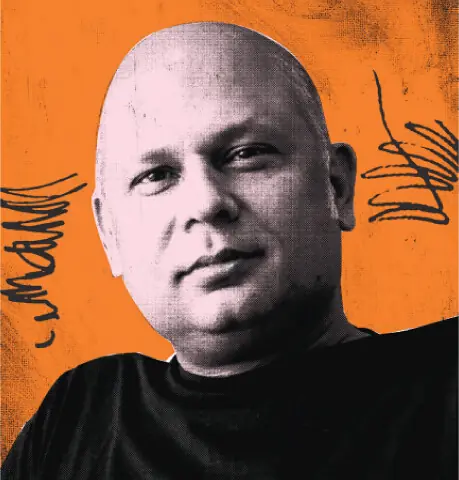
The columnist is a poet and essayist. His latest collections of verse are Hairaa’n Sar-i-Bazaar and No Fortunes to Tell
Published in Dawn, Books & Authors, March 19th, 2026