0
0

The cost of civil administration continues to rise despite a relatively leaner state structure. While there may be isolated exceptions, citizens and corporates alike still view the government as oversized, ineffective and inequitable, making the increase in administrative spending appear completely unjustified and certainly unworthy of the revenue extracted through exceptionally high taxation rates.
The relevant document was not readily accessible on the Finance Division’s website; however, a media report citing a ministry’s quarterly expenditure review indicated a 13 per cent increase in administrative costs during the first three months of the current fiscal year. It highlighted a persistent pattern over the past five years of significantly rising spending on the state apparatus and pensions, despite repeated proclamations of austerity and recent attempts to rightsize the government.
According to available information, the government has abolished over 200,000 posts since last year, shut down several dysfunctional entities, merged overlapping organisations, and imposed bans on new posts as well as the purchase of vehicles and machinery across the public sector.
In a note issued in mid-December following completion of the second review of the Extended Fund Facility and Resilience and Sustainability Facility, clearing Pakistan’s access to $1.2 billion, the International Monetary Fund acknowledged the country’s prudent fiscal management and strong programme implementation, despite severe challenges, including the devastating floods alongside persistent structural pressures.
‘The federal government loses its case for revisiting revenue shares when it cannot control its own running costs’
It noted: “The authorities’ strong programme implementation, despite the recent devastating floods, has maintained stability and improved financing and external conditions. Policy priorities remain focused on maintaining macroeconomic stability and advancing reforms to strengthen public finances, enhance competition, raise productivity and competitiveness, bolster the social safety net and human capital, reform state-owned enterprises, and improve public service provision and energy sector viability.”
Despite repeated requests, members of the government’s economic team did not comment on record about the hike in administrative spending. Privately, however, a senior official insisted the government is undertaking all possible measures to make the state leaner, more efficient and effective.
“Massive cuts in government spending have already been made. Loss-making bodies such as the Pakistan Works Department and Utility Stores Corporation have been shut down, and nearly all vacant posts across departments have been abolished. A high-level committee is rightsizing every ministry, while ministers and senior bureaucrats now travel economy for both domestic and international trips. Many additional measures are underway. Never before has such a cost-cutting exercise been undertaken at the federal level,” a top official said anonymously, without, however, explaining the continued rise in administrative expenditure.
A former Federation of Pakistan Chamber of Commerce and Industry president aligned with the ruling party defended the government, attributing the spending increase to inflation and the settlement cost of abolished entities. He emphasised that such reforms carry a time lag and predicted the trend would reverse next year. “The government is walking its talk, creating leaner and more efficient departments, and the benefits will become clearer over time,” he said.
Business leaders in Punjab were cautious and did not respond before the deadline, while corporate leaders in Karachi were more forthcoming in sharing their opinion.
Nusair Teli, a new-generation business leader from Karachi, called the rise in civil administrative costs unjustified and outlined a strategy to contain it. Industry, he argued, is being asked to pay more for energy and taxes while state services remain stagnant or deteriorate. If higher spending were funding real digitisation, faster approvals, reduced official touchpoints or better port and customs efficiency, it could be viewed as investment — but that is not what businesses see. Instead, formal firms are paying more to support the same inefficient structure while the informal economy expands.
Mr Teli proposed three immediate measures: freeze all non-essential posts, vehicles and perks while protecting frontline services; digitise and consolidate overlapping departments that interact with businesses, creating a genuine single window for registration, tax filing and approvals; and link budgets to measurable performance, supported by independent expenditure audits. Over the medium term, pensions, perks and overlapping functions must be restructured to ensure a leaner, more accountable state.
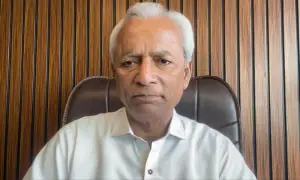
Younus Dagha, former Sindh minister and chairman of the Policy Research and Advisory Council at the Karachi Chamber of Commerce and Industry, was sharply critical. He argued that the federal government cannot credibly seek changes to the National Finance Commission (NFC) formula while failing to curb wasteful spending.
“The federal government loses its case for revisiting revenue shares when it cannot control its own running costs. In a digital era, processes should have been redesigned to right-size the bureaucracy and cut expenses. Digitisation, online services and reduced human interaction would lower staffing needs, save costs for the government and citizens, and curb corruption. Asking for more funds is simply an admission of failure to reform,” he said.
Another private sector leader, Hassan Bakshi, Chairman of the Association of Builders and Developers of Pakistan, called the rise in civil administration spending wasteful and counterproductive. “The increase is totally unjustified. The only real solution is digitalising government processes. This alone can cut administrative costs, curb corruption, improve ease of doing business, and ultimately reduce the overall cost of doing business in Pakistan.”
Cross-country comparisons on spending on state apparatus are difficult due to limited comparable data and wide variations in governance systems and administrative practices. Beyond broad recommendations to keep the government lean and efficient, thereby creating space and an enabling environment for the private sector to drive growth, there are no clear international guidelines on what the ‘ideal’ share of civil administration should be in total public spending.
Published in Dawn, The Business and Finance Weekly, December 15th, 2025