• Deputy PM says zero-sum politics must end, calls for renewed regional cooperation
• Insists May conflict with India could have escalated to ‘far more dangerous levels’
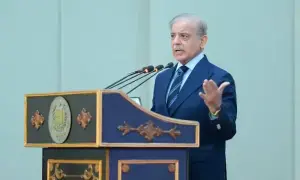
KARACHI: Deputy Prime Minister Ishaq Dar warned on Wednesday that multilateralism is “under assault” and that strategic stability in South Asia remains “delicate”, as great-power rivalry, nuclear brinkmanship, hybrid warfare and unresolved disputes continue to threaten regional peace.
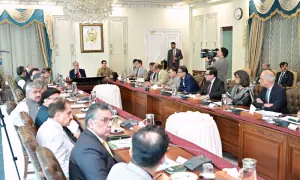
“Multilateralism is under assault and the institutions of global governance are often criticised for the acts of omission and commission of a few states driven by unilateralist impulses,” Mr Dar said while speaking at an event in Islamabad.
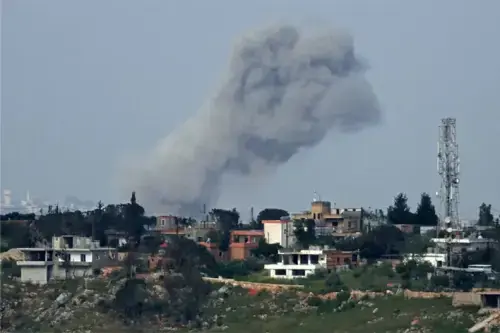
Referring to the four-day conflict with India earlier this year in May, he said, “In 92 hours, the Indo-Pakistan war had the potential to escalate to far more dangerous levels.”
Mr Dar, who also serves as the foreign minister, said that states had increasingly resorted to the use of force to settle disputes while disregarding international law and the principles of the UN Charter.
The deputy PM noted that “emerging technologies, transnational terrorism and hybrid warfare, including misinformation campaigns, continue to challenge stability”. He said that India and Pakistan were “involved in a conflagration” that could have gone towards an “uncontrollable escalation”, adding that an “uneasy and fragile peace persists”.
“Pakistan demonstrated both in resolve and capability to thwart aggression and reinforce deterrence. The concept of a net security provider is buried,” he asserted. The foreign minister pointed out that “major power competition is a defining feature of our times”, with military, technology, trade, tariff and resource rivalries intensifying. However, the deputy PM said, Pakistan “opposed bloc politics and zero-sum approaches and consistently stressed the imperative of cooperation rather than confrontation”.
“We have underscored the indispensability of dialogue and diplomacy, of peaceful settlement of disputes, and of international cooperation and solidarity.”
As an elected member of the UN Security Council for the 2025-26 term, Pakistan was “engaged in vanguard efforts to promote international peace and security”, Mr Dar highlighted.
He also noted that the rise of extremist ideologies, political populism, democratic backsliding and Islamophobia were “negatively impacting the globe and causing upheavals in unprecedented ways”.
“Pakistan envisions a South Asia where connectivity replaces divisions, economies grow in synergy, disputes are resolved peacefully in accordance with international legitimacy and where peace is maintained with dignity and honour,” Mr Dar said. “We remain ready to work with all willing partners to help South Asia realise its immense potential.”
Nuclearised environment
Mr Dar said South Asia had a complex security environment as it comprised “three geographically contiguous nuclear powers with complicated relationships”.
“Major regional states boast of some of the largest armed forces in the world. There is a continuous buildup of conventional and nuclear arms and regular induction of destabilising weapons systems. “Strategic stability is delicate, among other things, by some dangerously ill-conceived war-fighting notions in the nuclearised environment,” he added.
Pointing out that sustainable peace had eluded South Asia for the past 78 years, Mr Dar said there were “escalating disputes” over resource sharing, particularly on river waters, as exemplified by India’s illegal and unilateral announcement on the Indus Waters Treaty in April. “There are pervasive interstate differences and some of the long-standing unresolved political disputes, like Kashmir, continue to threaten the peace and stability in the region,” he highlighted. “Sustainable peace in region, however, requires more than maintaining strategic stability,” he said, emphasising a need for just and lasting solution to the Kashmir dispute.
He also detailed various challenges that South Asia faces, including poverty, inequality, illiteracy, disease, malnutrition, income disparities, food insecurity, natural disasters and the impacts of climate change. The region fares terribly low on most human development indices. It also remains poorly integrated economically, with intra-regional trade hovering around five per cent,” he said, adding that the region was energy-deficient.
“Regional connectivity is woefully inadequate,” he said, pointing out that Saarc had “largely remained inactive for over a decade”. Mr Dar asked: “We South Asians need to think really hard. Are we doomed to remain mired in confrontation and conflict while other regions progress and prosper?” He added, “The answer should be a clear ‘no’. The cumulative challenges of regional security, economic fragility and climate crisis are simply too grave to disregard.”
Published in Dawn, December 4th, 2025