0
0
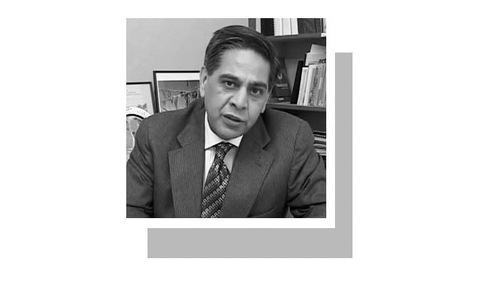
KARACHI: Perhaps the most interesting session on the Adab Festival’s first day, was the one in which former senator Farhatullah Babar’s book Beyond the Bomb: Munir Ahmed and Pakistan’s Nuclear Odyssey was launched.
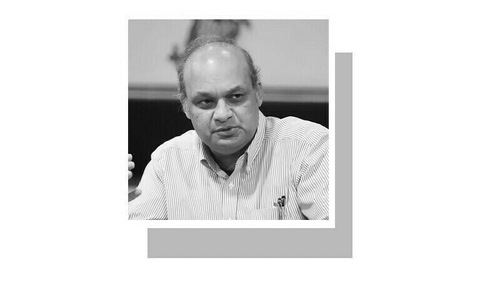
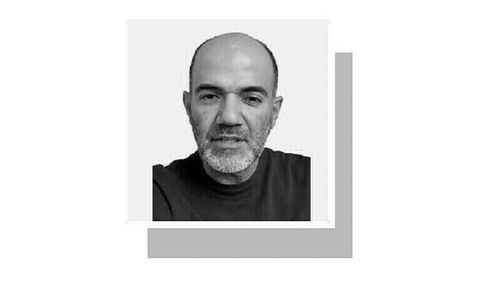
The session was moderated by Omar Aziz Saiyid and also featured journalists Mazhar Abbas and Azaz Syed besides the author.
The book is not just a biography. It is a meditation on ethics, secrecy and the civil-military fault lines that continue to define South Asia’s nuclear posture. It is a timely and essential account for researchers, policy makers and academia seeking to understand the further tilt in the civil-military equation towards the military after the Pakistan-Saudi Defence Pact and the 27th Amendment and its implications for peace and security in the region and the world.
The book pays tribute to a towering but unsung nuclear hero on the one hand while raising unspoken issues in command, control and civilian oversight on the other.
Author Farhatullah Babar says trajectory of Pakistan changed after Bhutto appointed Munir PAEC chairman
Starting with Zulfikar Ali Bhutto, who was Pakistan’s president in 1972, summoning the cream of scientists and engineers to a secret conference in Multan a month after the dismemberment of the country in December 1971, to task them to build the bomb ‘no matter what the cost’, the book describes how Bhutto’s vision was transformed into reality by Munir Ahmad Khan, who led the Pakistan Atomic Energy Commission (PAEC) for nearly two decades from 1972 to 1991.
“In January of 1972, we were still mourning the loss of East Pakistan. We were demoralised. And Bhutto called all these scientists to inform them that China had become an atomic power and India would also follow suit, but can we also do it? To this some said we could, and some were of the view that we couldn’t. Some said maybe in five years, some said maybe in 10. But Bhutto raised his three fingers to indicate to them that he wanted it happening in three years,” said Senator Babar.
“There was a young man standing quietly by himself to one side in all this. He was Munir Ahmad Khan, whom the president appointed there and then as the chief of the PAEC. The then chairman of PAEC, Ishrat Hussain Usmani, there since 1960, only stood up then to congratulate Munir Ahmad Khan. The trajectory of Pakistan changed after that,” he said.
But he lamented how Munir Ahmad Khan remained uncelebrated while someone like President Pervez Musharraf, who had no role in Pakistan’s nuclear capability and who was also involved in a major nuclear proliferation scandal, was given a state funeral.
Published in Dawn, November 23rd, 2025
Shazia Hasan is a senior staff reporter for Dawn. Her reporting covers human interest stories, the armed forces, Railways, education, and fishing communities.