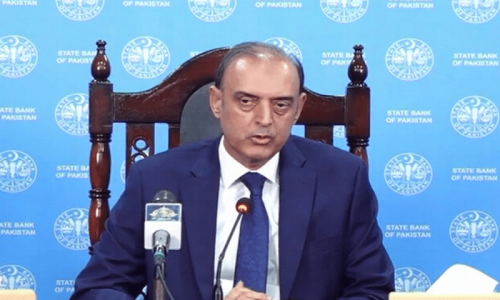
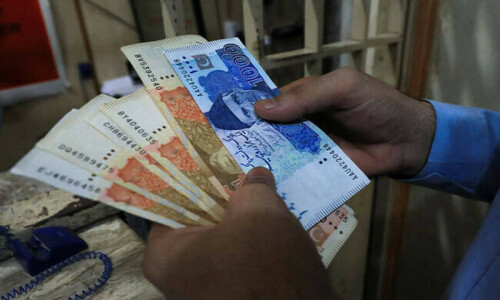
KARACHI: The State Bank of Pakistan (SBP) is expected to maintain the current interest rate at 11 per cent in its upcoming monetary policy announcement on Monday (Sept 15). The interest rate has remained unchanged since May, when it was lowered to 11pc.
While trade and industry groups have been calling for further cuts to stimulate economic activity, the SBP has remained unmoved. Despite a significant decline in inflation, which has provided an opportunity to reduce the real interest rate, policymakers are cautious about the long-term outlook. The gap between inflation and the policy rate is currently slightly below 8pc, but concerns about potential future inflation spikes, particularly in the aftermath of recent floods, could drive the SBP to hold the rate steady.
A survey conducted by the Chartered Financial Analyst (CFA) Institute revealed that 92pc of respondents expect the interest rate to remain unchanged in the upcoming policy review. The SBP’s Monetary Policy Committee had kept the rate steady in the previous meeting, citing potential inflation risks from rising energy prices and geopolitical tensions, even though inflation had been moderating.
The floods in the country have added pressure to inflation, particularly in agriculture-based products, with significant price increases for items such as rice and vegetables. Prices have risen by Rs30 to Rs40 per kg, marking a clear divergence from the relatively stable prices seen in August.
CFA survey shows 92pc expect status quo due to floods and inflation spike
The CFA survey further showed that only 6pc of respondents believe there is a chance for a 50 basis point (bps) cut, while 2pc foresee a smaller 25bps reduction.
Mohammad Younus, Chairman of the Policy Research and Advisory Council (PRAC), noted that despite headline inflation remaining in single digits since August 2024, the SBP’s restrictive stance has led to real interest rates of around 8pc — one of the highest in the region. In comparison, India’s real interest rate is 4pc, Bangladesh’s is 1.7pc, China’s stands at 3.4pc, and Vietnam’s is at 1.3pc.
Younus pointed out that Pakistan’s economy is showing clear signs of weak demand. “Sustained low inflation in the 2-3pc range over six months indicates that restrictive policies have significantly constrained economic activity, suppressing demand,” he said.
This demand suppression is compounded by high borrowing costs, with the 8pc real interest rate outpacing the country’s real GDP growth.
Over the past decade, Pakistan’s investment-to-GDP ratio has averaged just 0.6pc, well below regional peers such as India (1.6pc), China (1.3pc), Vietnam (4.6pc), and Turkey (1.4pc). Younus called this “an investment famine” caused by prohibitively high borrowing costs, which have stifled private-sector expansion.
Published in Dawn, September 13th, 2025