THE federal cabinet’s decision to declare a climate and agriculture emergency in the country was overdue given the magnitude of devastation resulting from the floods sweeping across Punjab and beyond.
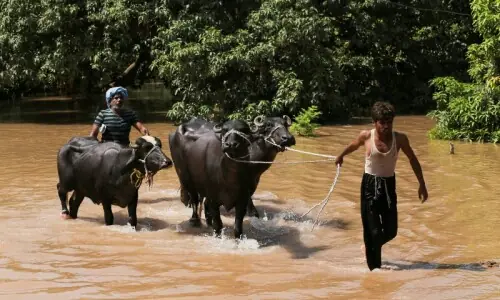
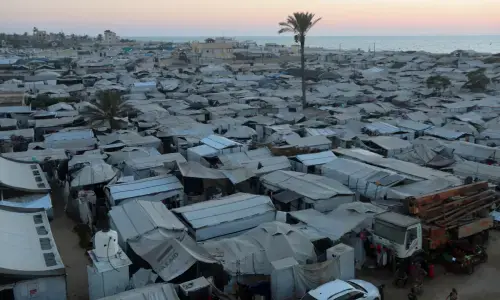
The images of inundated fields in thousands of villages, displaced families, destroyed homes and dead livestock underscore the seriousness of the catastrophe. Prime Minister Shehbaz Sharif has set up a special committee to assess the extent of damage to agriculture, determine how farmers can be compensated and recommend steps to mitigate the deluge’s impact on the economy.
The devastation will test both the state’s resolve and ability to rehabilitate displaced communities, protect food security and rebuild rural livelihoods in the face of recurring climate shocks. Immediate relief must come first: announcement of financial compensation for smallholders for their losses and soft loans to buy inputs for the next crop cycle; provision of food and fodder supplies; and veterinary and healthcare services in the flood-affected areas to prevent the outbreak of disease.
Equally critical will be the protection of consumers from a possible surge in inflation, which may require timely food imports and stringent action against hoarders.
That said, the massive nationwide human and economic losses and destruction of infrastructure caused by floods past and present show that even prompt and generous relief and rehabilitation efforts remain insufficient.
The government, therefore, should combine relief and rehabilitation with long-term sustained investments in climate adaptation and mitigation so that the economy and farmers are not left at the mercy of extreme weather events, be they floods, droughts or heatwaves.
While declaring a climate and agriculture emergency, the PM has rightly stressed the need for a comprehensive strategy to tackle climate challenges.
In this respect, a broader framework for action — the 31-point Declaration on Rights of Nature & Climate Justice — has already evolved under the Dawn Media Group’s Breathe Pakistan initiative.
Drawing from climate rights guaranteed under Article 9A of the Constitution, the call is for all stakeholders to build a “climate democracy”. The initiative provides a plan on how to build climate resilience around the restoration of the ecological balance to protect the vulnerable, and secure justice and sustainability for future generations.
Indeed, the national challenge is enormous and demands wide-ranging constitutional, legal and social reforms, besides close cooperation between the centre and provinces.
It also requires other stakeholders — businesses, high-net-worth individuals and civil society — to step up and help the government build climate resilience. After all, climate change is no longer a challenge for governments alone; nor does it impact just the rural economy. It also imposes significant costs on businesses in multiple ways as Pakistan’s vulnerability to destructive climate-induced events increases by the day.
Published in Dawn, September 12th, 2025