0
0
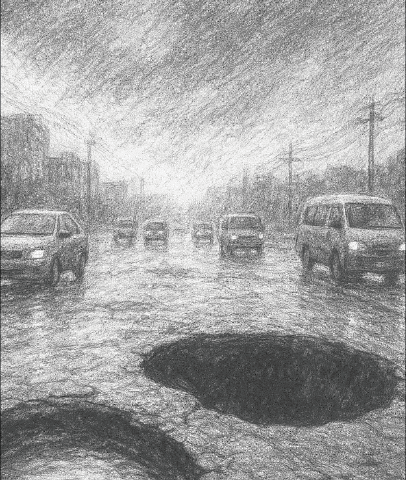
THIS is with reference to the report ‘Karachi roads in tatters after rains’ (Aug 25). It is an oversimplification to say that Karachi was flooded when heavy rains lashed the city on Aug 19. The provincial capital was not just flooded; it failed. Within hours, major arteries across the city got submerged, people died, motorists got caught in massive traffic gridlocks and remained stranded for several hours. Indeed, many had to spend the entire night out on the streets.
In several areas, families waded through waist-deep water within their own homes, scooping floodwater out of their living rooms. Power outages, flight cancellations, and internet blackouts followed, making matters much worse.
All that the provincial government and the city administration could do was to declare a state of emergency, announce the closure of schools and offices for the next day, and then activate social media warriors to post unverified images por-traying how quickly things had been brought under control, which was like rubbing salt into the wounds of the people at large. The real emergency, however, was not the weather; it was the system itself.
Karachi’s drainage infrastructure is a relic. Its nullahs, once natural lifelines, are now clogged, encroached upon, and barely functional. Gujjar and Orangi nullahs overflowed not because of un-
precedented rain, but because they have been narrowed, neglected and politicised. Climate change may intensify monsoon patterns, but it is institutional mis-management that turns rain into ruin.
Michael Ryan Davis, in Late Victorian Holocausts, reminds us that millions died not simply because of famines, but because colonial systems dismantled traditional safety nets, and replaced them with market ideologies that left the poor to starve. Famines triggered by the El Niño-Southern Oscillation (ENSO) phenomenon became killers not by nature’s hand alone, but through deliberate policy failure. In Ecology of Fear, Davis expands this warning, showing how urban disasters are shaped not by nature alone, but by the decisions of planners, politicians and profiteers. Karachi today is a modern echo of that history — a city where climate volatility meets infrastructural collapse, and where the vulnerable are left to bear the cost.
Karachi has become the antithesis of a sustainable, liveable city. Infrastructure collapses under pressure. Government machinery reacts. It never prepares. One really fails to remember when was the last time, if ever, Karachi had a proactive administration. It is high time we stopped treating urban flooding as an act of nature. It is an act of neglect.
Until Karachi’s systems are rebuilt with transparency and equity at their core, every drop of rain will remain a reminder not of nature’s wrath, but of the failures we refuse to confront.
Mahnoor Aftab
Karachi
Published in Dawn, August 27th, 2025