Experts have welcomed the announcement of a trade deal struck between the US and Pakistan on Wednesday night that includes a partnership in developing oil reserves in the country.
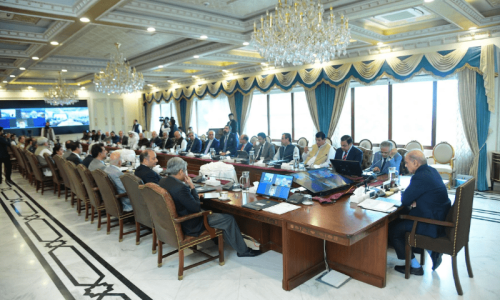
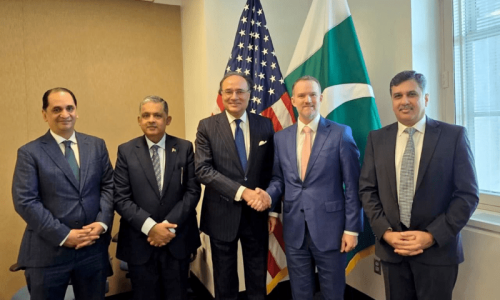
Finance Minister Muhammad Aurangzeb is currently in Washington for negotiations on a tariff deal and also began meetings with senior US officials yesterday.
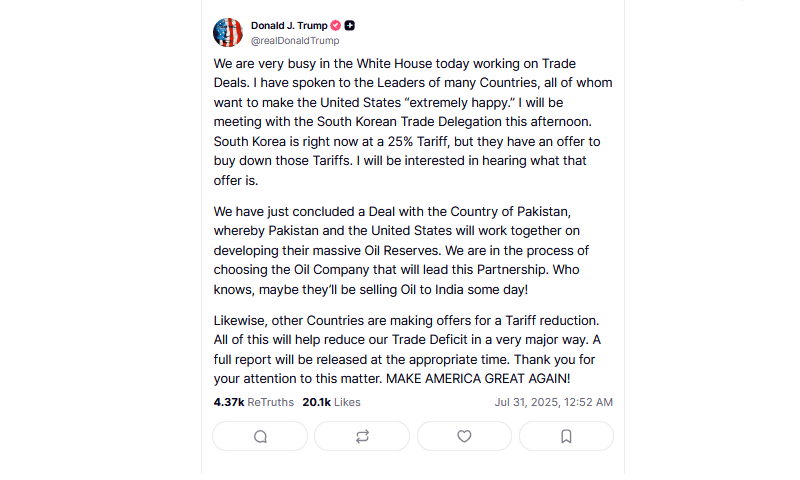
United States President Donald Trump said early on Thursday that his administration has struck a trade deal with Pakistan that includes joint development of the country’s “massive” oil reserves.
“We are in the process of choosing the oil company that will lead this partnership. Who knows, maybe they’ll be selling oil to India someday!” Trump said on social media.
Additional details of the agreement were not immediately available; however, local experts welcome the development with a positive note.
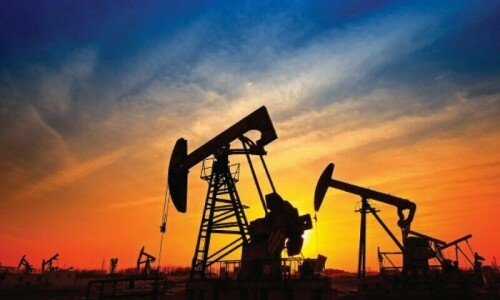
Local oil industry experts see Trump’s “massive” oil reserves statement with hope.
Muhammad Iqbal Jawaid, a Karachi-based oil industry expert, viewed the development as “encouraging” for Pakistan’s “untapped” oil and gas sector, which has a “huge” potential to grow.
“Pakistan enjoys a huge untapped potential for oil and gas, but it requires massive resources that we don’t have. If the US comes into the picture, it could lead to a major breakthrough,” Jawaid told Anadolu.
Balochistan and Khyber Pakhtunkhwa, along with tribal districts near the Afghanistan border, have bright prospects in terms of oil and gas exploration, he added.
He went on to say that Pakistan had strong prospects of having offshore energy reserves, which could be tapped with the help of major global companies.
Sharing a similar view, Wasi Khan, another oil industry and energy expert, said that Islamabad had not been able to tap its “true” potential in the oil and gas sector due to inadequate infrastructure and under-investment.
“I see this development in a positive commercial context. Greater international cooperation in Pakistan’s energy sector can bring in more investment, advanced technology, and healthy competition, all of which serve Pakistan’s interests,” he told Anadolu.
Security challenges
Khan said that in Pakistan’s case, exploration efforts have remained limited so far, primarily due to resource constraints and law and order challenges in onshore regions.
However, offshore areas are free from such limitations and represent a significantly under-explored frontier, he added.
Endorsing the opinion, Jawaid observed that the law and order in Balochistan and Khyber Pakhtunkhwa needs to be improved to attract international investment in the local energy sector.
The South and North Waziristan districts, together with other adjoining areas, are believed to have been sitting on major oil and gas reserves, which remain untapped due to security issues.
The two provinces, including the tribal districts, have long been the hotbed of militancy, where security forces are fighting against Tehreek-i-Taliban Pakistan and ethnic Baloch separatists.
The mineral-rich Balochistan is a key route for the multi-billion-dollar China-Pakistan Economic Corridor project.
Transformative path
Pakistan’s proven oil reserves are currently estimated at 353 million barrels, according to the US Energy Information Administration (EIA).
Its current oil and condensate production stands at 60,000 barrels per day.
With an annual oil import bill of over $12bn, the country imports fuel mainly from Saudi Arabia, the United Arab Emirates, Qatar, Kuwait, and China.
It has also started importing crude oil from Russia on a small scale.
The EIA once estimated that Pakistan holds up to 9bn barrels of technically recoverable shale oil. This assessment may well have formed the basis for Trump’s remarks on Pakistan’s energy potential, according to Khan.
He observed that if approached with serious intent and supported by “capable partners such as American expertise”, Pakistan could embark on a transformative path much like Saudi Arabia once did.
“There, five major US oil companies (Chevron, Texaco, Exxon, Mobil, and Gulf Oil) joined forces, eventually forming Aramco (the Saudi state oil company) and discovering one of the largest oil reserves in the world,” he added.
“Pakistan’s offshore potential deserves the same scale of ambition and commitment,” Khan further said, adding that he is “very hopeful” about the country’s untapped oil potential.