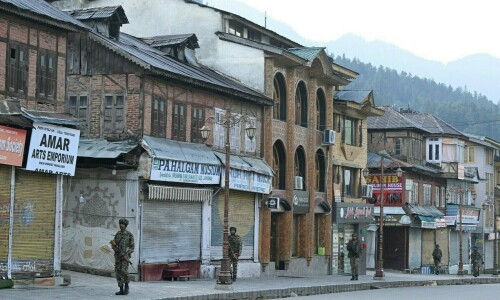
MORE than three months after the deadly Pahalgam episode in held Kashmir, the BJP-led Indian government is still struggling to construct a believable narrative in the midst of rising domestic criticism over its handling of the events.
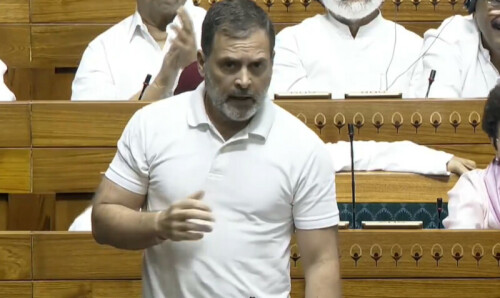
Indian Home Minister Amit Shah on Tuesday told parliament that three suspects killed in an alleged encounter near Srinagar, as part of the so-called Operation Mahadev, were responsible for the Pahalgam killings. He alleged that the suspects were Pakistanis.
However, local security sources had on Monday told Radio Pakistan that New Delhi could stage “fake encounters” involving Pakistanis incarcerated in India and label these counterterrorism operations. The ISPR chief had earlier expressed similar fears. Meanwhile, Indian PM Narendra Modi indulged in more Pakistan-bashing during Tuesday’s parliament session.
But it is not just Pakistan that is casting doubt on India’s Pahalgam narrative; credible voices within that country are also questioning the official line, particularly New Delhi’s efforts to link Pakistan to the terrorist attack. P. Chidambaram, India’s former home minister, is the latest to question the BJP’s narrative. Talking to media outlets, Mr Chidambaram said there was “no evidence” that the Pahalgam attackers were Pakistanis, and that the state had not given clear information about the episode. The former minister further said New Delhi was hiding facts about losses suffered by India during the four-day conflict in May. “Be upfront,” he chided the government.
The BJP is facing similarly stinging queries in parliament regarding the incident. It is overly convenient that the current home minister triumphantly announced that the attackers had been traced and killed — and expediently linked to Pakistan — as more and more Indian voices demand the truth.
Instead of spinning a narrative that has few takers, the BJP regime needs to be honest with its own people, as well as the world. Promoting doubtful accounts will mislead Indians and further damage ties with this country that have already hit rock bottom. Moreover, many of India’s traditional foreign allies are not ready to accept New Delhi’s charge against Pakistan.
The rational course of action would require India to honestly tell the world what happened, admit that mistakes were made, and try to patch things up with Pakistan to reduce the chances of further conflict in the subcontinent. The least that should be expected from New Delhi is to not further drag Pakistan into this quagmire and blame it for India’s own failures.
However, this requires statesmanship, and currently there appears to be no one imbued with this quality in the ruling set-up. It is unfortunate that jingoism, radical religious nationalism and arrogance seem to be the current driving forces of Indian policy towards Pakistan.
Published in Dawn, July 30th, 2025