0
0
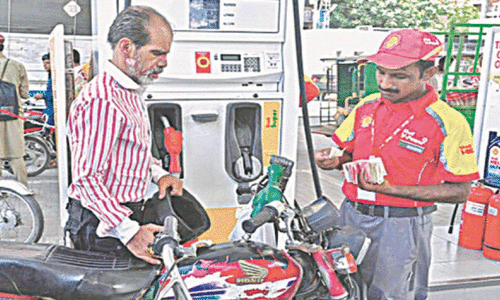
ISLAMABAD: After four consecutive hikes, petrol and diesel prices are expected to fall by about Rs9 and Rs3.50 per litre, respectively, for the upcoming fortnight ending Aug 15, owing to lower international oil prices and reduced import premiums, sources said on Tuesday.
Based on prevailing tax rates, the ex-depot price of petrol is estimated to decline by around Rs9 per litre (3.3 per cent), while high-speed diesel (HSD) may see a reduction of Rs3.50 per litre (1.3pc), depending on final cost calculations.
According to informed sources, global oil prices have softened slightly over the past fortnight, while the import premium on petrol has dropped by nearly one-third — from about $9.70 to $6.75 per barrel — as regional tensions eased.
Currently, the ex-depot price of petrol stands at Rs272.15 per litre, following a cumulative increase of Rs20 per litre since May 15. Petrol is widely consumed by private vehicles, rickshaws, motorcycles, and small cars, and any price change has a direct impact on middle- and lower-middle-income households.
HSD, meanwhile, is priced at Rs284.64 per litre after rising by almost Rs28 per litre since mid-May. As the primary fuel for heavy transport, railways, and agricultural machinery such as tractors and tube-wells, diesel prices are considered inflationary. Despite the anticipated cut, transport fares — already raised — rarely come down in response to fuel price drops.
Prices may fall for the first time in over two months
In contrast, kerosene and light diesel oil (LDO) are projected to become costlier, with expected increases of Rs3.50 and Rs2.25 per litre, respectively.
The government is currently collecting about Rs98 per litre on both petrol and diesel through various levies, despite maintaining a zero rate of general sales tax (GST) on all petroleum products. This includes Rs77.01 per litre on diesel and Rs78.02 per litre on petrol and high-octane products as petroleum levy and climate support levy (CSL), of which Rs2.25 per litre is attributed to CSL alone.
In addition, Rs20-21 per litre is being charged as customs duty on both fuels, regardless of whether they are imported or locally refined. Distribution and dealer margins account for another Rs17 per litre.
Petrol and HSD remain the government’s main petroleum revenue sources, with combined monthly sales of around 700,000-800,000 tonnes. In contrast, kerosene demand stands at just 10,000 tonnes per month. The government collected Rs1.161tr through petroleum levy in 2024-25 and projects a 27pc increase — reaching Rs1.470tr — in the current fiscal year.
Published in Dawn, July 30th, 2025