Afghans both hopeful, disappointed after Russia’s Taliban recognition



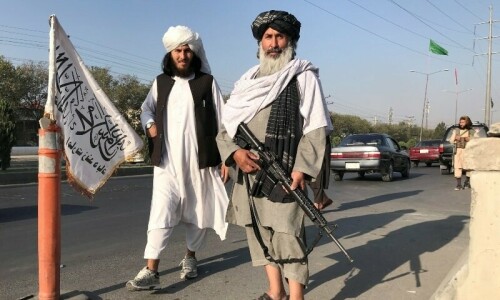
KABUL: Russia’s decision to formally recognise the Taliban government has been seen as an opening for a stronger economy by some Afghans, while others were sceptical that it would improve their lot.
Russia became the first country to acknowledge the Taliban authorities on Thursday, after a gradual building of ties that included removing their “terrorist organisation” designation and accepting an ambassador in recent months.
The Taliban authorities had not been recognised by any state in the nearly four years since sweeping to power in 2021, ousting the foreign-backed government as US-led troops withdrew after a two-decade war. Afghanistan is one of the poorest countries in the world and in a fragile recovery from four decades of conflict.
“With the current situation in Afghanistan, with all the challenges, everyone is worried. If the world recognises Afghanistan, we will be happy, currently, even the tiniest thing matters,” Gul Mohammad, 58, said on Friday in the capital Kabul.
Despite having bitter memories of the Soviet invasion of Afghanistan in 1979, when he “lost everything” and became a refugee in Pakistan, he acknowledges that “the priorities are different now”.
Jamaluddin Sayar, 67, predicted that “trade and economic prosperity will now blossom”. The retired pilot said other countries, “both western and eastern”, should recognise the government and “stop spreading propaganda against the Islamic Emirate”, using the Taliban authorities’ name for their administration.
Won’t ‘lead to anything’
Russian and Afghan officials praised the move as an opening for deeper cooperation, notably in economic and security arenas. Security concerns have been a key avenue for coordination between the Taliban authorities and the international community, amid fears Afghanistan would become fertile ground for increased militant activity.
The authorities have prioritised security and made repeated assurances that Afghan soil would not be used by any group to plan attacks on other nations. However, Pakistan’s ties with the Taliban authorities have been strained over a surge in militant activity since their takeover and last year, an attack claimed by the militant Islamic State group’s branch in Afghanistan killed 137 people in a Moscow concert hall.
In a country where dissent and protest is tightly controlled, some Kabul residents were afraid to openly criticise the Taliban authorities. Atef, not his real name, was unconvinced better relations between Afghanistan and Russia would improve the livelihoods of ordinary Afghans.
“I think Afghanistan will fall into the traps of the Russians again, the issues and challenges will increase, and there is nothing that can help ordinary people,” the unemployed 25-year-old said. “People are struggling, and they will still struggle with or without the recognition.”
For Afghan women’s rights activists, particularly those who have advocated for isolating the Taliban government, the recognition was seen as a setback that “legitimises” restrictions on women.
Norway-based Afghan women’s rights activist Hoda Khamosh was defiant against the impact of the Russian move. “Human rights organisations right now are trying to recognise gender apartheid in Afghanistan because the Taliban are a repressive regime against women,” she said. “Therefore, these recognitions will not lead to anything.”
Published in Dawn, July 6th, 2025