Pakistan backs Iran’s right to self-defence



ISLAMABAD: Pakistan on Friday came out strongly in support of Iran’s right to self-defence, following Israeli military strikes on Iranian targets, distinguishing its position from most other regional and global powers.
The Pakistani position was more than a diplomatic footnote; rather a bold assertion of prin-ciple in a region accustomed to cautious ambiguity.
When the Foreign Office described Israel’s action as “unjustified and illegitimate aggression” that violated “the sovereignty and territorial integrity of the Islamic Republic of Iran” and flouted the UN Charter, it did not stop at condemnation.
It explicitly mentioned Article 51: “Iran has the right to self-defence under Article 51 of the UN Charter.” The statement further urged the world to “hold the aggressor accountable for its actions.”
Dar speaks to Iranian foreign minister, assures him of full support
Prime Minister Shehbaz Sharif added political weight to the chorus of disapproval, condemning “this grave and highly irresponsible act” in the “strongest possible terms” and warning that it “risks further de-stabilising an already volatile region.”
Furthermore, the unanimous resolutions passed by both houses of Parliament left no doubt: “This house stands resolute with our Iranian brothers and their right to defend themselves,” read similarly worded resolutions adopted by the Senate and the National Assembly.
Such clarity is rare, as most capitals have opted for measured language and appeals for de-escalation.
Saudi Arabia denounced the strikes as violations of international law without endorsing any right of retaliation; the UAE voiced “deep concern,” stressing diplomacy over force; Qatar lamented a “dangerous escalation” and Israel’s “illegal policies,” yet stopped short of supporting self-defense; Turkiye criticised the strikes as destabilising and a blow to diplomacy; and India and China both urged restraint while carefully avoiding blame.
Pakistan, by contrast, broke ranks. Why does this matter? Islamabad’s explicit reliance on Article 51 underscores its own preoccupation with sovereignty - a principle it invokes regularly in its disputes with India.
By championing Iran’s defensive rights, Islamabad is effectively reaffirming its own narrative that any breach of territorial integrity demands a right to respond. In that sense, Pakistan’s stance is as much about reinforcing its own position as it is about solidarity with Tehran.
Domestically, the move resonates with a public narrative that frames Pakistan as a defender of the vulnerable, an identity rooted in both Islamic solidarity and anti-imperialism posture. Politically, it bolsters the government’s credentials among those who view Israel as an “illegitimate entity” responsible for “heinous crimes against Muslim ummah.”
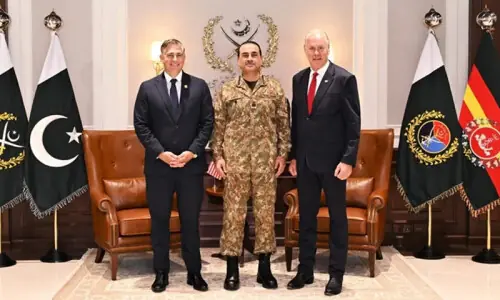
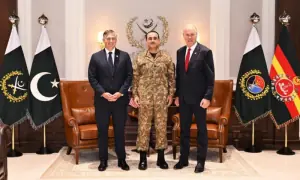
Yet this posture carries risks. Army Chief Field Marshal Asim Munir’s upcoming visit to Washington, intended to cement strategic ties with the United States, now faces awkward optics.
In a call with Iranian Foreign Minister Seyed Abbas Araghchi on Friday, Foreign Minister Ishaq Dar condemned the blatant Israeli aggression and reiterated Islamabad’s strong support to Iran for the sake of peace in the region.
He also conveyed the deepest sympathies on the loss of many precious lives in Israeli attacks on Iranian territory.
As former Foreign Secretary Aizaz Chaudhry observes, Pakistan will extend “moral and political support to Iran” without anticipating any immediate repercussions of Iran-Israel hostilities; however, the sharp divergence between Islamabad’s rhetoric and Washington’s endorsement of Israel’s actions could prove discordant.
Michael Kugelman, a South Asia expert in Washington, warns that “Pakistan’s strong opposition to the Israeli attacks, and given Washington’s expressions of support for the strikes, … Munir here would be bad optics.”
The Pakistani moves reflect Islamabad’s delicate, foreign policy balancing act — aligning with the United States for strategic, diplomatic and economic support, while upholding a sovereign foreign policy that affirms its principles even when they collide with its allies.
Published in Dawn, June 14th, 2025