PM vows to revive agriculture through innovation



ISLAMABAD: Prime Minister Shehbaz Sharif on Saturday reaffirmed his government’s commitment to revitalising the country’s agriculture sector by promoting innovation, sustainable development, and the active involvement of young experts and key stakeholders to revive the agricultural economy.
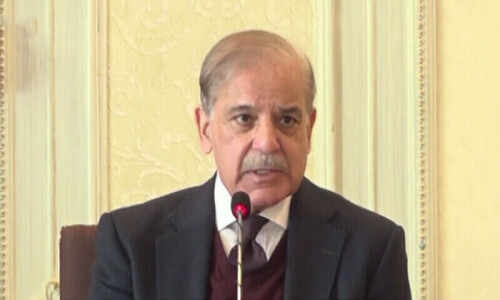
“Pakistan has fertile land, capable agricultural engineers, and hardworking farmers. Other than climate challenges, we have all the ingredients for success. Real growth and progress in this sector can only come through science-led strategies,” the prime minister said while chairing a high-level consultative meeting on agriculture sector.
According to the Prime Minister’s Office (PMO), the meeting was attended by a diverse group of young agricultural scientists, researchers, entrepreneurs, and exporters, along with key federal ministers, to explore a forward-looking roadmap for agricultural reform in the country.
PM Shehbaz called for tapping into the talent of young professionals and researchers, while leveraging the wisdom of experienced experts to guide the process. He said cotton production had fallen so low that Pakistan had become an importer, while neighbouring countries like India and China had progressed in crop yields.
Directs formation of working committees on five critical sectors
Referring to Pakistan’s 65 per cent rural population, the prime minister stressed the need to provide meaningful opportunities to rural youth, particularly in agri-tech and entrepreneurship. He noted the absence of patronage for local agri-machinery manufacturers and service companies supporting small farmers, urging that these be brought into a systematic framework.
“Today’s meeting is a turning point. We must learn from past neglect and embrace a comprehensive, inclusive strategy to move forward,” the prime minister stated, lamenting the lack of off-season storage facilities and value addition plants that could create jobs and reduce food wastage.
PM Shehbaz directed the formation of working committees on five critical sectors identified during the meeting to submit actionable recommendations within two weeks. “This is our chance to revive Pakistan’s agri-economy with the help of our young minds, scientific knowledge, and collective commitment. Let’s not waste any more time,” he said.
The participants of the meeting agreed on several priority areas requiring urgent attention mainly technological integration as proposals were floated to improve digital access in rural areas through better smartphone and internet availability, creating a central database for farmers and incorporating blockchain and QR code systems for input delivery to boost transparency and efficiency.
They also emphasised on improving soil fertility and encouraging research to promote nutritious, high-yield crop production. Public-private training programmes were proposed to enhance farmers’ skills, whereas the participants stressed upgrading existing agricultural markets, developing new infrastructure, and ensuring widespread availability of modern equipment to enhance productivity.
The meeting highlighted the need to increase both domestic and foreign investment in the agriculture sector, while also strengthening the role of financial institutions and facilitating agricultural loans.
The participants called for a transparent regulatory framework with increased involvement of experts, farmers, and relevant stakeholders in policymaking processes to ensure long-term success.
The experts highlighted that Pakistan’s per-acre agricultural yield especially for wheat, sugarcane, and cotton lagged behind global benchmarks due to poor seed quality, inefficient water use, and substandard agricultural practices.
Minister for Climate Change Dr Musadik Malik, IT and Telecom Minister Shaza Fatima Khawaja and Minister for Information Attaullah Tarar also attended the meeting.
Published in Dawn, April 20th, 2025