Iran FM to head to Moscow, discuss US nuclear talks


Iran’s foreign minister is to visit ally Russia this week to discuss nuclear negotiations with the United States, ahead of a new round of talks between the foes planned for Rome.
On Saturday, Abbas Araghchi held talks with US Middle East envoy Steve Witkoff in Oman, the highest-level negotiations since the collapse of a 2015 nuclear accord.
US President Donald Trump, who withdrew from the accord, has thrown Iran back into the spotlight since his return to the White House in January. In March, he sent a letter to Iran’s supreme leader Ayatollah Ali Khamenei, calling for nuclear talks while warning of possible military action if Tehran refused.
Western countries, including the United States, have long suspected Iran of pursuing nuclear weapons, an allegation Tehran has consistently denied, maintaining that its programme was solely for peaceful purposes.
Russia, a close ally of Iran and party to the 2015 deal, and China have held discussions with Tehran in recent weeks over its nuclear programme.
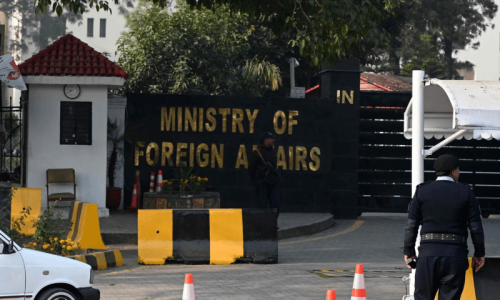
“Dr Araghchi will travel to Moscow at the end of the week,” said foreign ministry spokesman Esmaeil Baqaei, adding that the trip was pre-planned and would be “an opportunity to discuss the latest developments related to the Muscat talks”.
Russia’s foreign ministry spokeswoman, Maria Zakharova, later confirmed the visit saying Araghchi would meet his Russian counterpart Sergei Lavrov and other officials.
Iran and the United States separately described Saturday’s discussions with the US as “constructive”.

Moscow welcomed the Iran-US talks as it pushed for a diplomatic solution and warned that military confrontation would be a “global catastrophe”.
Another round of talks between Iran and the United States is scheduled for Saturday (April 19). Iran has yet to confirm the location, but Italian Foreign Minister Antonio Tajani later said Rome had given a “positive response” to a request to host the talks, adding: “We are willing to do whatever it takes.”
‘Red lines’
The official IRNA news agency reported that they would be held in Europe, without elaborating.
Baqaei said the next set of talks would continue to be indirect with Omani mediation, adding that direct talks were “not effective” and “not useful”.
He had previously said that the only focus of the upcoming talks would be “the nuclear issue and the lifting of sanctions”, and that Iran “will not have any talks with the American side on any other issue”.
Late on Sunday, IRNA reported that Tehran’s regional influence and its missile capabilities were among its “red lines” in the talks.
Washington reinstated biting sanctions on Tehran following its withdrawal from the 2015 deal three years later. Iran continued to adhere to the agreement for a year after Trump’s withdrawal but later began rolling back its compliance.
Iran has consistently denied that it is seeking nuclear weapons.
Baqaei reiterated that Iran would host United Nations nuclear watchdog chief Rafael Grossi in the coming days but noted that the details of his trip were still “to be decided on”.
In a post on X, Grossi confirmed that he would be heading to Tehran “later this week”.
“Continued engagement and cooperation with the agency is essential at a time when diplomatic solutions are urgently needed,” he said.
IRNA later reported that Grossi would arrive on Wednesday and meet Araghchi and Mohammad Eslami, the head of Iran’s nuclear energy agency.
The head of the International Atomic Energy Agency (IAEA) last visited Iran in November when he held talks with top officials, including President Masoud Pezeshkian.
In its latest quarterly report in February, the IAEA said Iran had an estimated 274.8 kilogrammes of uranium enriched to up to 60 per cent, which far exceeds the 3.67pc limit set under the 2015 deal and is much closer to the 90pc threshold required for weapons-grade material.