0
0
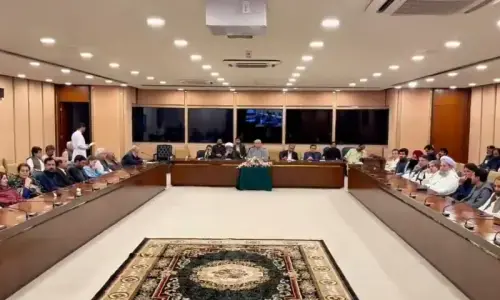
LAHORE: A thought-provoking discussion on ‘Punjab Di Rehtal Da Roop’ was held at Shalimar Gardens as part of Mela Chiraghan on Sunday.
The session was moderated by Dr Imdad Hussain from the Information and Technology University and the panelists were Dr Khola Cheema from GCU Faisalabad, Dr Farrukh Khan from Lums and Prof Saeed Bhutta, chairman Department of Punjabi, GCU, Lahore.
Prof Bhutta said Charkha had an elementary place in Shah Hussain’s poetry and it had a deep connection with the agricultural society of the region. He said Charkha was even mentioned in a 500 years old book Rigveda.
“Charkha is also associated with cotton and cotton-related activities for thousands of years. Greeks also mentioned it in their books.”
Dr Bhutta said that the Roman Empire as well Queen Victoria had put a ban on Hindustani malmal in separate eras.
He emphasized the role of Charkha in Punjabi life as it was not only a tool to make cloth, the finest in the world, but a metaphor to cultivate sobriety, character, love, and multiple social roles.
Khola Cheema said Shah Hussain used the symbol of femininity and it was the greatness of Sufi saints that by using such a symbol, they gave utmost respect to women who were considered oppressed in those days.
She pointed out that the feminine or womanhood had atrociously been colonized, stigmatized, and peripheralized in existing social affairs.
She lauded the female CM of Punjab for contributing to the rehabilitation of womanhood and cited the lives of Heer, Sohni, Sassi, Mirabai and Rani Jindan. She lauded Maryam Nawaz for restarting Mela Chiraghan at Shalimar Gardens after an interval of 67 years.
Dr Farrukh said there was a great need to revive Punjabi culture and keep it alive as it was rich. He highlighted the significance of universalism in intangible culture such as ordinary conversations, interactions, poetry, folklore and music.
Dr Hussain said the faqirs such as Madho Lal Hussain transcended masculinity by absorbing or adopting femininity or feminine elements or ways of being to earn spirituality.
“This is what they taught to their malangs and ordinary people.” Imdad Hussain particularly pointed out the idea and practices of Rupa were so ancient in Punjab that all aspects of our life were entangled in them.
He said what Jamal was in
Arabic Rupa denoted beauty in Punjab while the Punjabis had always been seeking Rupa or beauty, excitement, liveliness, floweriness and pleasantness.
He said one of the purposes of life here had been the cultivation of Rupa in everything but mostly in the conduct of the people.
Published in Dawn, April 14th, 2025