New Delhi chokes in smog after firework ban flouted



India’s capital New Delhi was wreathed in poisonous smog Friday, with air pollution worsening after a fireworks ban was widely flouted for raucous celebrations for the Hindu festival of lights, Diwali.
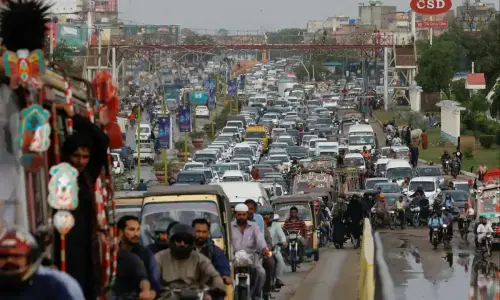
New Delhi’s traffic-clogged streets are home to more than 30 million people, and the city is regularly ranked as one of the most polluted urban areas on the planet.
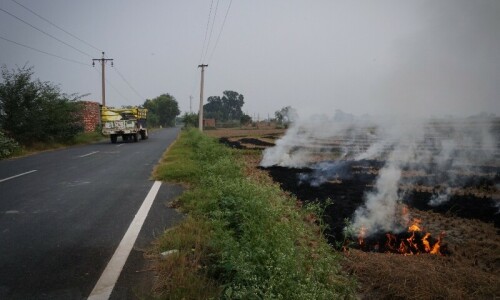
The city is blanketed in cancer-causing acrid smog each year, primarily blamed on stubble burning by farmers in neighbouring regions to clear their fields for ploughing, as well as factories and traffic fumes.
But air worsened Friday after a thunderous night of firecrackers lit as part of Diwali celebrations, despite city authorities last month banning their sale and use.
‘Stilted response’
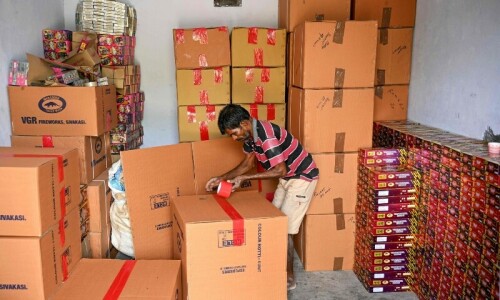
City police had seized nearly two tonnes of fireworks before Diwali, but the crackers remained readily available for sale in neighbouring states.
Many residents celebrated at home, holding a family meal and lighting small candles in praise of the Hindu goddess Lakshmi and symbolising the victory of light over darkness.
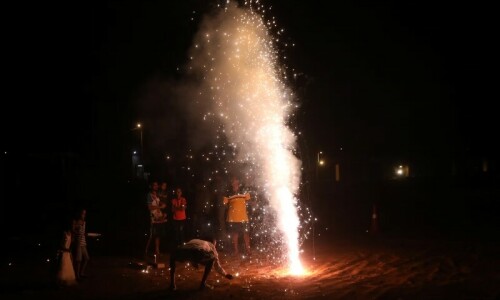
Others launched firework rockets and booming crackers, rocking the densely packed city throughout the night.

Police are often reluctant to act against violators, given the strong religious sentiments attached to the crackers by Hindu devotees.
Critics say arguments between rival politicians heading neighbouring states — as well as between central and state-level authorities — have compounded the problem.
India’s Supreme Court last month ruled that clean air was a fundamental human right, ordering both the central government and state-level authorities to take action.
“Delhi’s toxic air is killing us softly with its smog,” the Times of India wrote in an editorial last week, as the winter pollution returned.
“It is nothing new, but what doesn’t cease to amaze, year after year, is the state’s stilted response.”
‘Lack of resolve’
Levels of fine particulate matter — dangerous microparticles known as PM2.5 pollutants that enter the bloodstream through the lungs — surged to more than 23 times the World Health Organisation recommended daily maximum.
Soon after dawn, pollutant levels topped 345 micrograms per cubic metre, according to monitoring firm IQAir, which listed air in the sprawling megacity as “hazardous”.
It rated New Delhi as worst in the world, just above smoke-choked Lahore, 400 kilometres (250 miles) to the northwest.

The New Delhi government has previously sought to cut pollution by restricting vehicle traffic, including a scheme that only allowed cars with odd or even number licence plates to travel on alternate days.
Authorities have also imposed seasonal bans on construction work and on diesel-powered vehicles from entering the city.
“The gravity of the problem is such that incremental changes are insufficient,” The Indian Express wrote, criticising “an unfortunate lack of resolve from both the centre and state governments. “