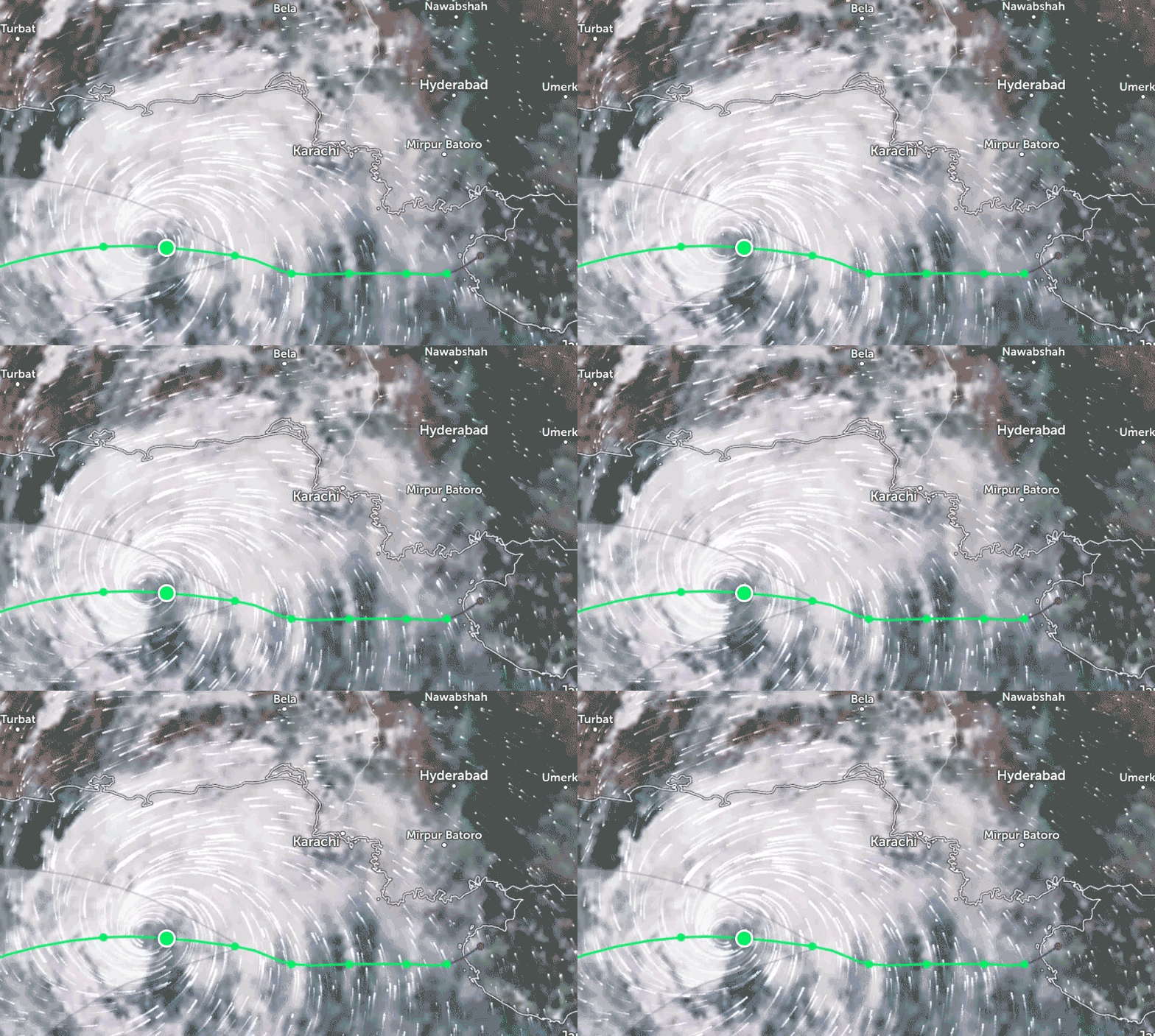
Super Typhoon Yagi hits Vietnam after leaving deadly trail in China, the Philippines


Super Typhoon Yagi uprooted thousands of trees, swept ships and boats out to sea and ripped roofs off houses in northern Vietnam on Saturday, killing at least three people, after leaving a trail of destruction in Southern China and the Philippines.
The storm made landfall in Vietnam’s Hai Phong and Quang Ninh provinces, packing winds exceeding 149 kilometres per hour, Vietnam’s National Centre for Hydro-Meteorological Forecasting said.
The death toll in Vietnam from storm-related damage rose to four as roofing torn away by Yagi flew through the air, killing three residents of Quang Ninh, state media said. A man in Hai Duong province further inland was killed on Friday when heavy winds brought down a tree.
More than a dozen others, believed to be sailors on fishing boats, are missing.
“It has been years since I witnessed a typhoon this big,” said Tran Thi Hoa, a 48-year-old woman from Hai Phong.
“It was scary. I stayed indoors, after locking all my windows. However, the sound of the wind and the rain was unbelievable,” she told AFP.
In Hai Phong, AFP reporters encountered streets filled with fallen trees, metal roofing and broken signboards that had been ripped off properties.
Before hitting Vietnam, Yagi tore through Southern China and the Philippines, killing at least 24 people and injuring dozens of others.
Powerful winds
Chinese state broadcaster CCTV said Yagi brought winds of more than 230kmh, uprooting trees and prompting the evacuation of around 460,000 people.
At least four people were killed and 95 injured in southern China after the storm hit Hainan and Guangdong provinces on Friday, CCTV said on Saturday, citing local authorities.
Before hitting the Vietnamese mainland, the typhoon unrooted hundreds of trees on Co To island, about 80 kilometres from mainland Quang Ninh. Several office buildings, schools and houses on the island were unroofed by the powerful winds.

Signboards lay scattered around the island, while electrical lines were snapped and tangled by the wind.
Local authorities said the typhoon was the most severe to hit the island in decades.
Vietnamese Prime Minister Pham Minh Chinh called on local authorities to evacuate residents from dangerous areas before the storm hit. He also urged other residents to stay indoors.
Evacuated
Around 20,000 people have been evacuated and moved to safer, higher ground in the north of Hai Phong, Thai Binh, and Hanoi, local authorities reported. Many are being sheltered in schools, kindergartens, and other public buildings.
More than 457,000, many of who are professional men, were mobilised by the Ministry of Defence’s rescue and relief department to deal with the fallout from the typhoon.
Some 2,000 vehicles and six planes have been sent to deal with the situation. Northern Vietnam has been experiencing heavy rains and strong winds since Friday evening, including in the capital, Hanoi.
Four airports in northern Vietnam, including Hanoi’s Noi Bai International Airport, have been closed, while sailing has been banned since Friday.
The storm killed at least 20 people and left 26 missing after sweeping over the Philippines earlier this week, according to the latest toll from the country’s disaster management agency.
Yagi caused flooding and landslides on the main island of Luzon before transforming into a super typhoon in recent days.
Southern China is frequently hit by typhoons in the summer and autumn, which form in the warm oceans east of the Philippines and Thailand.
Typhoons in the region are now forming closer to the coast, intensifying more rapidly, and staying over land for longer due to climate change, according to a study published in July.