0
0
UNITED NATIONS: In a UN Security Council debate on climate and water scarcity, Pakistan has once again emphasised the need for strict adherence to the Indus Water Treaty.
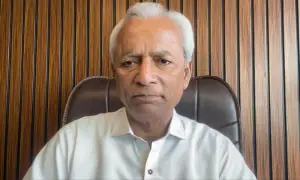
“Increasing water demand, coupled with climate change impacts, creates the potential for trans-boundary water disputes in several parts of the world,” warned Pakistan’s UN envoy Munir Akram while addressing the council on Tuesday.
“Pakistan attaches high priority to the strict implementation of the Indus Water Treaty and aims to reinvigorate the Indus River basin,” he said.
The Indus Water Treaty is a 1960 water-sharing agreement between Pakistan and India, facilitated by the World Bank. It allocates the waters of the Indus River system between the two countries.
Ambassador Akram pointed out that the Indus basin was the largest contiguous irrigation system globally, providing food security to over 225 million people. To reinvigorate this water body, Pakistan has launched the multi-dimensional Living Indus project.
Talking about melting glaciers in Pakistan’s northern territories, he stated that those were the largest store of water, apart from the Northern and Southern ice caps.
“Extreme temperatures are melting these glaciers at an alarming rate, and this, together with heavier monsoons, leads to massive floods, like the epic floods which devastated Pakistan in 2022, causing damage over $30 billion,” he warned.
Conflicts on the rise
Ambassador Akram then warned the international community that scarcity and climate-induced disasters could lead to inter-state and intra-state conflicts.
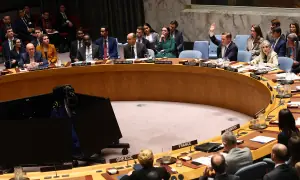
The UNSC is currently holding a high-level debate on the impact of climate and food insecurity on the maintenance of international peace and security.
The Pakistani envoy urged the UNSC to play a more significant role by officially endorsing pledges made on climate change and sustainable development, converting them into obligatory commitments for member nations.
Ambassador Akram also emphasised the rising disputes over water at various levels, exploitation of agricultural and animal pastures by terrorist groups, and the increasing friction between neighbouring coastal countries over fisheries and fishing rights.
Emphasising the interconnectedness of climate change and conflicts, the ambassador noted that “climate change and food insecurity are enlarging and exacerbating inter-state and intra-state conflicts”.
He warned that disputes over water — at the state, sub-national, and local-community levels – were rising, and competing claims to agricultural and animal pastures were being exploited by terrorist groups and criminal gangs.
Ambassador Akram cautioned against ‘securitising’ the climate and development agenda, emphasizing that scarcity was the root cause of conflicts, and sustainable development is the best means of conflict prevention.
He highlighted key decisions made at COP 28, including charting a pathway for a just and equitable energy transition, agreeing on targets for the Global Goal on Adaptation (GGA), and operationalising the Loss & Damage Fund.
The Pakistani envoy, however, expressed concern over the lack of progress in reducing emissions and providing adequate climate finance. He emphasised the need for developed countries to reduce emissions by at least 43 per cent by 2030, in line with the principle of CBDR and respective capacities.
Additionally, he stressed the need for mobilising the estimated $1.5 trillion annual investment for a transition to ‘clean energy’, which remains a significant challenge.
Despite the promises, both public and private investments in sustainable infrastructure in developing countries fall short, with the $100 billion annual climate finance commitment unfulfilled.
Ambassador Akram warned that unless the commitments made at COP28 and other conferences were implemented, achieving climate goals and the Sustainable Development Goals (SDGs) would become almost impossible.
In a notable proposal, Munir Akram suggested that the UNSC could contribute significantly to both climate and development goals by endorsing the commitments made on climate change and sustainable development, transforming them into binding obligations.
Published in Dawn, February 15th, 2024