• WFP, FAO report notes $77.5bn to be repaid over next three years
• Political instability, lack of IMF deal to hit ability to import food
ISLAMABAD: Acute food insecurity in Pakistan is likely to further exacerbate in coming months if the economic and political crisis further worsens, compounding the effects of the 2022 floods, warns a new United Nations report published on Monday.
The report titled, Hunger Hotspots: FAO-WFP early warnings on acute food insecurity, jointly published by the Food and Agriculture Organisation (FAO) and the World Food Programme (WFP) covers the June to November 2023 period.
It notes that amid the current global economic slowdown, mounting public debt has exacerbated the ongoing financial crisis in Pakistan. It points out that authorities will have to repay $77.5 billion external debt between April 2023 and June 2026, a substantial amount considering the country’s GDP of $350bn in 2021.
Growing political instability and lagging reforms prevent the release of a crucial new credit line from the International Monetary Fund (IMF) and additional support from bilateral partners, the report says.
The political crisis and civil unrest are likely to worsen ahead of general elections scheduled for October 2023, amid growing insecurity in the northwest of the country. A shortage of foreign reserves and a depreciating currency are diminishing the country’s ability to import essential food items and energy supplies and increasing food items’ prices besides causing nationwide energy cuts, the report says.
The situation has been compounded by effects of last year’s floods which caused damages and economic losses of Rs30bn to the agriculture sector.
According to the report, over 8.5 million people were likely to experience high levels of acute food insecurity between September and December 2022.
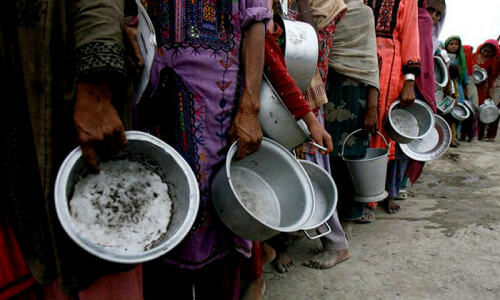
The food insecurity and malnutrition situation is likely to worsen in the outlook period, as economic and political crises are reducing households’ purchasing power and ability to buy food and other essential goods, it notes.
The likely deterioration to the food security situation in the projection period is due to the devastating impact of floods, which caused livestock losses and adversely affected food production and availability of food and livelihood opportunities.
It also notes that Afghanistan’s coal and food export revenues could drop if the economic and political crisis in Pakistan — Kabul’s main trading partner — and the security situation in border areas continues to deteriorate.
The report has called for building the capacity of national and provincial disaster management authorities to include forecast-based financing and risk insurance as part of disaster management and sectoral contingency plans.
Among the actions recommended by the report are strengthening the shock-responsive nature of existing social protection mechanisms (such as the Benazir Income Support Programme) to ensure effective anticipatory action and humanitarian response through social protection systems.
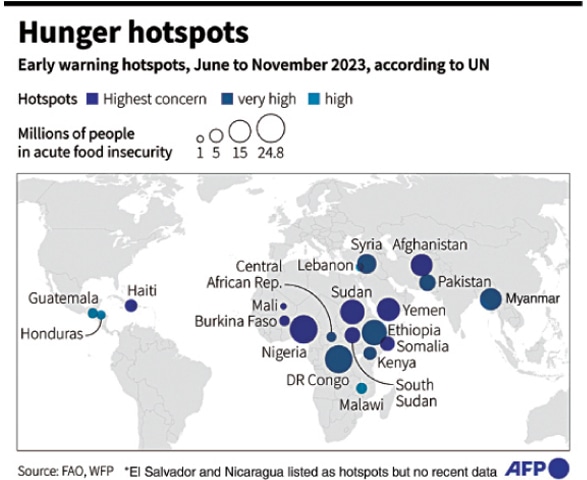
The two UN agencies further warn that acute food insecurity is likely to deteriorate further in 81 hunger spots — comprising a total of 22 countries during the outlook period from June to November 2023.
Afghanistan, Nigeria, Somalia, South Sudan and Yemen remain at the highest concern level. Haiti, the Sahel (Burkina Faso and Mali) and the Sudan have been elevated to the highest concern levels. This is due to severe movement restrictions of people and goods in Haiti, as well as in Burkina Faso and Mali, and the recent eruption of conflict in the Sudan.
All the hotspots at the highest level have populations facing or projected to face starvation or are at risk of deterioration towards catastrophic conditions, given they have already critical food insecurity and are facing severe aggravating factors. These countries require the most urgent attention.
Pakistan, the Central African Republic, Ethiopia, Kenya, Congo and Syria are hotspots with very high concern, and the warning is also extended to Myanmar.
Published in Dawn, May 30th, 2023