0
0

KARACHI: The provincial cabinet on Wednesday approved the Sindh Human Rights Policy for five years to ensure protection and promotion of rights of various marginalised sections of the society including women, children, labourers, minorities, differently-abled and transgender persons.
The Sindh human rights department presented the draft of the policy before the cabinet and stated that it was made with the technical support of team of the Huqooq-i-Pakistan project and other experts.
The time frame of the policy was five years, starting from 2023 till 2027, and it would be reviewed after every five years to consider the latest developments in the international arena and human rights situation in the province, the HR department told the cabinet.
The new policy addresses two categories of rights: civil and political rights (CPR) and economic, social and cultural rights (ESPR).
New policy is focused on protection of civil, political, economic, social and cultural rights
The cabinet was informed that the right to life, liberty and security, access to justice and right to information were covered under the category of CPR, while workers’ rights, the right to affordable health, education as a right for development, cultural rights and environmental rights were covered under the category of ESCR.
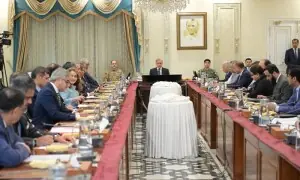
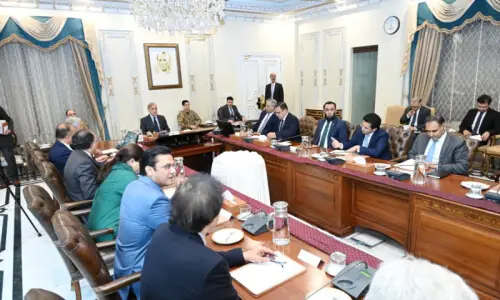
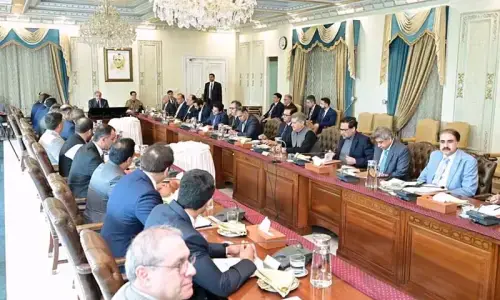
The cabinet meeting, chaired by Chief Minister Syed Murad Ali Shah, was told that the draft of the policy was also shared with as many as 19 departments and institutions of the provincial government and 24 civil society representatives for their feedback.
It was informed that the Sindh Human Rights Policy focused on the promotion, protection, and fulfilment of human rights in compliance with the fundamental rights enshrined in the Constitution, core United Nations (UN) human rights treaties ratified by Pakistan and other international obligations.
In terms of groups, the policy addresses issues of marginalised sections. Its component include women’s rights, child rights, minority rights, rights of senior citizens, rights of persons with disabilities and rights of transgender persons.
Talking to Dawn, Special Assistant to CM on Human Rights Surendar Valasai said that the draft policy set a range of targets in various sectors which among others included introduction of the Human Rights Degree Programmes at the university level; taking proactive measures to protect places of worship of minorities; bringing reforms in the curriculum to promote tolerance and discourage hate speech against religious minorities.
He said that it also set a target to address the defects in the criminal justice system, administration of justice, police service through the development and implementation of comprehensive policies and programmes and to develop a robust system for access of free legal aid to the vulnerable community and for redressal of complaints.
The policy further, tasks the government of Sindh to devise an action plan to curb anti-women practices including forced marriages and killings in the name of so-called honour, he added.
He said that the policy focused on the promotion and protection of human rights in the light of fundamental rights enshrined in the Constitution, commitments under the Generalized Scheme of Preference (GSP) Plus and United Nations Human Rights Treaty Obligations.
Funds to SIUT approved
The cabinet had decided to hand over the Benazir Institute of Urology and Transplantation (BIUT) building to the Sindh Institute of Urology and Transplantation (SIUT) along with a transfer of an annual development programme (ADP) allocation of Rs101.400 million (revenue component) and the provision of additional funds amounting to Rs767.877m as grant-in-aid for the purchase of machinery, equipment, and furniture.
The cabinet also approved the provision of Rs1.5bn as the operational cost to SIUT as a grant-in-aid, but no amount has been released. After discussing the matter, the cabinet approved releasing Rs2.369bn to SIUT.
The cabinet allowed the health department to continue the procurement of drugs/ medicines and surgical items.
Justices of peace
The cabinet approved the appointments of Syed Ali Zaheer Rizvi (Central) and Dinshaw Byram Avari South as Justices of Peace.
It also okayed the appointment of Dilawar Gaddi (Hyderabad), Abdul Jabbar (Sanghar), Mr Heero (Mirpurkhas) and Mohammad Akram (East Karachi) as notaries public.
Meanwhile, the cabinet was told that in order to resolve the waterlogging issue at Hyderabad-Mirpurkhas dual carriagewayat Tando Jam and to provide relief to the residents of the affected area, the provincial government was planning to develop a storm water drain, sewerage line and a water drainage system.
The cabinet approved Rs1bn project to resolve the waterlogging issue.
For Ghotki-Kandhkor Bridge, the cabinet approved the payment of Rs5 billion to retire the bridge-finance facility to lenders/banks.
Published in Dawn, August 3rd, 2023