0
0
PESHAWAR: Amid growing cases of multi-drug resistant typhoid fever, physicians have called for countrywide vaccination, use of clean drinking water, washing hands and avoidance of excessive use of antibiotics to prevent the disease.
“Multi-drug resistant (MDR) and extensively drug-resistant (XDR) typhoid fever can be prevented through vaccination, drinking clean water and washing hands regularly,” Prof Syed Amjad Taqweem, the chief executive officer of Health Net Hospital, Hayatabad, told Dawn.
He said that two conjugate vaccines, prequalified by World Health Organisation, had long-lasting immunity and could be given as a single dose to children from the age of six months to save them from the ailment. He added that vaccination should be launched as medical emergency across the country at earliest.
Prof Amjad, a former physician at Lady Reading Hospital (LRH), said that ‘typhoid conjugate vaccine’ was very effective in preventing the disease. He added that the vaccine was easily available.
Advise people against excessive use of antibiotics
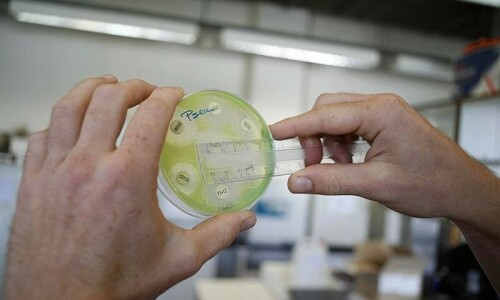
“Salmonella Typhi isolates are defined as MDR if they are resistant to chloramphenicol, ampicillin, and trimethoprim/sulfamethoxazole. These are called XDR if they are MDR plus non-susceptible to fluoroquinolones like ciprofloxacin and resistant to third-generation cephalosporin like ceftriaxone,” he explained.
XDR typhoid is defined as resistant to all recommended antibiotics for typhoid fever including third-generation cephalosporins and fluoroquinolones. Its cases started appearing in 2016 in Pakistan. Susceptibility testing showed all isolates were resistant to ampicillin and ceftriaxone while most of them were resistant to ciprofloxacin.
“To prevent spread of resistant infection we need to develop a habit of conducting a culture test in cases of fever due to infections,” said Prof Amjad.
He said that both ‘widal’ and ‘typhi’ dot tests were useless as they did not give any information about the typhoid. He added that treating everyone on positive widal or typhi dot without clinical evidence of typhoid fever was cause of widespread resistance.
“These tests shouldn’t be conducted because typhoid is diagnosed clinically through culture and sensitivity test. Doctors should stop treating the tests with indiscriminate antibiotics use. They should start treating patients with appropriate skill and knowledge and refer them to someone with required knowledge if they aren’t equipped with it,” said Prof Amjad.
Prof Khalid Mahmood at Peshawar General Hospital said that typhoid fever, caused by bacteria called salmonella, was common in low income countries. He added it had become a major public health problem due to the emergence of the resistance to many antibiotics.
“In late 1970, mortality due to typhoid fever was reduced from 20 per cent due to the advent of first line antibiotics like penicillin, chloramphenicol and septran. Then we had typhoid bacteria developing resistance to the above antibiotics but the bug remained sensitive to flouroquinolone and third generation cephalosporin antibiotics,” he said.
Prof Khalid, also a former physician at LRH, said that of late cases of XDR were increasing rapidly in the country after initial reported cases from Sindh.
The newly emerging strains are resistant to all the above mentioned antibiotics, including flouroquinolone and third generation cephalosporin. These bugs are sensitive to carbapenems and azithromcin. It has led to increase in cases of complicated typhoid fever with resultant increase in mortality.
Prescription of antibiotics according to culture and sensitivity tests for sufficient duration is necessary to treat the confirmed cases and prevent the emergence of new resistant strains.
“The main reason of the emergence of the resistance of bacteria including salmonella to antibiotics is unnecessary and unwise use of antibiotics. Antibiotics are often prescribed for the day-to-day viral infections like common cold and respiratory tract infections,” said Prof Khalid.
These antibiotics are usually given for so-called typhoid fever diagnosed on the basis of positive widal or typhoid tests, which are obsolete and not advisable to diagnosis the ailment.
“It is strongly recommended to use antibiotics for bacterial infections only and after culture tests,” he said. He said simple first generation antibiotics should be preferred and certain potent and injectable antibiotics should only be used in hospital settings and on the basis of positive culture report.
“If we continue to misuse antibiotics many more resistant bugs are likely to come up in future and simple surgical procedures would end up in post-operative surgical site infections leading to increase morbidity and mortality,” said Prof Khalid.
Published in Dawn, June 29th, 2023