



 0
0

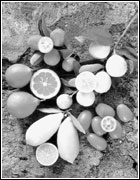 Pakistan produces a variety of citrus fruits. These range from Mausami, Washington Navel, Kinnow, Sweet Lime, Rough Lemon, Succri, Jaffa, Eureka Lemon, Red Blood, Ruby Red and Kaghzi. These varieties are grown in Sargodha, Sialkot, Sahiwal, Hazzara, Kech, Noshera, Minwali, and Jhang.
The fruit is enjoyed around the world for its taste, nutritional value and cheap prices. Its export demand is on the rise. Despite adequate fertilization, pest control, and reduction of deadwood, cultural practices are inadequate.
More effective control can be accomplished by using integrated approach to prevent, reduce and eradicate pathogen infections and disease development during pre- and post-harvest stages.
The control of post-harvest diseases is vital for maintaining quality and shelf-life in an exporting market where transportation may take weeks. The post-harvest diseases can be separated into two categories based on their initial infections.
Pre-harvest infections include diplodia natalensis, phomopsis citri, colletoteichum gloeosporioides, phytophthora species and alternaria citri. The post-harvest diseases include penicillium digitatum, penicillium itatcum and geotrichum citriauranti.
The types of decay and severity are dependent on climate, varieties, agricultural practices and post-harvest handling practices. Green and blue moulds are caused by penicillium digitatum and penicillium itaticum, respectively and developed via injuries. Green mould is identified by the olive green spores.
The extensive spore formation by this pathogen ensures its presence where ever the fruit is handled. Blue mould on the other hand is recognized by the blue spores. Initial lesions are similar to that of green which includes formation of a soft watery spot associated with white mycelia, but the colour is blue. Blue mould is more common in fruit held in cold storage and can spread in packed cartons more rapidly than green mould causing a “nest” of decayed fruit.
Beside green and blue moulds anthracnose, sour rot, black rot and diplodia and phomopsis stem-end rot are instrumental in causing post-harvest losses. Anthracnose a pathogenic disease caused by colletotrichum gloeosporiodes is a major decay in tangerines that are harvested early in the fall when long periods of degreening are required to enhance the fruit appearance. The initial lesions are silvery grey and leathery, being similar in firmness and elevation to adjacent healthy rind tissue. The infected rind becomes brown to greyish black and softens as the rot progresses.
The stem-end rots including alternaria, phomopsis and diplodia are caused by alternaria citri, phomopsis citri and diplodia natalensis, respectively. The pathogen grows and sporulates in deadwood on the trees with water transmitting spores to the immature fruit surface where the fungus forms infection structures known as appressoria. These appressoria remain latent or quiescent and therefore do not cause decay prior to harvest. The appressoria germinate and form infection hyphae after harvesting, but the decay do not spread from infected fruit to healthy ones in packed cartons.
Effective control of one or more disease through the use of a single treatment method is not always possible. It is therefore suggested to develop integrated post-harvest control practices, including post-harvest drench where thiabendazole and imazalil fungicides are effective in controlling the decay, especially green mould and diplodia stem-end rot.
Excessive degreening can significantly enhance decays such as diplodia stem-end rot and anthracnose. The concentration of ethylene and duration of degreening treatment are correlated with the decay incidence and severity.
Cleaning fruit and removing surface dirt which harbours microbes and post-harvest pathogens is important in minimizing the decay and is usually achieved through spraying sanitizers such as chlorine in water or soaking fruit in water to which soda ash is added.
Immersions of lemons in three per cent sodium carbonate at 35*C for 30 seconds is a common commercial practice for the control of moulds and sour rot.
Washing is usually accomplished over brush beds with the aid of approved cleansers or soaps. During washing, fruit is scrubbed for approximately 30 seconds as they travel over rotating brushes.
At this stage care must be taken to avoid injury to fruit, often caused by prolonged brushing, rigid brush fibre and excessive speed. Washing is followed by a potable water rinse to remove soap and surface contaminants. Fruit is then dried with heated air and graded to remove defective ones.
Refrigerated storage and shipping of citrus fruit is an effective measure for decay control, maintenance of fruit quality and extension of shelf life. Sour rot and diplodia stem-end rot are significantly suppressed by storage at 4*C. Approximate temperatures of storage for citrus fruit depend on many factors including the variety, susceptibility to chilling injury and production region.
Pathogen resistance to fungicides is a severe problem in the case of green and blue mould since resistant strains develop readily in large population of spores. Strategies reduce fungicide resistance problems including strict sanitation, rotationor mixing of fungicides with different modes of action and application of broad spectrum biocides such as sodium bicarbonate and biological control agents.
Thus it can be concluded that the setback in citrus export and the wastage quantity can be utilized by just streamlining and regulating the system from the grower to export markets by introducing the guidelines of pre and post-harvest decay control practices.






























