Survivors dug out of rubble in Turkiye, but many families pray to find a body to mourn


 0
0
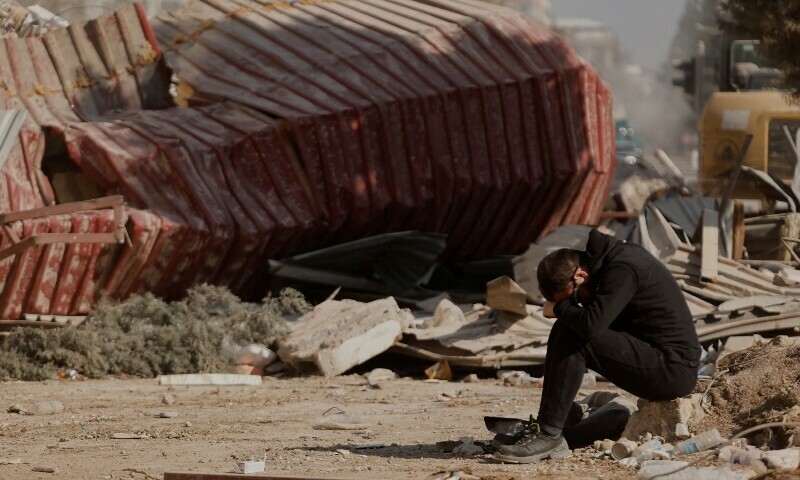

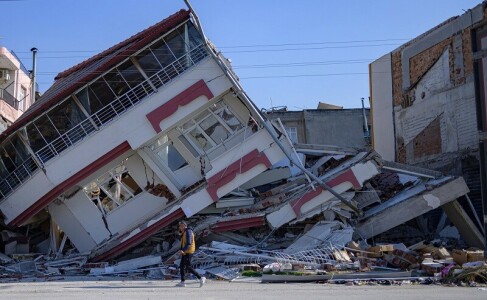
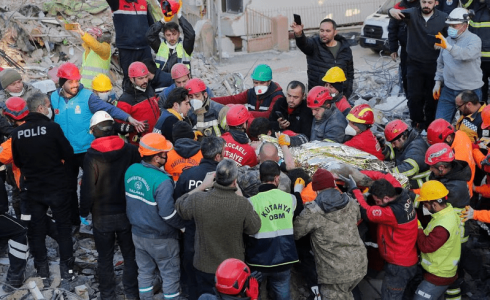
Survivors were still being dug out of the rubble in earthquake-hit Turkiye, but for many grieving families, their only hope is that the remains of their loved ones will be found so that they can mourn at their grave site.
“Would you pray to find a dead body? We do … to deliver the body to the family,” said bulldozer operator Akin Bozkurt as his machine clawed at the rubble of a destroyed building in the town of Kahramanmaras.
“You recover a body from under tonnes of rubble. Families are waiting with hope,” Bozkurt said. “They want to have a burial ceremony. They want a grave.”
According to Islamic tradition, the dead should be buried as quickly as possible.
The head of Turkiye’s Disaster and Emergency Management Authority, Yunus Sezer, said the search and rescue efforts would largely end on Sunday night.
More than 46,000 people have been killed after the 7.8-magnitude quake struck Turkiye and Syria on Feb 6. The toll is expected to soar, with some 345,000 apartments in Turkiye now known to have been destroyed, and many still missing.
Neither Turkiye nor Syria have said how many people are still missing following the quake.
Twelve days after the quake hit, workers from Kyrgyzstan tried to save a Syrian family of five from the rubble of a building in Antakya in southern Turkiye.

Three people, including a child, were rescued alive. The mother and father survived, but the child died later of dehydration, the rescue team said. An older sister and a twin did not make it.
“We heard shouts when we were digging today an hour ago. When we find people who are alive we are always happy,” Atay Osmanov, a member of the rescue team, told Reuters.
Ten ambulances waited on a nearby street that was blocked to traffic to allow the rescue work.
Workers asked for complete silence and for everyone to crouch or sit as the teams climbed to the top of the rubble of the building where the family was found to listen for any more sounds using an electronic detector.
As rescue efforts continued one worker yelled into the rubble: “Take a deep breath if you can hear my voice.”
With sanitation infrastructure damaged, health officials are concerned about the possible spread of infection.
The World Health Organization estimates that some 26 million people across both Turkey and Syria need humanitarian aid.

US Secretary of State Antony Blinken is to arrive on Sunday in Turkiye to discuss how Washington can further assist Ankara as it grapples with the aftermath of its worst natural disaster in modern times.
In Syria, which has reported more than 5,800 deaths, the World Food Programme (WFP) said authorities in the northwest of the country were blocking access to the area.
“That is bottlenecking our operations. That has to get fixed straight away,” WFP Director David Beasley told Reuters on the sidelines of the Munich Security Conference.
The bulk of fatalities in Syria are in the northwest, an area controlled by insurgents at war with forces loyal to President Bashar al-Assad.
“Time is running out and we are running out of money. Our operation is about $50 million a month for our earthquake response alone, so unless Europe wants a new wave of refugees, we need get the support we need,” Beasley added.
Thousands of Syrians who had sought refuge in Turkiye from the civil war have returned to their homes in the war zone — at least for now.