‘Our intelligence was correct’: DG ISPR says Pakistan hit ammunition storage site in Kabul strike
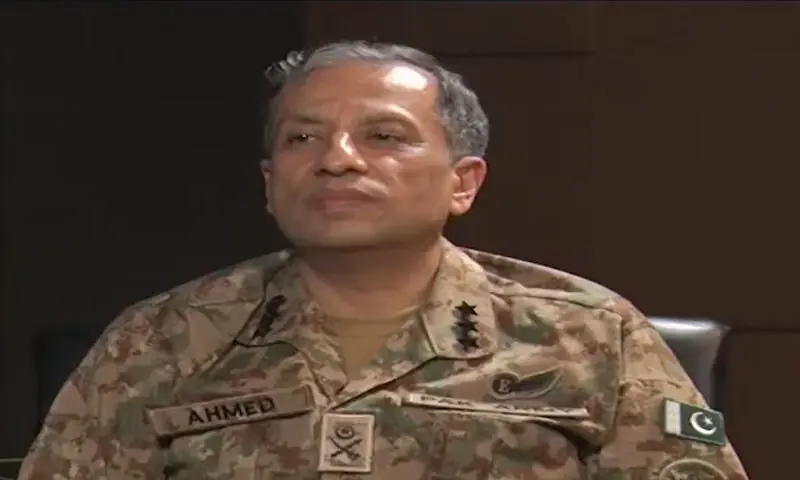


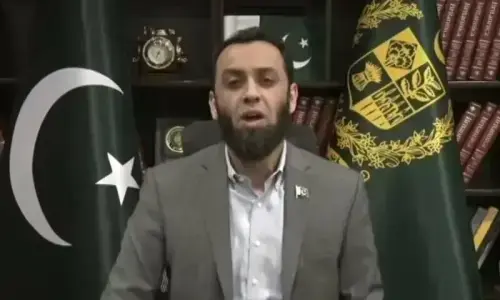
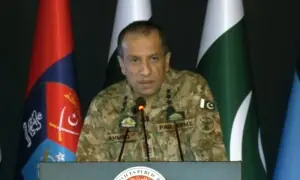
Inter-Services Public Relations (ISPR) Director General Lieutenant General Ahmed Sharif Chaudhry on Wednesday stated that the strike carried out in Kabul earlier this week had targeted an ammunition storage site.
He made the remarks while speaking on Geo News programme ‘Capital Talk’.
The military’s spokesperson stated that the public needed to understand the context behind Operation Ghazab lil-Haq, which was launched against the Afghan Taliban last month, specifically that it was not a “standalone” military campaign, but rather a part of Pakistan’s ongoing war against terrorism.
“This war has been imposed upon Pakistan by terrorists and their sponsors,” he said. He said that it was common knowledge that India was behind terrorism in Pakistan and was using Afghanistan as “a base of operations”.
He said that Afghanistan had acted as a base of operations for every act of terrorism in Pakistan, pointing to the suicide bombing at an imambargah in Islamabad’s Tarlai area in February.
“Innocent children, people and worshippers were killed during Friday prayers. Where did the terrorist come from? Afghanistan,” DG ISPR said.
“In the Wana Cadet College attack, five terrorists were killed, and all of them were Afghans … Our police and people are under attack, and where are these terrorists coming from? They are coming from Afghanistan,” he said.
DG ISPR added that terrorist leaders, such as Noor Wali Mehsud, Bashir Zeb and Gul Bahadur were “being hidden” in Afghan territory.
“We have not imposed any war upon Afghanistan; The war on terror has been imposed on us,” he asserted.
“We have no issues with our Afghan brothers and sisters, absolutely not. They are themselves oppressed by the Afghan Taliban regime,” he said.
Outlining the operation’s “immediate context”, he said that last month, multiple terrorist hideouts along the Pak-Afghan border were struck. He added that the banned Tehreek-i-Taliban Pakistan (TTP) was struck, not Afghans.
“They (Afghan Taliban) then struck. They hit 53 locations in Pakistan and our posts along the border,” he stated. “Everyone [must know] that they initiated it and we responded, and we are going to take them to task.”
He added that 81 locations in Afghanistan were targeted in airstrikes to eliminate “terrorist support infrastructure”, such as corps and brigade headquarters, ammunition dumps, storage sites and other facilities enabling terrorist attacks on Pakistani soil.
“When these strikes take place, the information ministry immediately provides regular updates and video clips,” he explained.
“If you examine the clips, they pinpoint targeting hangars, tunnels and headquarters, which are being provided by the Afghan Taliban regime, which is the master terror proxy,” he said.
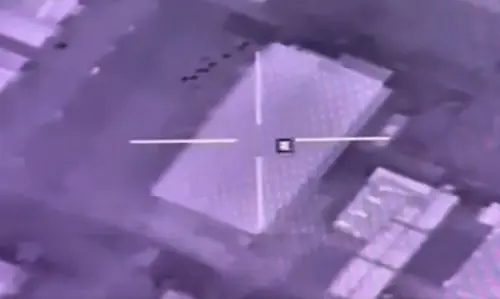
Speaking about the strike in Kabul, DG ISPR said that there was an ammunition and drone storage site, which was targeted. He added that there was video footage of the strike, which was publicly available.
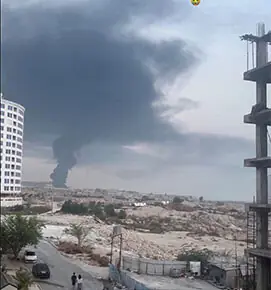
“We hit that … if you strike ammunition, there are secondary detonations. Our intelligence was correct; we hit an ammunition storage site, so the ammunition exploded,” he said.
“When it did, people in Kabul saw the explosion and fireballs, which lasted for some time. Old missiles like Russian Scud missiles, ammunition, drones and equipment exploded. That is what we struck.”
He added, “The record is there, the visuals are there, the after effects of that strike are there, which all confirm that we struck an ammunition site.”
DG ISPR added that precision-guided munitions (PGMs) were used in strikes, as opposed to cheaper general-purpose bombs, which could cause greater collateral damage.
“We are being very careful. We are using PGMs directly where the terrorist support infrastructure is. That is what we used over here,” he added, referring to the Kabul strike.
He also highlighted the Afghan Taliban’s lack of credibility.
“There is no credibility to their claims; the world knows it, we know it. They make claims and then delete them. They are discredited and liars,” he said.
“Has anyone asked how someone can set up a drug rehabilitation centre around an ammunition depot where you store weapons? Is there a hospital anywhere in the world which has been built next to an ammunition store?” he asked.
Lt Gen Chaudhry said that the rehabilitation centre was a “military containerised structure”.
“That was a military containerised structure in which they probably kept suicide bombers who were being trained, or they were hiding terrorists, or housing Afghan Taliban fighters.
“I don’t know what was in there. That was not our target, but if they claim that there were drug addicts at the site, then this is an old habit of theirs where they use drug addicts as suicide bombers, and it was most likely some training facility,” he said.
“We must understand that Afghanistan is not a state per se; this is a territory captured by the Afghan Taliban, which is a terrorist organisation,” he said.
He added that according to UN reporting, 22 terrorist organisations were operating in Afghanistan.
“Afghanistan has become a centre for all of the world’s terrorists. It’s a can of worms, which has been closed by Pakistan,” he said. He added that the war on terror was not just Pakistan’s war, but “a war for the whole world”.
Asked about the drones intercepted near Islamabad a few days ago, DG ISPR wondered how Kabul was able to procure them.
“Pakistan has always said that there is someone, some state, which is providing them with drones. There is no drone manufacturing site in Afghanistan, so who is providing them with these drones? It is India,” he said.
He added that India provided the Afghan Taliban with rudimentary drones that could not be traced to them.
“It shows the deep nexus between RAW (Research and Analysis Wing), the Indians and this master terror proxy Afghan Taliban regime,” he said.
He went on to say that the Pakistan Air Force and the army air defence jointly monitor drones and “take them down through a combination of hard and soft kills”.
“We should know that the character of war has evolved and it is evolving very fast,” he said. “We are in the era of drone warfare and non-contact warfare.”
Giving the example of the Middle East war, DG ISPR noted that multiple drones and other projectiles reached their targets, despite the use of “one of the best air defence systems”.
“All of the drones that are coming in are being taken out, and we’ll continue to do that,” Lt Gen Chaudhry stated, noting that this illustrated the threat Pakistan faced from the Afghan Taliban.
Asked about Pakistan’s endgame in Afghanistan, DG ISPR said it was “clear as day”.
“Afghanistan should not be used as a base of operations for terrorism inside Pakistan,” he stated.
“The choice has to be made by the Afghan Taliban regime — is the TTP more important to them or Pakistan? Is terrorism more important to them than peace? They have to make a choice.
“Our choice is very clear: it’s Pakistan, first and last,” he asserted.
Asked about negotiations between Islamabad and Kabul breaking down, Lt Gen Chaudhry said talks failed because Afghanistan “is not ready to let go of terrorism”.
“We asked them to create a verifiable mechanism ensuring that terrorism will not take place in Pakistan,” he stated. “We proved that Afghans are behind acts of terrorism. [Terrorist] leaders are sitting there; they (Afghan Taliban) are hiding them in government buildings.”
He said that Pakistan was open to talks, but said that Kabul could not approach Islamabad while supporting terrorism through recruitment and training camps.
“We have a very just demand and all of our friends acknowledge it: that this cannot happen, where you (Kabul) say ‘we will talk’ but at the same time send terrorists to our country. These two things cannot go together,” he asserted.
“There are only two things produced by the Afghan Taliban: terrorism and drugs. This is their business and these two things are linked,” he added.
He added that Afghanistan was not a normal state and “terrorism and the war economy are a way of life”.
The remarks by the military’s spokesperson come after targeted overnight airstrikes were carried out in Kabul and Nangarhar amid Operation Ghazab lil-Haq. A day earlier, Pakistan maintained that it had targeted ‘Camp Phoenix’ — a former US military base currently being used by Afghan Taliban forces — even as Afghanistan claimed a drug rehabilitation centre had been bombed instead.
Information Minister Attaullah Tarar said on Tuesday that an ammunition storage facility was among the targets hit in the Afghan capital. However, reports emanating from Kabul said that a drug treatment centre known as ‘Omid Camp’ was targeted, with Afghan officials claiming hundreds dead and injured as a result.