0
0
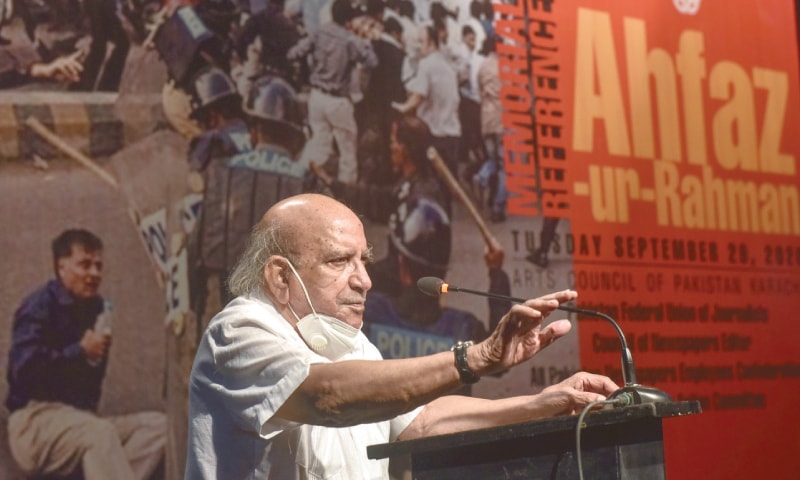
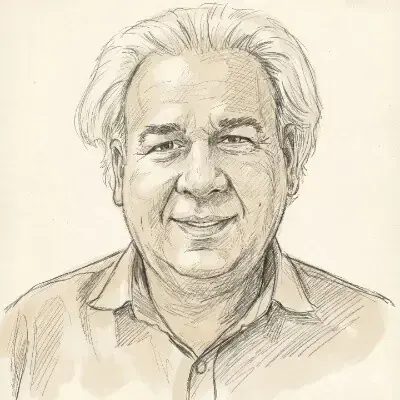
KARACHI: Friends and colleagues shared their views on the life and work of distinguished journalist, poet and writer Ahfaz-ur-Rahman, who passed away on April 12 this year, at an event held in his memory at the Arts Council on Tuesday evening.
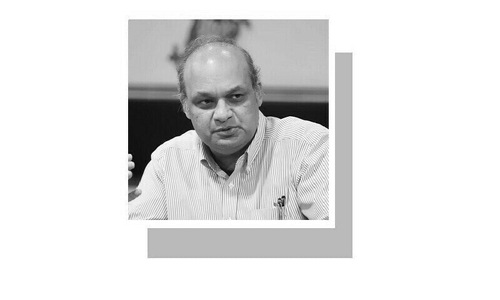
Speaking on the occasion, human rights activist and senior journalist I.A. Rehman said Ahfaz-ur-Rahman was a multidimensional (pehludaar) person. He was a trade union leader, a quality poet, a good short story writer, was fond of children and a lover of life. He practised what he preached.
Mr Rehman said the situation [in the country] is bad. Journalism is on its last legs (aakhri damm per hai). In the past, governments used to think of journalism and journalists as necessary evil. These days they categorise them as unnecessary evil. The present government would be very happy if journalism in Pakistan came to an end. Touching upon the issue of the lack of unity in the Pakistan Federal Union of Journalists (PFUJ), he said “when personal benefits are added to bossiness (chaudrahat mein mafaad shamil ho jaey), plots are attained and foreign trips are enjoyed then the unity gets weakened”.
According to him, today, 14,000 journalists have lost their jobs, and no one knows. What can be done in such a situation? The problem is not just confined to the media –– the entire nation is faced with it. We need to think how to again develop our connection with the underprivileged classes (labourers, farmers etc) because without them we can’t do anything. We need to know what the underprivileged think about us.
Mr Rehman argued that today’s battles could not be fought with yesterday’s weapons. It requires to be fought with the weapons of tomorrow. Looking back wouldn’t fetch anything. The PFUJ was once a huge organisation. There wasn’t any such union in the country which used to see dictators in the eye. Efforts for unity must carry on.
Mr Rehman said Ahfaz sahib was a brave man; there were no holy cows for him. Even when he was sick, he kept working. The late journalist was of the view that if children could be set on the right path then the coming generations would turn out good.
Journalist Husain Naqi said Pakistan’s civil society is weak, and after the country got dismembered (in 1971) it has become weaker.
Ahfaz sahib was born in Jabalpur, India. He was 13 or 14 years old when the Suez Canal crisis happened. About the same time, Muslims in India were attacked. The National Students Federation protested against both. Ahfaz sahib took part in it as a student. Then in 1978, during General Zia’s martial law, he went to jail. Mr Naqi, commenting on the situation regarding journalism, pointed out that more journalists lost their lives in the last 20 years than in the struggles that took place previously for freedom of the press.
Journalist Nasir Zaidi, secretary general of the PFUJ, delivered an impassioned speech. He said Ahfaz-ur-Rahman never compromised on principles. He had known him since the 1960s. Whenever he would be in distress, Ahfaz would console him. He argued that the difference between journalist leaders of today and the leaders of the time when Ahfaz was in the field is that the latter were a committed lot who adhered to their principles.
Expressing his views on the PFUJ scenario, Mr Zaidi said in his effort to reunite the groups he told colleagues that there were two principles on which there should be no compromise: freedom of the press and workers’ rights. One of them replied that freedom of the press needed to be revisited because times had changed and we could not fight with the state.
Journalist Khawar Naeem Hashmi said he first met Ahfaz sahib in 1973. Back then Ahfaz was the editor of a newspaper’s magazine and he worked under him. He learned from the late journalist how to be brave and how to say ‘no’.
Dr Jaffer Ahmed read a well-researched paper on Ahfaz-ur-Rahman in which he talked about an essay that Ahfaz wrote as a young writer in 1965 for the magazine Afkaar’s ‘Faiz number’ and for which he got the first prize. A couple of years later, a Bombay magazine came out with a ‘Krishan Chander number’. The magazine invited young writers from India and Pakistan to write an essay in the form of a letter to Krishan Chander to take part in a contest. Afhaz’s piece won the first prize there as well.
Among others, Jabbar Khatak, Iqbal Khursheed, Tahir Najmi, Ahmed Shah, Ahfaz sahib’s son Rameez (on video link) and daughter Tabinda also spoke.
Ahfaz sahib’s wife Mehnaz gave the vote of thanks.
Karamat Ali anchored the event.
Artiste Sheema Kermani performed a dance to a Nasir Kazmi ghazal while Sheen Farrukh announced that she with a group of trustees would introduce the ‘Ahfaz-ur-Rahman award for journalism’.
Published in Dawn, September 30th, 2020