Pakistan to take Kashmir dispute with India to International Court of Justice


 53
53

The government announced on Tuesday it would take the Kashmir dispute with India to the International Court of Justice, after New Delhi revoked special status for occupied Kashmir earlier this month, to the fury of Islamabad.
“We have decided to take Kashmir case to the International Court of Justice,” Foreign Minister Shah Mehmood Qureshi told ARY News TV.
“The decision was taken after considering all legal aspects.”
Examine: Kashmir: India’s Afghanistan
Separately, Special Assistant to the Prime Minister on Information Firdous Ashiq Awan confirmed to reporters following a cabinet meeting that an in-principle approval had been granted by the cabinet to take the issue to the world court.
She said that the case will be presented with a focus on the violation of human rights and genocide in occupied Kashmir.
A panel of lawyers of international repute would be engaged to pursue the case on behalf of Pakistan at the United Nations' top court, Awan added.
A decision by the court would be an advisory only. However, if both countries agreed before-hand, the ruling would become binding.
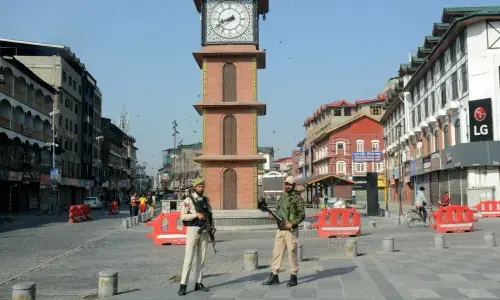
On August 5, the government of Indian Prime Minister Narendra Modi stripped Kashmiris of the special autonomy they had for seven decades through a rushed presidential order. An indefinite curfew was imposed in occupied Kashmir and elected leaders were put under house arrest.
By repealing Article 370 of the constitution, people from the rest of India will now have the right to acquire property in Kashmir and settle there permanently. Kashmiris as well as critics of India’s Hindu nationalist-led government see the move as an attempt to dilute the demographics of Muslim-majority Kashmir with Hindu settlers.
Furthermore, Indian Home Minister Amit Shah, who is also president of the BJP, moved a bill — passed by the Indian parliament — to bifurcate the state into two union territories to be directly ruled by New Delhi.
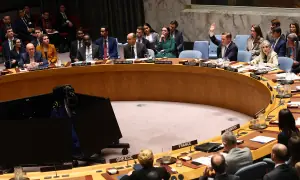
Pakistan angrily slammed the decision, expelling India's ambassador, suspending bilateral trade, and taking the matter to the United Nations Security Council.
The country observed a 'Black Day' on Thursday to coincide with India's independence day celebrations, in solidarity with the people of occupied Kashmir.
Prime Minister Imran Khan, meanwhile, has pledged to take up the responsibility of raising voice of the Kashmiri people at every forum of the world. “I will be the ambassador of your cause across the globe,” he said last week.
The premier also questioned the international community's silence on occupied Kashmir and warned that should ethnic cleansing of Muslims take place in the region, there would be "severe repercussions" in the Muslim world.