6
6

DESPITE fairly high participation rates at the primary education level, the transition from primary to higher educational has remained problematic in Pakistan. Around half of students enrolled in grade 5 drop out from school before reaching grade 10. Of the many children dropping out for one reason or another, 78 per cent of out-of-school children fall within the 10-16 years age group.
Pakistan’s education sector has seen a number of reforms to improve access and student retention — some very successful, some not so much, some wholly unsuitable in our context. Despite all these reforms and stakeholders’ continued commitment, thousands of children are still denied their right to free and compulsory education.
A recent survey by Nielson has backed existing literature and field evidence that suggest the reasons for children being out of school vary between supply side challenges, lack of demand and socioeconomic factors. While almost all provincial governments have made efforts to address these categories, they still fall short of being able to tackle our education challenge.
We need innovative solutions to shore up student retention rates.
In Pakistan, a pyramid-like structure exists for the level-wise number of schools; one that is narrow at the top. According to the Pakistan Education Statistics Report, 2016-17, for 150,129 primary schools, there are 49,090 middle schools, 31,551 secondary schools and 5,130 higher secondary schools. While primary schools are available to children at their doorsteps, the fewer post-primary schools are further away from their homes.
This raises concerns for parents, given that it is considered unsafe for children, especially girls, to commute unaccompanied between home and school, and that it would increase the cost of transport. Evidence from the field and the Pakistan Social and Living Standards Measurement Survey, the Punjab School Education Survey and a recent study by Unicef and I-SAPS indicate that, in many cases, these costs are significant and unaffordable for marginalised and poor families. The challenge is exacerbated due to the lack of reliable estimates of the number, names and locations of the children who drop out from school after primary education (or during any grade, for that matter).
One option is to build more middle and secondary schools, especially in underserved areas — but this is not easy to implement. The infrastructural costs and the pace at which such projects work alone make it unrealistic, at least in the short run. Yet, with each passing year, there are more children who drop out because of the distance barrier. I believe that a more realistic, timesaving, cost-effective and evidence-based approach can be adopted.
To start with, we need planning at the local level to identify challenges and underlying causes, and, more importantly, propose solutions tailored for the local context. It is equally important that parents, teachers, students and other community-level stakeholders be taken on board prior to implementation. Past experience shows that demand issues do not work in silos; rather, some are connected with supply issues (non-provision of facilities in nearby areas, the school environment, the quality of education), resulting in children’s and parents’ disinterest in continuing education.
One innovative solution is the Sustainable Transition and Retention in Delivering Education programme being implemented by the Khyber Pakhtunkhwa and Punjab governments. The model is based on local-level planning and uses existing public infrastructure and facilities to provide educational opportunities to disadvantaged children in the afternoon shifts. To complement this and further ease continuation of education, transport facilities in the form of bicycles, vans, rickshaws, etc are provided to students who qualify for the transport subsidy, so that not only are the transition and retention rates of students at the post-primary levels improved, but children are also given an opportunity to re-access education — in some cases, even three years after dropping out of school.
Results have been encouraging. Within less than a year since it began, more than 7,900 children (50pc girls) who had either dropped out or were at risk of dropping out have been provided an opportunity to continue their education nearer their homes.
It is time we took the low post-primary transition and retention challenge seriously, and gave children an opportunity to continue education beyond primary schooling. Innovative programmes are needed efforts towards improving rates of completion of post-primary schooling for marginalised children, and can potentially be one of the answers to our education sector’s chronic problems.
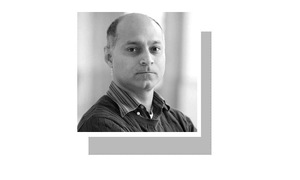
The writer is a research fellow at the Institute of Social and Policy Sciences, Islamabad.
Twitter: @abdullah_alam
Published in Dawn, August 2nd, 2018