9
9

The winning percentage was overwhelming and seemingly impressive. In the 2013 Balochistan Assembly election, Abdul Qudoos Bizenjo won more than 80pc of the vote.
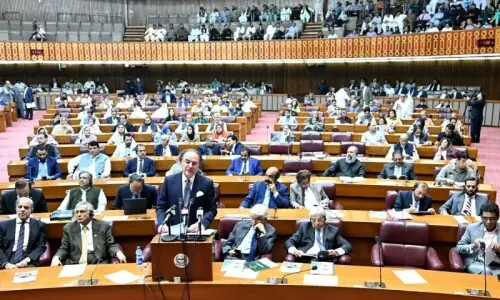
But that electoral victory, which has put Mr Bizenjo on the path to becoming the third chief minister of Balochistan in the current assembly, was a profoundly undemocratic exercise.
The total votes cast on May 11, 2013, in PB-41 were 683 or 1.18pc of the eligible voters in the constituency. Mr Bizenjo won the Awaran provincial seat with a total of 544 votes.
Those numbers are not mistakes. And the nomination of Mr Bizenjo by PML-N dissidents and their allies in the Balochistan Assembly is not a joke.
If it were at all possible for the political machinations in Balochistan to become any more tawdry, the move to install an MPA who was elected with merely 544 votes as chief minister may have achieved just that.
Perhaps in a fractious assembly with many different interests to be catered to, the weakest candidate is the ‘best’ candidate for chief minister.
The nomination of Mr Bizenjo may have an unlikely side effect: it could briefly cast a spotlight on one of the most troubled districts in the country.
A hotbed of the continuing low-level separatist insurgency, Awaran is an area in which virtually no independent reporting or gathering of information is possible.
A geographically large, sparsely populated district with some of the worst socioeconomic indicators in the country, Awaran has been failed by the state at every level.
Is Mr Bizenjo in any way interested in addressing the complex, multilayered and security-driven challenges in his home district if he does succeed in becoming chief minister?
More generally, with the ouster of the unpopular Sanaullah Zehri and the political equation in the assembly having been turned on its head, is there any interest in the new majority to go beyond dividing the spoils and perhaps try and help stabilise a grim security situation in Balochistan?
The truly dispiriting aspect of the political turmoil in Balochistan is how easily the people’s elected representatives are willing to align themselves with anti-democratic forces trying to reshape the political landscape ahead of national elections.
Mr Zehri was no saint and his predecessor, Abdul Malik Baloch, was a disappointment, but the political class in Balochistan appears determined to drag the democratic process through the mud for myopic, short-term and ultimately self-defeating gains.
Published in Dawn, January 13th, 2018