Italian scholar explores Hindu, Muslim Sufi linkages at SMIU festival


 0
0

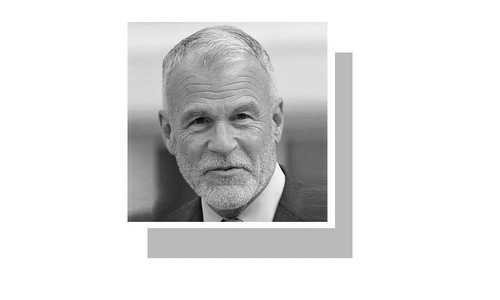
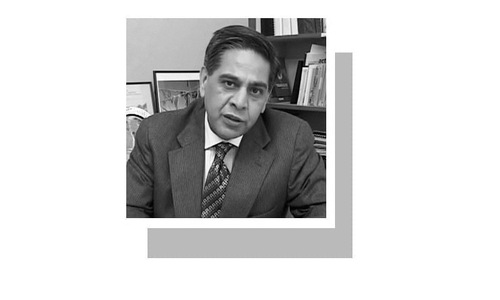
KARACHI: Prof Thomas Dahnhardt, an expert on South Asian languages, religions and cultures, on Friday gave an insightful talk in the first of the international lecture series at the Sindh Madressatul Islam University’s arts and ideas festival on a highly interesting topic discussing and exploring contacts between Hindu and Muslim Sufi spirituality in South Asia.
Dr Dahnhardt, however, made it clear that Sufism was an integral part of Islam, which could not be detached from it.
“Sufism should not be detached from Islam and Islam should also not be detached or deprived from Sufism,” said the Italian scholar of international repute on the second day of the four-day festival.
He said ever since Muslims had set their feet on South Asian soil the ensuing relations between the pre-existing cultural environment and the dynamic dimension inherent to Islam had led to numerous fruitful contacts on multiple levels between these two civilisations — the Arab or Muslim and the Indus Valley civilisations.
Dr Dahnhardt said over time the process of reciprocal acknowledgement and assimilation allowed for the emergence of the fascinating cultural environment described as Indo-Islamic civilisation.
“In this context, the role played by spiritual authorities in bringing together communities through the channel of the common language of popular devotion has been attested and recognised.”
But, he added, it was on the less visible plane of intellectual and spiritual insight that Sufi and Hindu masters had been successful in exploring a terrain for both traditions to rest on, thereby developing a common ground for the élite and the common folk.
In his essay the scholar affiliated with the University of Venice explored certain aspects of such spiritual collaboration as it occurred over time in South Asia.
He discussed various orders of Sufism and their interaction with the Hindu yogis, especially the tradition to “go deep in the religion” in search of the greatest truth.
Earlier, the festival was formally inaugurated by university Vice Chancellor Dr Mohammad Ali Shaikh.
Scholars from abroad and from various parts of the country are participating in the moot.
Dr Shaikh said the Indus Valley civilisation was among the great ancient civilisations of the world.
Earlier, 10 documentaries or short films prepared by students of various universities of the country were screened. Three among the 10 films won prizes.
SMIU’s Zahid Abbas secured first position, Bhawish Raj, a student of the National University of Sciences and Technology Karachi and SMIU’s M. Azeem Khan got second and third positions respectively.
Published in Dawn, December 9th, 2017