0
0
PESHAWAR: The University of Peshawar has once again begun the four-year BS programme on self-finance basis along with regular classes to overcome financial crisis it has been facing for a couple of years.
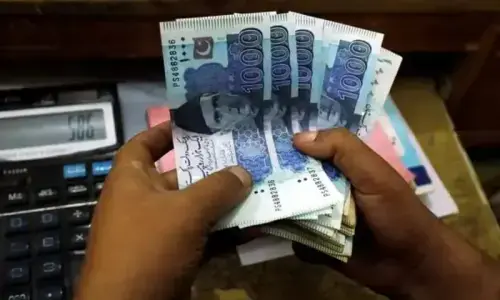
“Admissions to the four-year BS programme in 12 financially viable disciplines are open on self-finance basis,” said a relevant UoP staff member, who cited shortage of funds as the only reason for the start of these classes, whose students will pay Rs72,000 per annum for BS (Science) course and Rs64,000 per year for BS (Arts) course.
Each of the teachers of these self-finance students will get an extra honouraria of Rs1,200 per class.
The university had begun the evening shift of the four-year BS programme in 2009 to generate revenue but closed it down over failure to help overcome financial problems.
Admin insists move to help varsity overcome financial crisis
Former UoP VC Prof Rasul Jan had ordered the discontinuation of the programme thinking it was making losses besides adversely affecting the quality of education and affecting the university’s ranking.
Now once again the same financial woes are the reason the UoP is forced to start the classes again in but in morning along with the regular classes in around 12 disciplines considered to be of good market value.
An official of the UoP said ironically, the university, one of the oldest in the province, had long been facing the budget deficit and that many government policies were responsible for the university’s financial crisis.
He said the BS programme was one of the biggest blows to the university’s financial stability as it deprived the UoP of revenue it generated through private and regular admissions in BA and MA programmes, including the private students, who appeared for those examinations.
“We used to earn Rs50 million revenue per annum from Master of Arts and about Rs80 million from Bachelor of Arts admissions per year. Since the BS programme was introduced, we have been getting this revenue,” he said.
An official said the Higher Education Commission had allocated Rs1.336 billion for the UoP this year but the money was not enough to cover the university’s budget deficit. “Of the total budget, a large amount is spent on salaries and pensions and what is left is not enough to run the affairs of the university,” he said.
Among some 20 public sector universities of the province, the UoP is one of the oldest ones with 2,278 regular and 450 contractual employees.
He said payments to 1,400-1,500 pensioners were a major reason for the university’s financial woes.
“Pensions are to be paid to the living wife and daughter in case of the deceased pensioner. The financial burden continues for decades after an employee retires,” he said. The official said out of its total budget, the UoP paid around Rs700 million only to pay pension.
He said the annual increase in pensions by the government without consulting universities and without increasing their funds was another reason for their financial crisis, including UoP’s.
“In the recent years, a big chunk of funds allocated for security apparatus and services also is used up for hiring security staff and equipment in view of security threats,” he said enumerating the reasons the universities were forced to look into revenue generating opportunities.
He said the officials were even trying to recover the outstanding dues totaling Rs80 million from its former students, while another measure to curtail expenditure was not to hire any permanent employee since Dec 2016.
The official said the University of Peshawar, which discontinued the four-year BS programme (evening shift) in Sept 2013 over huge losses, is resuming the programme in some marketable disciplines.
He said the UoP was not going to hire any new employee but would use its faculty to teach the class for a set honorarium.
The official said the university having some 43 disciplines was going to start the self-finance classes in BS programme in 12 disciplines only initially enrolling some 500 students.
Published in Dawn, October 12th, 2017