11
11
WASHINGTON: Pakistan and India seem all set to finally hold the much-delayed water talks in the US capital next week, hoping to avoid further tensions over an issue that has far-reaching consequences for both.
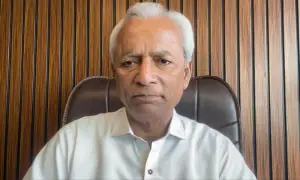
Official sources told Dawn that Minister for Water and Power Khawaja Mohammad Asif is likely to lead the Pakistani delegation at these talks that would be held at the World Bank headquarters in Washington. The delegation will include Secretary Water and Power Yousaf Naseem Khokhar and several other senior officials.
Secretary Ministry of Water Resources Dr Amarjit Singh is likely to lead the Indian delegation.
The last round of the World Bank-supervised talks was held in November 2016, and the World Bank had indicated that it intended to hold another round in April this year but could not do so, as India refused to accept the third-party arbitration.
Pakistan not only wanted the talks to be held as scheduled but also sought the World Bank’s arbitration as the guarantor of the Indus Waters Treaty (IWT). But India rejected arbitration, saying it preferred negotiations within the framework of the treaty.
Pakistan too recognises the treaty’s pivotal role but disagrees with the Indian interpretation, which seeks to minimise arbitration.
The talks will focus on two controversial hydropower projects — Kishanganga and Ratle — over which Pakistan sought International Court of Arbitration through the World Bank.
Pakistan believes India has been using delaying tactics to complete the controversial hydel projects it is building on western rivers in held Kashmir.
“We are ready to hold talks with India under World Bank and the US guidance. But we will not withdraw our case against Ratle and Kishanganga projects,” a Pakistani official said, adding that India had also refused earlier to respond to Pakistan’s call for inspection of Pakul Dal and other dams it’s constructing in the occupied area.
Published in Dawn, July 27th, 2017