0
0
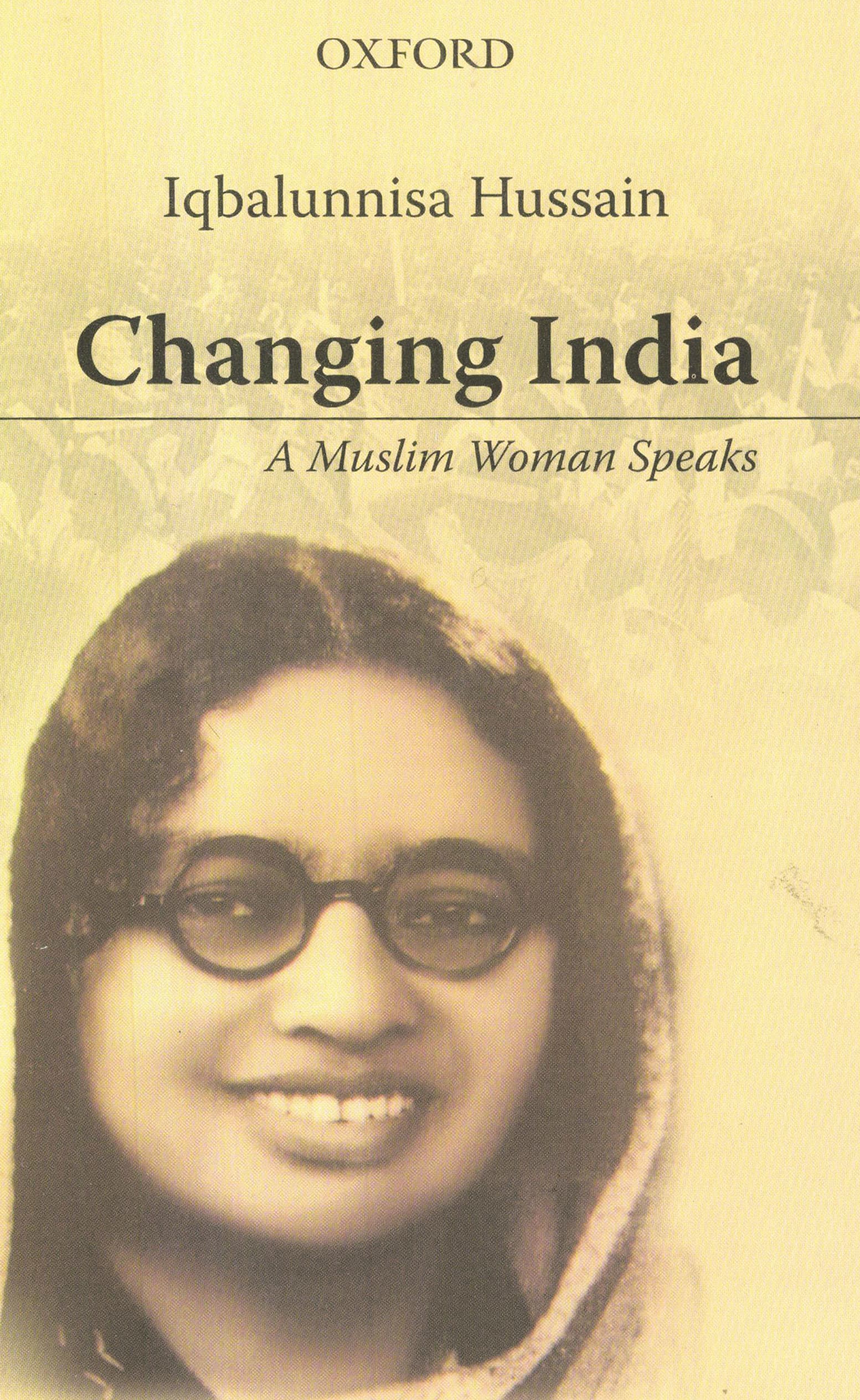
Even in patriarchal societies, times of ferment bring into view the role, however marginal, of women. The last years of British rule in the Indian subcontinent were no exception. The stars were few but their contribution left a mark — in art, literature and politics — as women who adopted a supporting role to carry forward the work of husbands and brothers, or as intellectuals and leaders in their own right. It is unfortunate though, that even in this small galaxy of talented women, the contributions of some should not have been given the prominence they deserved.
Iqbalunnisa Hussain, writes her daughter Salima Ahmad in her foreword to Changing India: A Muslim Woman Speaks, was a “simple village girl”, whose education at the time of her marriage at 15 years was “a smattering of Arabic and Urdu”. She was fortunate in her marriage, writes John Spiers in the original foreword to the book first published in 1940, for her husband encouraged her to read and write in English. School and college in Mysore — a state deeply admired by the writer — was followed by studies at Leeds University where she received an MA in Education. Her experiences and her observations on both British and Indian society are the subject of the book under review, the forerunner of Purdah and Polygamy: Life in a Muslim Household.
The status and role of the Muslim woman is a central concern. Iqbalunnisa mentions how the “old barriers of time and space” have been broken down and “old isolations are disappearing”. Nevertheless, she remains concerned about the plight of Muslim women not just as an objectified group, the construct of a male-centric view but also as individuals who, caught in a time warp, are not striving for the position that should be theirs.
In making a case for rescuing Muslim women from the talons of tradition, Iqbalunnisa has relied much on Islam, presenting it in a modern light and asking for religious tenets to be followed in a way that emancipates women. The book has various chapters on religion: on ijtihad, on the Holy Prophet (PBUH) as a modern thinker, on how Islam is a “religion of hope”. Today, her defence of religion may be considered unnecessary in a Muslim-majority country. But in pre-Partition times, when backwardness and progress came to be associated with particular communities, it was also a desperate attempt to delineate religion from the way it was practised.
Fortunately, Iqbalunissa ensured that her canvas was wide enough to bring in other aspects of Indian society; she dwells at length on culture, mindsets, and character building as she seeks to sketch identities. Her style is clear and concise, often punctuated with humour, perhaps inadvertently. In her description of “uncivilised families”, she takes to task women household members who, shunning the changing times, continue to bind themselves to an archaic approach to life. “One may call them she dragons,” writes an emotional Iqbalunnisa, as she vents her ire on their lack of awareness and creativity, and on their predilection for the role of “selfish mischief-mongers”. Her role as an advocate for the unshackling of women — at times from their own demons — blended seamlessly with her vocation as an educator: she was principal of a primary school and set up schools for girls, besides being active in the Girl Guides. An interesting chapter is based on a lecture by Hussain at Mysore University where she discussed her personal experience at Leeds University and the rich intellectual environment that students could avail themselves of.
For a Muslim woman in those times to go to university was no mean feat; and for her to study in a stimulating environment abroad must have felt nothing less than life’s most enriching experience. Hussain, fortunately, had an eye for detail and has meticulously recorded her observations that must have been an eye-opener for students back home. She writes of the various student societies at the university, making comparisons with the more unfortunate lot of students in India. “They have the Conservative Society which provides for study and discussion of current political topics,” she writes, adding, “With Indian students, politics is a forbidden fruit”. Her words resonate today: “Education is desired not for acquisition of culture but of gain and a good job in service”.
Iqbalunnisa may not have captured the turbulence of historical events as the British got ready to depart, but as a woman writer and a feminist, her impressions are important, and in many ways prophetic of the times to come. It is revealing also in that there may have been so many women like her living in those times of transition: strong women, wanting to educate themselves but unable to do so due to patriarchy closing all doors that could lead them to intellectual fulfilment. The bitterness that remained may well have transformed many of them into the “she dragons” that the author writes about.
Changing India: A Muslim Woman Speaks
(FEMINISM)
By Iqbalunnisa Hussain
Oxford University Press, Karachi
ISBN 978-01996068364
240pp.