0
0
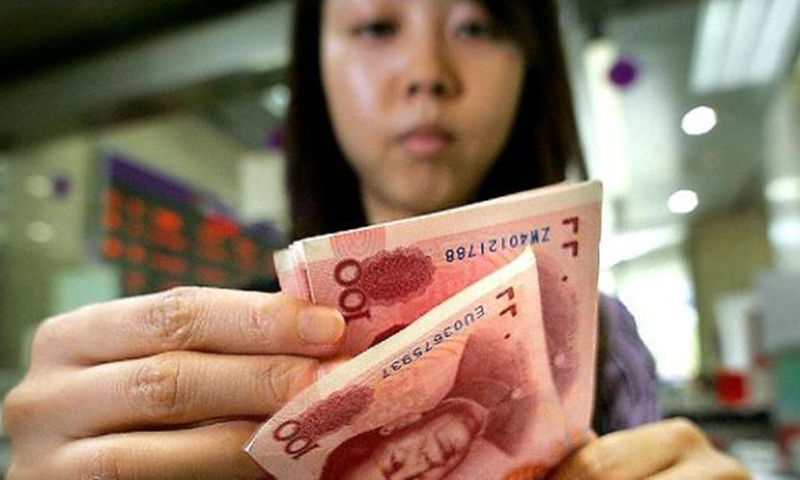
LAUNCESTON: Why does the Chinese economy remind me of Chief Inspector Jacques Clouseau?
One of the many memorable scenes featuring the late Peter Sellers as the bumbling French detective comes in the Revenge of the Pink Panther, when he disguises himself as a peg-legged Swedish sailor, complete with an inflatable rubber parrot on his shoulder.
Problem is the parrot leaks, requiring Clouseau to flap his arm to operate a pump to re-inflate the bird, which eventually pops off as too much air is put in.
The connection to the Chinese economy is that once again a set of softer-than-expected economic numbers has the market anticipating that the authorities will act to boost activity.
Like Clouseau’s parrot, every time the economy loses some air, the expectation is that it will be pumped up again and it will return to health.
The release of economic data that failed to meet expectations on Wednesday is the latest case in point.
Credit figures showed that the amount of money flowing into the Chinese economy fell to a six-year low in July, while growth in investment, retail sales and bank lending was short of the market consensus.
Property investment also slowed in the January to July period, gaining 13.7 per cent, down from 14.1pc in the first half.
New property construction dropped 12.8pc in the first seven months of 2014 from the same period last year.
The weaker numbers contrast with signs of improvement elsewhere, including a pick-up in both the official and the HSBC purchasing managers’ indices.
Other areas that don’t appear weak include vehicle sales, up 6.7pc in July from a year earlier and 8.2pc on a year-to-date basis. China posted a record trade surplus in July, with the growth in exports from the same month in 2013 at 14.5pc, almost double the market consensus, while imports dropped 1.6pc.
Given that commodities make up a large part of China’s imports, it’s worth noting that part of the decline can be traced to price declines, with volumes holding up quite well.
Iron ore imports rose 10.7pc from the previous month to the third-highest on record, but this was more likely because of a slump in prices rather than any strength in underlying demand.
The same could be said for the 16.9pc jump in soybean imports in July, with declining overseas prices improving margins for Chinese crushers, thus prompting demand.
Other major commodity imports paint a more subdued demand picture, with crude oil dropping 1.1 percent on a daily basis in July from June to the lowest since March, coal declining 8.1 percent and copper by 2.9 percent.
China’s uneven growth
It’s possible to find explanations for these softer imports if one is determined to maintain a bullish outlook.
Most likely crude imports were lower because China has for now stopped filling strategic storages, while coal is weak because hydropower generation has been strong and domestic coal miners have been cutting prices to the point where imports can’t compete.
Copper imports may have been impacted by the tightening of financing in the wake of the problems at Qingdao port, where it is alleged that multiple credit deals were secured by single cargoes. Higher global copper prices may also have been a factor.
Overall, the picture that emerges is of a Chinese economy experiencing uneven growth, with areas of strength such as vehicle and other manufacturing, contrasting with sectors of softness, such as residential construction.
Some of this is desirable, especially the easing of housing construction, but it also means that demand for some commodities is likely to be lumpy.
The main risk for China is that the authorities give into the financial markets and provide more monetary stimulus, rather than accepting that re-aligning the economy to be more service-orientated and less capital investment intensive is likely to result in uneven growth across various sectors.
Inspector Clouseau manages to re-inflate his rubber parrot three times before it blows off his shoulder on the fourth attempt.
How many times can China re-inflate its economy with cheap money?—Reuters
Published in Dawn, August 15th, 2014