0
0
JUTE comes from Malvaceae family to which cotton also belongs. It is the second most important vegetable fibre after cotton.
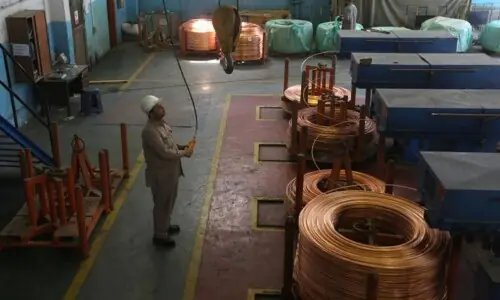
After the separation of East Pakistan in 1971, all the 12 jute mills in (West) Pakistan depend almost entirely on jute fibre imported from Bangladesh. Now efforts are being renewed to grow jute in the country to feed the local industry.
While major jute growing countries are Bangladesh, India, China, Myanmar, Nepal, Taiwan, Thailand, Vietnam, Cambodia and Brazil, over time more countries including Pakistan started cultivating this crop. But the area under jute cultivation in Pakistan is shrinking gradually. During 1980-81 the total jute area of the country was 1,323 hectares which by 1990-2000 shrank to just 22 hectares.
The reasons behind the decline may be the availability of synthetic fibre in the market on prices less than jute fibre or the non-conducive climatic condition and other factors for cost-effective production of jute.
However, concerns among people globally against the use of synthetic polymers, toxin-liberating substances and non-biodegradable products, because of their hazardous after effects on environment and human health, the consumer world over are now focusing on eco-friendly materials from sustainable resources.
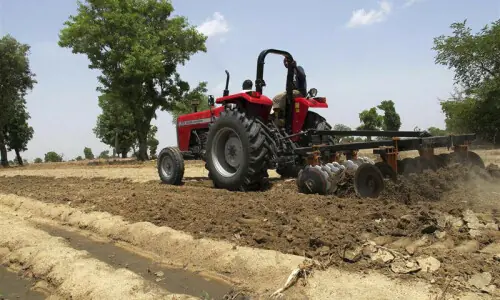
With these facts in view, the Pakistan Jute Mills Association (PJMA), in collaboration with the Ayub Agricultural Research Institute, Faisalabad, and the Punjab Agriculture Department, has launched a plan to encourage farmers in Punjab to grow jute on about 150,000 acres to keep the jute mills in Pakistan running.
According to PJMA, this venture can also save $100 million annually which the federal government has to spend on import of jute. The PJMA chairman has assured growers of buying the whole crop planted at a price better than cotton.
According to report, district officer (Agriculture) Muzaffargarh has called for setting up demonstration plots throughout Punjab to provide a chance to growers to witness for themselves the sowing of jute and its advantages for growers.
According to DDO Agriculture, jute crop is suitable for areas close to river, low lying and irrigated areas. The best period for its growing is from April to May and for seed multiplication from May 15 to June 15.
While promoting large scale cultivation of jute in the country and its sowing in different parts of Punjab it must be kept in mind that the crop encounters over two dozens of insect pests, diseases, mites and nematodes from its stages of seedlings to harvest.
Unfortunately, many pests and diseases of jute are potent pest of cotton crop as well such as field cricket, semi-loopers, army warms, mealy bug, pot borer, aphid, termites etc. and so are the diseases like stem rot, leaf spot and root knot etc.
Intensity of attack of hairy caterpillar on jute crop could be gauged from the fact that in late 1960’s the plant protection department used to arrange aerial spray to combat and eradicate the menace.
Keeping these facts in view, it is suggested that for large scale cultivation of jute an area far away from the cotton belt should be carved out. This is because the period of jute sowing in the cotton belt coincides with the cotton sowing period which will serve as an alternate host of cotton pests and may provide enough space for the development and rapid multiplication of pests lethal for cotton crop as well.
Moreover, continued shifting of pests from jute to cotton crop may also enhance the number of chemical sprays resulting in additional burden on the financially-constrained cotton growers.
The writer is an entomologist and crop pest management consultant e-mail: agriwatch@hotmail.com