0
0
Sometimes, I sit back and enjoy flashbacks of good old memories. When the Iranian monarch visited Karachi in 1950, there was a lot of excitement, anticipation and preparation to welcome him as this was the first visit by a head of state. His entire route was decorated, and the best of all was Bunder (which is now M.A. Jinnah) Road’s only roundabout where they had erected large ceremonial gates.
On the day of the visit, people started lining the long road hours earlier, the crowd swelling as the day went on. It was electrifying to finally watch his motorcade procession pass and the crowd’s spontaneous burst of ‘Zindabad’ slogans. The Shah of Iran looked regal and my exhilaration was at its highest when I caught a glimpse of him smiling and waving at the crowds.
Years later when I visited his grave in Cairo, I found it very basic. The Shah of Iran’s grave was supposedly temporary, till a befitting homeland burial. Tolstoy’s story ‘How much land does a man need?’ probably fitted well. Nonetheless, Egypt seemed to demonstrate a traditional deference to the son-in-law.
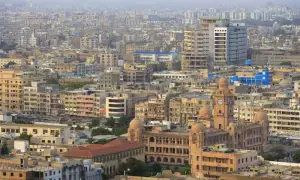
Karachi was a relatively small city those days and Bunder Road an important artery. After the Shah’s visit, they kept the roundabout attractive, adding more flower beds, lawns and an artificial hill with a water fall. This not only attracted public but vendors too.
Around that period, camp settlements for migrating refugees also emerged in the surrounding areas and eventually a bus stop was constructed at the roundabout for their convenience. This brought feeder transport of cycle rickshaws, horse buggies and services for the multitude of people passing through the newly created transport hub. Young boys would hop in and out of halted buses to buy fresh coconut slices and cotton candy.
There were push carts selling hot tea, sand roasted chick peas and simple food items to waiting commuters. For those returning home, there were fruit carts and other goodies available. A personal favourite was a vendor of reptile oil and other cure-all concoctions, narrating intriguing stories to stunned crowds, interrupting at the climax of the tale only to sell another elixir.
The neighbourhood had one notable fixture, a small public toilet from by-gone times. This proved to be grossly inadequate for growing commuters who wrote bold warnings, forbidding use of the toilet outside the toilet! But actually most people could not read.
One fine winter, an Iranian entrepreneur organised a big fair, the Lucky Irani Circus, on some grounds across the roundabout. It was an instant hit with Karachites. This was when one small incandescent light bulb to a room was the norm, while the fair was a completely new sensation with hundreds of dazzling, blinking and coloured lights. There were many attractions and pavilions for showcasing new goods and products, stuff which most people had never seen before.
From Ferris wheels and rides to artistes lip-synching and dancing to popular film songs on specially erected high stages. The ‘lady’ artists among them were actually males dressed up as women. Other attractions included dare-devil motor cyclists in the “death well” and “death sphere”, and rows and rows of food stalls with abundant smoke rising from charcoal grills. The fair being a hit, was staged again shortly and the roundabout bus stop came known as Numaish, or ‘Fair Ground’.
Karachi’s population grew rapidly from pouring refugees and migration from the interior of Pakistan. This necessitated the fair to move elsewhere to a larger area. Hence, the roundabout bus stop acquired a new name, the Purani Numaish.
Instead of demolishing the old fair facilities, they were later used as a transit Haj camp for pilgrims from upcountry who would take steamer ships from the port.
This was interesting for the locals and pilgrims alike. One could see camel carts with pilgrims sitting over sacks of grains, riding out the port.
The local economy boomed as did the Friday collection of the corner mosque. The mosque’s Imam had a special knack of inspiring the pilgrims to donate generously.
For visitors, the roundabout road and traffic were an awesome attraction along with the numerous tent offices of pilgrim guides and loudspeaker calls for them to sign up.
Times have changed. Heads of states do not visit the city and pass in parades anymore. There are no welcome arches built near the roundabout.
The pilgrims do not travel anymore by ship, so their transit camp near the roundabout has vanished.
Temporary refugee settlements have moved away, and the bus stop is no more a transport hub. What remains, is the name Purani Numaish, and good old memories.