0
0

TAWANG: At first sight, a 400-year-old Buddhist monastery, tucked deep in the Himalayas in a remote corner of India’s northeast, hardly seems like a highly coveted piece of real estate.
But Tawang Monastery, perched on a spur surrounded by clouds, is no ordinary abode for monks or nuns.
One of the last vestiges of Tibetan Mahayana Buddhism, the lamasery may hold the key to unlocking a decades-old border dispute between India and China.
China cites the lamasery as evidence that the mountainous district of Tawang, in India’s Arunachal Pradesh state, once belonged to Tibet and that New Delhi should hand it back to help settle the row.
“We don’t recognise the entire Arunachal state as being a part of India,” commented a senior Chinese diplomat, who declined to be named.
“But Tawang is particularly special. It has longstanding historic links with Tibet and it is important for us to be able to settle the border problem,” he said.
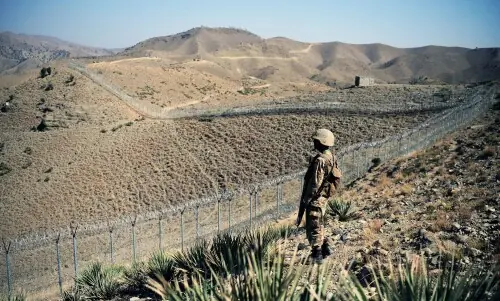
The dispute over the 3,500-km India-China border is a complex web of claims and counterclaims that has eluded solution for more than half a century and even led to a brief but brutal war in 1962.
New Delhi disputes Beijing’s rule over 38,000 sq km of barren, icy and uninhabited land on the Tibetan plateau, which China seized from India in the 1962 war.
China, for its part, claims 90,000 sq km of territory ruled by India in the eastern part of the border, mostly in Arunachal Pradesh. Within that disputed area is Tawang and its monastery.
The neighbours have held several rounds of talks since 1981 to resolve the dispute but have so far failed to make progress.
Last year, they agreed on an 11-point roadmap to settle the border row in light of booming bilateral trade and growing ties.
The proposal was seen as an attempt towards accepting the status quo and hammering out a swap whereby China would give up claims in the east in return for India’s recognition of Chinese sovereignty in the strategic Aksai Chin area in the west.
Although both sides seemed amenable to such a deal, Beijing’s demand for Tawang — and New Delhi’s refusal to part with any populated territories — has created a stumbling block.
Indian officials reject the Chinese contention that Tawang was part of Tibet. They say the people of that region chose to become part of India when British colonial rule ended in 1947.
China covets the Tawang region not just because of the picturesque lamasery but because it is seen as being key to developing the long isolated Tibetan region. The Tawang area is a source of grains, vegetables, spices and furniture.
“The PLA has written several articles recently suggesting Tawang can sustain the Tibetan economy if it becomes a part of China,” said Srikanth Kondapalli, a China expert at New Delhi’s Institute for Defence Studies and Analyses, referring to China’s People’s Liberation Army.
But Tawang residents see a hidden agenda in Beijing’s designs over their mountainous district.
Some, like Tengye Rinpoche, the Tibetan abbot of Tawang Monastery, doubt if they can continue to preserve ancient Buddhist traditions if the region comes under Chinese control.
Others like Sonam Lama, 35, a Tawang tribal and a Buddhist monk, are more strident.
“The Chinese will destroy Tawang’s character if it becomes a part of Tibet,” said Sonam, one of the dozens of monks in Tawang, conspicuous in their maroon and yellow robes.
“India respects all religions and gives freedom to practice any religion. So we should continue to remain a part of India,” he said.
Sentiments such as these should make New Delhi’s job of holding on to Tawang easy and, as Indian diplomats hope, help convince Beijing that the region should remain a part of India.
However, some locals say that if India wants to prevent any Chinese claim to the area then it should start developing the region which has a poor road network, electricity shortages, no college and high illiteracy levels.—Reuters