THE ICON INTERVIEW: THE QUIET DEPTH OF HASEEB HASAN


 0
0
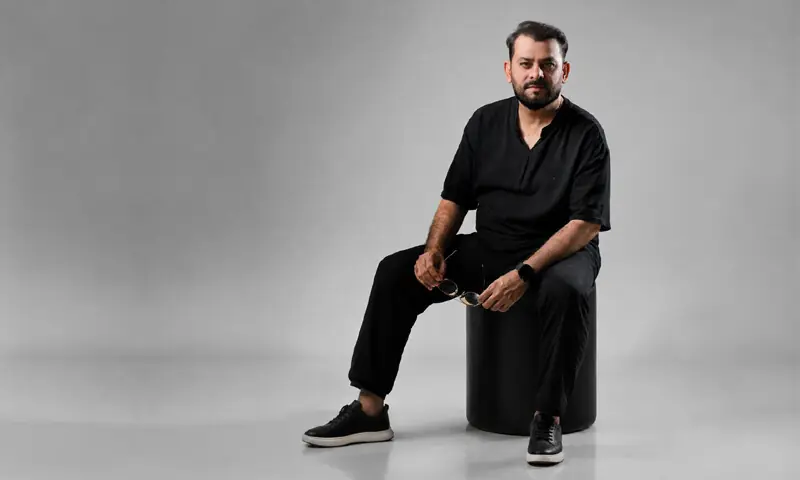

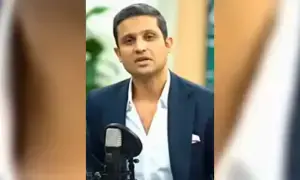
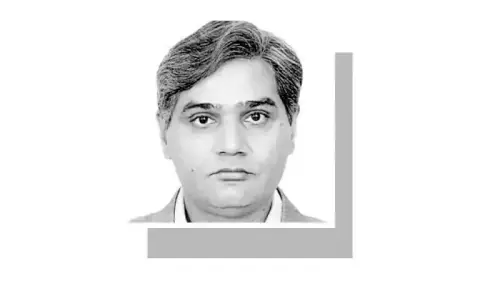
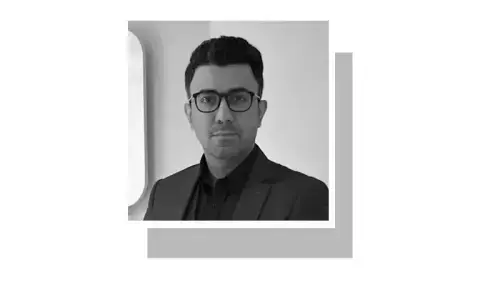
As I sit across director Haseeb Hasan, I discover a man of profound composure and keen observation. Besides his trademark thick-rimmed glasses, Haseeb’s presence is defined by a distinct sense of stability — a calm demeanour that instantly puts those around him at ease.
During our conversation, Haseeb is remarkably thoughtful; he weighs his words with a precision that mirrors the deliberate nature of his creative process. He has an inherent dignity, a quiet depth that suggests a man who does not just look at people, but truly understands them.
Over the past two decades, Haseeb has systematically built a filmography defined by visual grandeur, intense narrative pacing and ensemble casts. But his real strength has always been in the depth and nuance he brings to his characters.
Early television successes included Bol Meri Machhli (2009), Nanhi (2013) and Ahista Ahista (2014). A definitive turning point then came in 2015 with Diyar-i-Dil, a sweeping family saga filmed in the rugged terrains of Skardu, which established his signature cinematic aesthetic on the small screen.
What is holding Pakistani dramas back? Why do stories sometimes fall apart? And can the industry reclaim the realism that once defined it? The critically acclaimed TV and film director reflects on storytelling, creative collaborations, global streaming politics and the future of Pakistani visual media
Haseeb capitalised on this momentum with the mega-hit romance Mann Mayal (2016), before transitioning his grand visual style to the silver screen for his directorial film debut, the military aviation drama Parwaaz Hai Junoon (PHJ, 2018).
Returning to television, he helmed the deeply philosophical and spiritual masterpiece Alif (2019), ventured into digital streaming with the cross-border web series Dhoop Ki Deewar (2021) and challenged media ethics in Jannat Se Aagay (2023).
After that came Sunn Mere Dil (2024) with Khalil-ur-Rehman Qamar, but more on that later.
FAMILY PRIDE
Haseeb has spent over two decades operating at an unrelenting, high-octane pace in showbiz. It must affect his personal life, I muse.
“Even when production extends late into the night, my family adapts and makes profound compromises,” he admits. “Their unwavering allegiance is the backbone of my career. Frankly, without the sanctuary of one’s family, you simply cannot sustain this kind of workload.”
Although Haseeb prefers not to talk too much about his personal life, he is keen to talk about his children.
For him, artistic DNA is finding its way into the next generation, as his daughter, Eesha, who is currently enrolled in university, has inherited her father’s sharp eye for visual storytelling and is building a platform for herself as a digital blogger. Meanwhile, his school-going son, Hamdan, currently has his heart set on becoming a pilot.
For a director who constructs worlds on screen, watching his children navigate their passions is a rewarding narrative in its own right.
BORN INTO CREATIVITY
Long before his current family became his anchor, Haseeb’s creative destiny was already being shaped by the environment of his childhood home in Karachi. His neighbourhood functioned as a hub of artistic royalty.
The legendary playwright Haseena Moin lived just down the street while maestro composer Nisar Bazmi lived a lane away. However, it was radio, TV and stage artist Shahida Moin who acted as a definitive catalyst, by taking him to the sets of music composer Sohail Rana’s show Sung Sung Chalain.
“I participated in a couple of episodes,” Haseeb recalls. “When I returned from the studio, the imagery of the set completely consumed my mind. I fantasised about it and immediately began designing a replica of the set at home, using old shoeboxes and handmade cut-outs.
“I feel like that was the exact moment creative instincts really began to develop in me.”
FINDING HIS CALLING
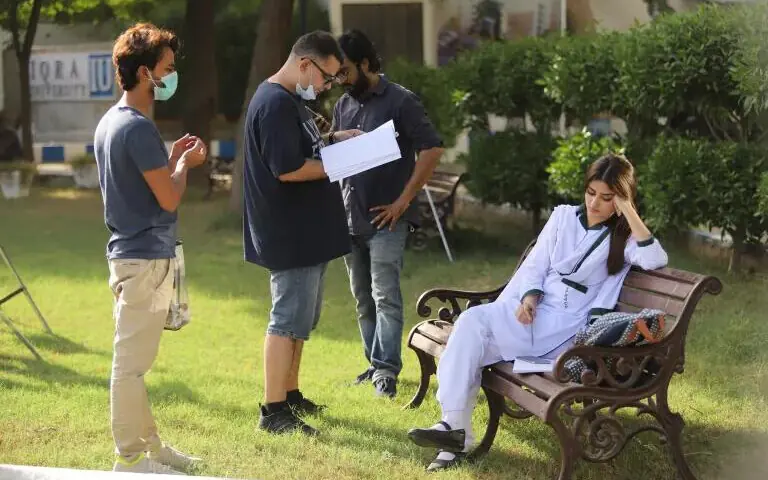
Initially a pre-medical student, Haseeb switched to Mass Communications in 1995 after realising medicine wasn’t for him. An internship introduced him to television production and changed the course of his career.
“Sometimes, formal studies don’t shape your future as much as hands-on experience does,” opines Haseeb. “I managed to land an internship at Eveready Studios in Karachi. Interestingly, many top directors dominating the industry today were fellow interns there. Diving into a few projects blindly, I learned the ropes from the ground up. The best career paths are often the ones we stumble upon by accident.”
That calling manifested remarkably fast. Haseeb stepped into the director’s chair as a 19-year-old, helming his first long play, Apnay Paraaye, in 1997. And as the media landscape evolved, so did Haseeb.
He started out with traditional networks such as PTV and NTM, then rode the wave of private channels in the mid-2000s. As his filmography shows, the rest was a rather remarkable history and professional trajectory. Which brings us back to Sunn Mere Dil (SMD) in 2024.
CREATIVE FRICTION
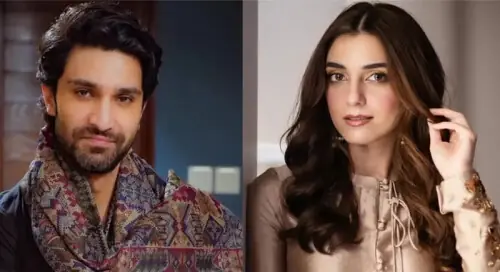
In SMD, Haseeb opted for his signature slow-burn pace, giving the heavy dialogues room to breathe, while capturing the deep, psychological weight of the characters’ emotional arcs. To bring this intense vision to life, he guided an ensemble cast led by Wahaj Ali and Maya Ali.
However, helming a project penned by Khalil-ur-Rehman Qamar brought a unique set of creative challenges, particularly when navigating complex character philosophies and the creative friction between the writer and director.
“The real issue was sensitivity and gender representation,” Haseeb states. “You cannot show either gender as entirely wrong. Both have flaws, both are grey. In my opinion, it is wrong to portray a woman in a purely negative light. While that approach might have worked in some of Khalil-ur Rehman Qamar’s previous projects, it didn’t work here.”
He adds, “The content, the underlying philosophy and even the beautiful dialogues were dismissed. Instead, audiences spoke out, saying the narrative felt wrong and unrealistic because it was so deeply biased and relentlessly negative. They wanted authenticity, not forced negativity.
“For example, if a girl is trying to save her brother’s life, she would still not compromise her self-respect just like that. However, in the script, her character repeatedly states that she is ready to do anything.”
Haseeb believes that drama requires fluid collaboration and scriptwriting is an inherently iterative process that improves through teamwork and revision. In his experience, every writer has flaws in the initial draft. The typical process worldwide involves a first draft, a second draft and so on and then a final draft, with the material consistently improving through revisions.
“Khalil sahib considers his scripts to be absolutely sacred and untouchable,” he asserts. “Though he is very friendly socially and a legendary writer — I am a huge fan of his work — that approach does not work today.
“When a script comes to me and there is a situational development or a thematic direction I disagree with, I should have the creative liberty to modify it for the betterment of the project. Sadly, Khalil sahib does not allow collaboration. He needs to realise that he must rethink his characters’ development and themes to align with technical and other requirements.”
He continues: “When a writer is unyielding, it leaves the director in a challenging position regarding creative execution. Writers must evolve alongside their life experiences and changing societal dynamics. The world has shifted, and our industry lags behind when we refuse to adapt. A script should not be treated as an untouchable sacred entity because the medium itself continues to evolve.”
Haseeb’s emphasis on collaboration is matched by a reputation for meticulous preparation on sets. Colleagues describe him as a director who arrives with a clear visual plan and expects the same level of commitment from everyone around him.
Punctuality is non-negotiable, and Haseeb remains closely involved throughout the shoot, working with actors on the emotional nuances of each scene while ensuring every frame aligns with his vision.
His exacting standards are demanding, but they reflect the expectations he places on himself as much as on his cast and crew.
THE LOST ART OF BREVITY
Recalling the era when PTV held the monopoly, Haseeb reflects on his early career.
“In those days, there was continuous communication between actors, directors and writers,” Haseeb recalls of earlier days. “We used to sit together, laughing and building the story. Back then, a standard serial was 13 episodes. Because the runtime was tight, every single episode was deeply connected to our collective energy.”
This focus on brevity is precisely what improved the quality of dramas, he feels. Today’s landscape, dominated by extended runs and commercial padding, presents a very different reality.
“I strongly believe we need to return to the 13-episode pattern. That is where you see the true quality of television,” he asserts. “Today, if a story is stretched to 50 episodes, it gets ruined.
“I understand that channels prefer longer dramas for revenue. But, from a storytelling perspective, 13 to 15 episodes should be the absolute maximum. When a project drags, the narrative stretches so thin that the bridge between the story and its execution completely collapses.”
OF CINEMA AND TV
Despite a prolific career that includes delivering the box office hit PHJ, Haseeb’s trysts with cinema remain selective. For many in the industry, his hesitation to make a permanent leap into films is a point of curiosity — but for him, it is a calculated balance of financial pragmatism and creative control.
“Back in 2018-19, directing a film could take a year-and-a-half of your life,” Haseeb explains. “From a practical standpoint, it was better to do a high-quality TV serial in six months. It allowed you to sustain your household and keep your tools sharp. Film requires massive investment and, more importantly, a level of team readiness that our industry often lacks.”
This intersection of cinematic scale and narrative pragmatism is best illustrated by his forthcoming project: a biopic of Captain Asfandyar Bukhari Shaheed, the brave young soldier who embraced martyrdom at the age of 27 during a terrorist attack on Pakistan Air Force’s Camp Badaber in Peshawar in 2015.
Originally conceived and shot with heavy action sequences and the scale of an ISPR-backed movie, the project underwent a strategic format shift during post-production. Instead of a traditional theatrical release, Haseeb made a viewer-centric decision to pivot the project into a three-episode special for Geo TV.
“The pacing is tighter as a three-episode series, and it’s a better viewing experience,” he says.
The commitment to raw authenticity also heavily dictated the project’s casting choices. When structuring a project of this magnitude, the natural industry inclination is to pursue bankable names. Haseeb admits he briefly considered megastar Fawad Khan for the lead role before choosing Ali Ammar, believing the relatively new actor better matched the youthfulness and authenticity the role demanded.
“I realised that believability was more important than stardom,” he reasons. “When the audience sees Ali Ammar in uniform, they see a soldier, not an actor. That creates a much deeper connection than seeing a famous hero who has already appeared in multiple dramas.
“Ali is a great emerging talent who surprised me with his drastic screen transformation, shifting his naturally gentle persona into the gritty, battle-hardened demeanour required of a military commander.”
The production was a logistical sprint, packing 120 minutes of intense, movie-grade content into a gruelling 25-day shooting schedule.
WHAT’S NEXT?
While Haseeb keeps the specific titles of his forthcoming projects under wraps for the most part, until his production partners officially announce them, these projects promise a massive expansion of narrative scope and geographical reach.
For one of his next projects, he is collaborating with celebrated playwright Umera Ahmad on a serial titled Rutba. The cast includes Mehwish Hayat, Hiba Bukhari and Zahid Ahmed.
Rumours have also been swirling about a potential sequel to Alif, and I press him for details.
“To be honest, I can’t reveal too much right now because I am not directly involved in the writing or production stages,” Haseeb clarifies. However, he does add: “What I can tell you is that the crew is actively being assembled for next year.”
The burning question, of course, is who will return to the screen. For fans hoping for a complete reunion of the original lead pair, Haseeb delivers a reality check, tempered with a glimmer of hope.
“The original line-up won’t remain entirely the same. It is highly unlikely that both Sajal Aly and Hamza Ali Abbasi will return. However,” he adds with a cryptic smile, “we might still see Sajal involved in some capacity.”
POLITICS OVER PLATFORMS
Our conversation turns to global streaming platforms — a space where Pakistani talent has faced persistent, systemic barriers. According to Haseeb, the roadblock is entirely political.
“It boils down to geopolitics,” Haseeb says. “When platforms such as Zee5 first entered the market, there was initial panic among local producers, because foreign platforms were bypassing traditional channels and hiring our top directors directly. But the real blow came when the political situation worsened between Pakistan and India.”
He points out a complex industry reality: while global platforms operate internationally, their regional content decisions are heavily interconnected. “The decision-makers for these platforms — even those based in hubs such as Singapore or Dubai — are often our Indian colleagues and friends. But when the political directive from the top dictates that they should not work with Pakistan, their hands are tied.
“Why would a platform risk its massive Indian market for a Pakistani original? Many projects are not moving forward, entirely due to politics,” Haseeb says flatly.
Reflecting on the global journey of the Zee5-commissioned Dhoop Ki Deewar (DKD) — which dealt precisely with the Indo-Pak conflict through the friendship forged between a Pakistani and an Indian over the loss of their parents — Haseeb laments the local hurdles the project faced and calls on authorities to understand the content before jumping to conclusions.
“In Pakistan, everything becomes a hyper-fixated trend within days, and this knee-jerk reaction happens to a lot of genuinely good projects,” the director says, emphasising the immense heart, soul and hard work poured into DKD by the entire team, including lead actors Sajal Aly and Ahad Raza Mir.
Despite the local backlash, Haseeb finds solace in the show’s massive international success. “Internationally, the global media considers DKD as my definitive project and, for that, I am incredibly grateful.”
Despite the challenges of an evolving television industry, shrinking creative freedom and geopolitical barriers, Haseeb remains convinced that the future of Pakistani storytelling lies not in bigger budgets or longer serials, but in stronger scripts, meaningful collaborations and emotional honesty.
He recalls being told by a cross-border team, “We have the technique, we have the technology in India — but we come to you for the soul.”
“Our stories have a heartbeat,” he reflects.
Clearly, for Haseeb Hasan, preserving that heartbeat is what matters most.
The writer is a freelance contributor with over two decades of experience in entertainment. He can be reached at asifkhan.media@yahoo.com
Published in Dawn, ICON, July 19th, 2026