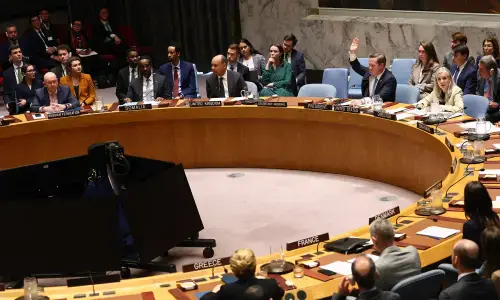
WASHINGTON: The United Nations Security Council is set to vote on a Bahrain-drafted resolution on the Strait of Hormuz on Tuesday, just hours before US President Donald Trump’s self-imposed deadline for Iran to reopen the strategic waterway.
The resolution, drafted by Bahrain in coordination with the Gulf Cooperation Council (GCC) and Jordan, strongly encourages states using commercial routes in the Strait to coordinate defensive measures to ensure safe navigation, including escorting merchant vessels. It demands that Iran immediately cease attacks on commercial ships and civilian infrastructure, including oil, gas, and water installations.
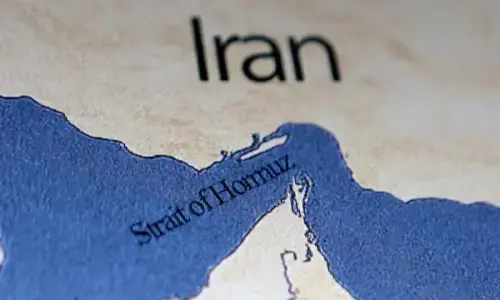
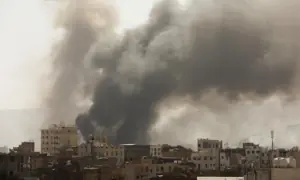
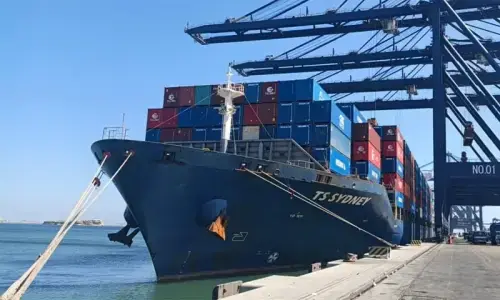
The Strait of Hormuz, a vital corridor for roughly 20 per cent of global oil consumption and a quarter of maritime-traded oil, has seen rising tensions since US-Israeli strikes on Iranian targets on February 28. Iran retaliated against Israel and Gulf states hosting US military bases, including reported attacks on commercial vessels and the deployment of naval mines.
While Tehran has allowed selective passage for ships it considers “non-hostile,” disruptions have raised international concern.
The US and Israel have targeted Iranian maritime assets, inflicting significant damage. President Trump has called for a multinational naval coalition to secure the Strait, while many allied nations, including France, Germany, Japan, and the UK, have taken a cautious approach. France is exploring a possible international mission, and the UK hosted talks with 40 countries to form a coalition for safe passage.
Negotiations on the draft resolution were contentious. Early versions included language under Chapter VII of the UN Charter, potentially authorising the use of force, but objections from China, Russia, and some European members led to its removal.
The current text encourages defensive coordination “commensurate with the circumstances,” respects international law, and introduces a reporting requirement. It requests the UN Secretary-General to submit a written report to the Security Council within seven days of adoption, and every 30 days thereafter, detailing any further attacks and provocations on merchant and commercial vessels by Iran in and around the Strait of Hormuz, including those that undermine navigational rights and freedoms.
The resolution requires at least nine affirmative votes and no veto from any permanent member to pass. China and Russia have warned that the text could implicitly legitimise force, while France and the UK have pushed for a strictly defensive scope.
Analysts say the resolution carries both practical and symbolic weight. Militarily, most GCC states depend on US support to secure the Strait. Politically, placing the dispute before the Security Council internationalises the crisis and pressures Tehran.
Continued disruption of the waterway could push up global energy prices and threaten commercial shipping, including the supply of liquefied natural gas to Asia and Europe.
Tuesday’s vote, occurring just hours before President Trump’s ultimatum expires, highlights the high stakes and global attention on the Strait of Hormuz.