0
0
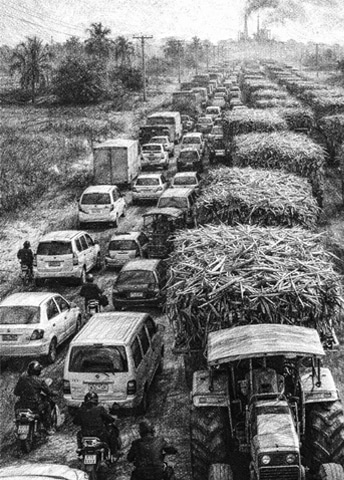
THIS is with reference to the letter ‘Moving coffins’ (Feb 5), which talked about an accident in which seven people from Lahore lost their lives when their car collided with a tractor-trolley dangerously parked on the roadside. Things in Sindh are not much different. Heavy traffic related to sugar mills along Sindh’s highways and busy roads has become a serious road safety issue that requires urgent administrative attention.
These highways are designed for fast-moving traffic with speed limits of around 100km per hour. However, during the crushing season, thousands of slow-moving and often overloaded tractor-trolleys, trucks and even animal carts carrying sugarcane use the same roads. The problem worsens near sugar mills where these vehicles remain parked along the highway tracks for hours and sometimes for days while waiting for unloading. This effectively turns high-speed corridors into bottlenecks, causing traffic congestion, dangerous overtaking and frequent accidents.
A recent tragic incident near Phul on the Misrwah Road highlighted the risk when a loaded sugarcane trolley overturned onto a passing rickshaw. A 70-year-old passenger lost his life, while others narrowly survived. Such incidents are not isolated; they are a predictable outcome of poor traffic planning around industrial units.
From a regulatory and safety standpoint, sugar mills should be required to develop dedicated metalled link roads and off-highway holding areas for cane-carrying vehicles instead of allowing direct queuing on highways. Funds collected under sugar cess and related levies can reasonably be used to build these roads and parking bays. Relevant highway authorities and traffic police should also enforce strict and effective no parking rules on main carriageways during the crushing season.
Dr Abdul Qadeer Memon
Naushahro Feroze
Published in Dawn, March 5th, 2026