Pakistan embassy in US hosts interfaith Iftar; guests express concern about regional tensions
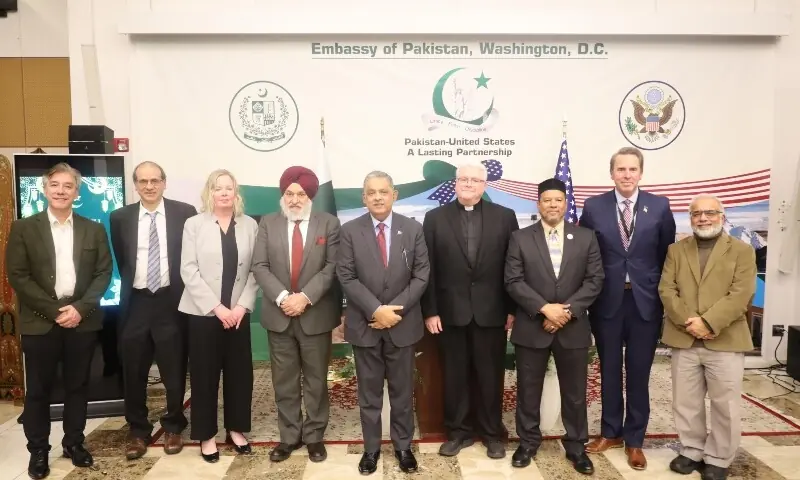
WASHINGTON: From the podium, the Pakistan Embassy’s interfaith iftar on Thursday shimmered with harmony. In the corridors, it whispered of unease.
Beneath the chandeliers, faith leaders spoke of shared ancestry, moral responsibility, and humility. Once the microphones were silenced and tea poured, conversations drifted — almost inevitably — to the simmering tensions between Pakistan and the Afghan Taliban.
The conflict never entered the formal remarks. Yet it hovered over nearly every private exchange. Officially, the evening was serene.
“I may be a son of Jacob and born in the house of Abraham,” said Daniel Spiro, President of the Jewish Islamic Dialogue Society. “When we take interfaith seriously, we come to realise that we can disagree without being disagreeable.”
Rejecting what he described as the “kumbaya” stereotype of interfaith engagement, Spiro added: “My organisation is not like that. When done right, it becomes a village of friends under God. Differences offer opportunities to grow.”
Dr Alok Shrivastav, representing the American Hindu Coalition and United Hindu Jain Temples of the DMV, highlighted Pakistan’s spiritual and civilisational significance. “Our rituals may vary, but we are all called to protect the weak. Diversity is not a threat,” he said, expressing hope that Hindus and Jains from across the globe would increasingly be able to visit Pakistan’s sacred sites. “When we gather with open hearts, we reflect the best of our faiths.”
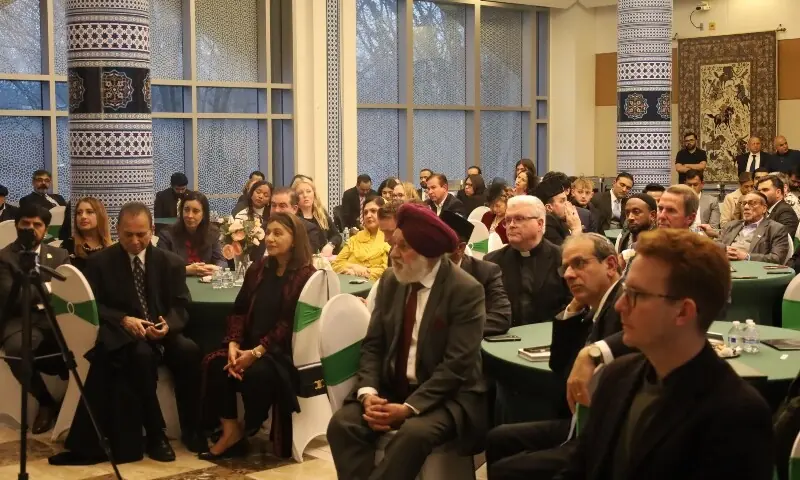
Quoting Sikh scripture, Surinder Singh Gill, Director of Sikhs of USA, said: “Aval Allah noor upaya… kaun bhale ko mande.” He explained that Sikh teaching calls for the welfare of all — sarbat da bhala — and aligns beautifully with the Holy Quran’s teachings of justice. “Faith is not a source of division but a bridge of peace,” he said. “When leaders of different countries stand together, we weaken the force of hatred.”
Father Dan Rooney, Director of the Office of Ecumenical and Interreligious Affairs for the Catholic Diocese of Arlington, reflected on the symbolism of such an evening in a divided world. “The world is watching us. When they look around, they see division,” he said. “It is necessary for us to realise what makes us brothers and sisters. What is it that makes us the same?”
Imam Talib M. Shareef, President and Imam of Masjid Muhammad — the Nation’s Mosque, regarded as the oldest in the region — described Ramazan as “a season of awakening.” Citing the Quranic phrase ‘min qablikum’, he reminded attendees that fasting is part of a shared Abrahamic heritage.
“Before Ramazan ever came to us, it came to Adam. His test was consciousness, not appetite,” he said. Fasting, he added, turns believers to shared roots and strengthens interfaith harmony “not just at tables but in neighbourhoods.”
Adding a Japanese Buddhist perspective, Daisaku Leslie, Director of Soka Gakkai International USA, spoke of the interfaith iftar as a moment to reflect on the dignity of every human being. “Peace begins when people recognise each other’s humanity. Dialogue is a living practice, not just a ceremony,” he said.
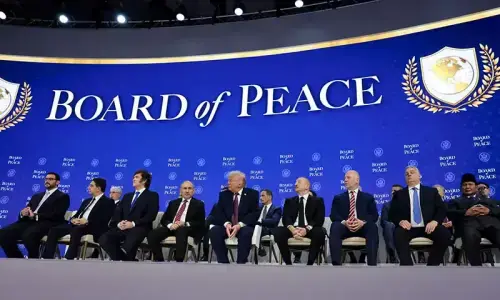
From the US State Department, Nicole Chulick, Principal Deputy Assistant Secretary, emphasised that Pakistan’s engagement remains globally important. “Pakistan’s engagement demonstrates the important role it can play in promoting peace, not just in its own region but globally,” she said, noting appreciation for Pakistan’s participation in initiatives such as the Board of Peace (BoP). “We have a common goal of keeping our people safe,” she added.
Mark Walker, Principal Adviser on Global Religious Freedom, highlighted that religious freedom strengthens society. “When people of different belief systems choose unity over suspicion, communities grow stronger. That kind of unity sends a powerful message and represents the solution the world needs today,” he said. He added that iftar is a communal tradition that transcends religious observance, drawing people closer across faith lines.
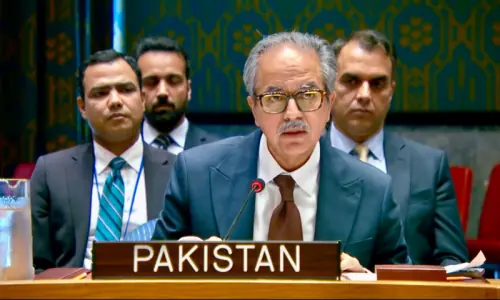
Concluding the evening, Ambassador Rizwan Saeed Sheikh urged the audience to move beyond “tolerance” towards “acceptance.” Invoking Pakistan’s Indus Valley heritage and recalling Quaid-i-Azam Muhammad Ali Jinnah’s assurance — “You are free…” — he described Pakistan as a custodian of multiple faith traditions and reaffirmed its efforts to counter religious hatred internationally.
“Acceptance acknowledges our differences while affirming equal human rights for all. I am different, you are different, yet we share the same dignity and rights as human beings,” he said. Highlighting Pakistan’s role at the UN Human Rights Council, he emphasised the country’s commitment to promoting interfaith harmony, tolerance, and freedom of religion.
“Ramazan is not just a month of spiritual significance or physical patience,” he said. “It is also about cleansing — abstaining from what the human element within us does not want to be restrained.”
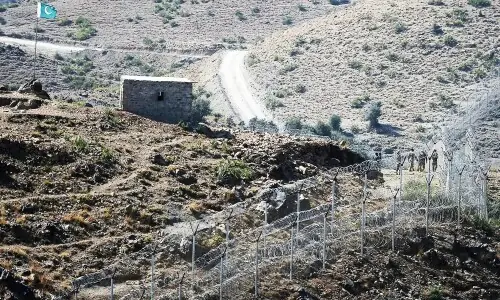
Away from the microphones, the tone shifted. American, Turkish, Southeast Asian, and European guests quietly raised concerns about the deteriorating situation along Pakistan’s western border. One Pakistani American attendee observed: “We hope cooler heads prevail.”
Others spoke of the risks of escalation and miscalculation, noting that instability between neighbours resonates far beyond the region. The conversations were measured but persistent.
The interfaith iftar achieved its purpose — projecting civility, shared values, and unity. Yet the murmurs beneath the harmony revealed a deeper truth: even in spaces devoted to peace, the anxieties of war travel with the guests.
The war was absent from the speeches. It was present in the conversations. And perhaps that quiet duality captured the evening most honestly.