Tackling rapid population growth has never been a govt priority: experts


 0
0

ISLAMABAD: Experts at the concluding session of the Population Summit on Tuesday said rampant population growth has remained a least priority issue of successive governments as they always focused on their own projection and opposition bashing.
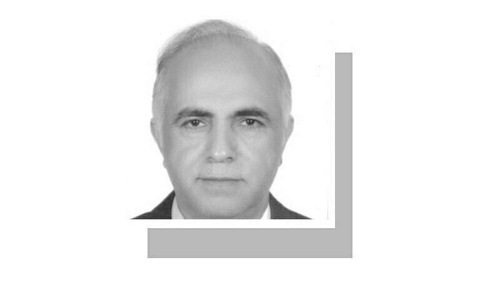
Former information and culture minister Mushahid Hussain Sayed, in his keynote address, said governments usually followed three Ps: politics, patronage and propaganda, ignoring major issues and brunt their energies on opposition bashing. In this context, the role of information ministries has almost changed, he added.
“We have to reset our national policies and focus on health, education, jobs, climate change and population,” he said, adding all political forces have to sit together for better Pakistan.
He also drew attention to the issue of “cousin marriages” as a cause for child stunting.
Serious flaws pointed out in national policies, including allocation of funds under NFC Award n basis of population
“There is one important reason that has been missed out of our narrative on stunting, and it is cultural - first-cousin marriages. They are a major cause of stunting according to medical sciences, and I think that needs to be incorporated,” the former senator added.
The concluding session of the Population Summit organised by DawnMedia brought together politicians, economists, development specialists, private sector leaders and experts who joined their heads to develop a shared vision as rapid population growth continues to place pressure on health systems, food and water security, and employment.
Senior journalist and DawnNews anchor Arifa Noor said there was “no space for important issues” amid the polarised political environment.
“What have the information ministries been reduced to? […] They’ve become personal of the political parties […] that’s still some virtue, but now they’re personal spokesperson for individuals more or less.”
She also raised concern over “feel-good legislation” that was passed by the parliament without considering how it would be implemented.
She also raised a serious flaw in policies governments announced as the National Finance Commission (NFC) award was given on the basis of population - the province having higher number of people will get more funds.
Ms Arifa was also of the view that the government could not focus on public issues unless it managed to resolve political crisis in the country.
Punjab Information Minister Azma Bokhari, in a video message for the summit, termed population growth the country’s “biggest problem”.
“Growing population is not just a problem for one province or an individual, it is a challenge for the entire country,” Ms Bokhari said.
“As the population increases, you have to adjust your resources as well, make changes to infrastructure and make efforts to create basic facilities for the growing population.”
“I would like to say that population growth is Pakistan’s biggest challenge at the moment,” she added.
The minister underscored the need to follow the paths outlined by fellow Muslim nations in tackling population growth.
Adviser to the chief minister of Khyber Pakhtunkhwa (KP) Shafiullah Jan highlighted the financial challenges faced by his provincial government.
He lamented that the Centre did not give due share of KP in NFC, saying it has to pay over Rs3500 billion to the province under NFC and allocations announced for the merger of erstwhile Fata and terrorism fund.
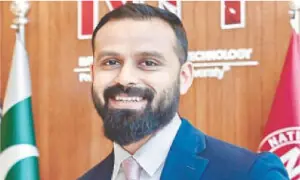
The prime minister’s spokesperson for foreign media, Mosharraf Zaidi, stressed the need for a “national movement” in tackling the population growth.
“On population, you need a national movement, and for that to happen, the conversation around the 26th, 27th, 28th, 29th and 30th amendments has to be treated with a view to the outcomes that we want for people.”
On the matter of NFC and population, Mr Zaidi said: “We need to revisit how we allocate resources in the country, and if it’s only on the basis of population, then I think we are in big trouble, but it cannot be at all on the basis of population either.”
“Figuring that balance out will require give and take,” he added.
Published in Dawn, December 3rd, 2025