• Officials urge public vigilance in World AIDS Day message
• Say Quetta remains epicentre as 707 women, 90 transgender persons, 2,362 men in province living with virus

QUETTA: The number of registered AIDS patients in Balochistan has reached 3,303, including 707 women and 90 transgender persons with 452 deaths reported in the province over the past year, senior health officials said on Sunday.
Speaking at a press conference at the Quetta Press Club ahead of World AIDS Day 2025, which carries the theme “Overcoming Stagnation and Transforming the AIDS Response” and is observed globally on Dec 1 (today), Director of Health Services Balochistan Dr Hashim Mengal, alongside Dr Sehrin Noshirwani, the provincial coordinator of the AIDS Control Programme, called for increased public awareness.
The officials noted while the case numbers are climbing, the data indicates improved surveillance, the number of registered patients rose from 2,851 in 2024 to 3,303 in 2025 — an increase of 452 registrations per year.
It is encouraging that more patients are coming forward for testing and registration, the officials said.
Male patients accounted for majority of the increase from 2,075 to 2362, while female patients increased from 600 to 707.
Quetta recorded the highest count of cases with 2,164 cases, including 90 transgender person. Other affected districts include Turbat with 368 cases, Hub with 158, Naseerabad with 66 and Loralai with 96 registered patients.
Mengal and Noshirwani identified drug-injecting users as having the highest HIV prevalence, followed by men who have sex with men and transgender persons.
They said the virus, which weakens the immune system and destroys the body’s defence mechanisms, spreads primarily through three routes: unprotected sexual contact; mother-to-child transmission; and blood exposure via untested transfusions, shared syringes or unsterilised surgical, dental and barber instruments.
The officials attributed the rising number of cases largely to a lack of public awareness.
To combat the spread, the Balochistan Health Department has established AIDS therapy centres in Quetta, Turbat and four other districts, offering free treatment and screening facilities in government hospitals. Officials said the programme conducts awareness activities year-round.
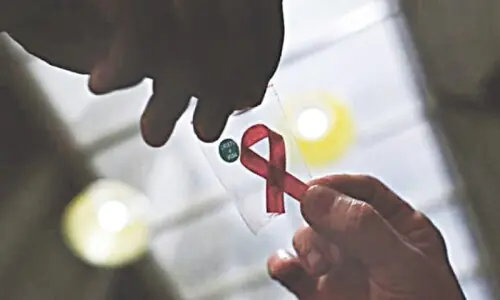
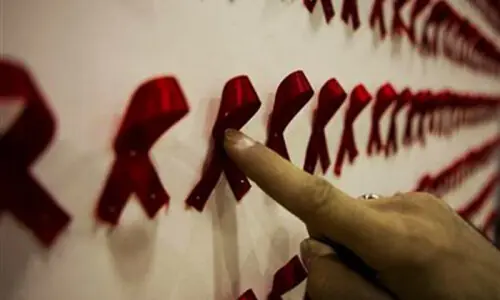
“The red ribbon is a global symbol of solidarity with those living with HIV/AIDS,” the officials said, emphasising the need for collective efforts to free Balochistan from the disease.
Also in attendance were Dr Khudaidad Osmani, Dr Ehsanullah and Muhammad Khan Zehri.
Published in Dawn, December 1st, 2025