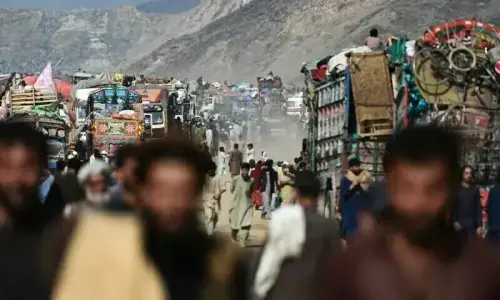
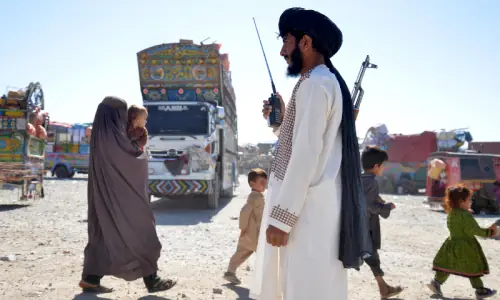
THE government’s decision to shut down all Afghan refugee camps and deny any further extension for their stay marks a new phase in a complex and painful chapter of Pakistan’s history.
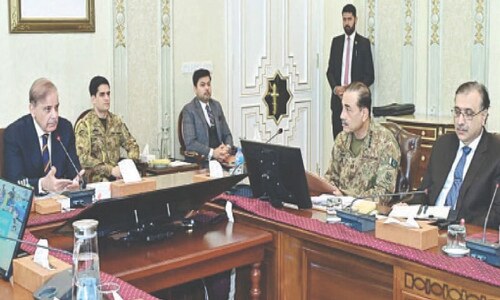
Prime Minister Shehbaz Sharif’s directive for the “dignified repatriation” of Afghan nationals — with more exit points to be established along the border — underscores Islamabad’s desire to address economic and security pressures.
Yet, this moment also demands empathy, restraint and a humane approach that matches the spirit of generosity Pakistan has displayed for over four decades. Since 1979, Pakistan has hosted one of the world’s largest refugee populations — at times sheltering more than 3m Afghans — despite its own economic hardships and political turmoil.
This act of hospitality has earned the country considerable goodwill and global respect. But the current policy, which explicitly links repatriation to Kabul’s failure to curb cross-border militancy, risks blurring the line between legitimate security concerns and humanitarian obligations. Refugees cannot be treated as extensions of a government from which many have fled in fear or desperation.
The Taliban’s return to power in 2021 prompted a new wave of displacement, with many Afghans escaping persecution, repression, and poverty. For such individuals, forced or abrupt repatriation could mean exposure to grave danger and renewed trauma.
The prime minister has rightly spoken of ensuring a “dignified and humane” process, with care for women, children, minorities and the elderly. But ensuring that this comes into practice requires international oversight, logistical support, and close coordination with the UNHCR, aid partners, and humanitarian agencies to ensure that returnees have safety, shelter, and viable livelihood options on arrival.
There is also a practical dimension. Many Afghans — some born and raised entirely in Pakistan — have integrated into local communities, contributing to labour markets, small businesses, education, and cultural life. Displacement for them is not a return but an uprooting that will reshape countless lives and neighbourhoods. A more nuanced approach is needed: those with legal status or deep social ties should be offered regularisation pathways, while repatriation for others must proceed when conditions across the border are stable and safe.
Pakistan’s frustration with Kabul over security issues is understandable, but refugee policy must not become an instrument of political signalling or retaliation. Instead, Islamabad should frame its approach as part of a larger humanitarian effort, seeking global funding and cooperation for reintegration programmes.
The world owes Pakistan support for shouldering this burden for so long. That support must now translate into meaningful aid, sustained diplomatic engagement, and a shared commitment to justice, dignity, and long-term stability. As the government proceeds, it must ensure that compassion remains its guiding principle. Dignity in repatriation cannot exist without humanity in intent.
Published in Dawn, October 19th, 2025