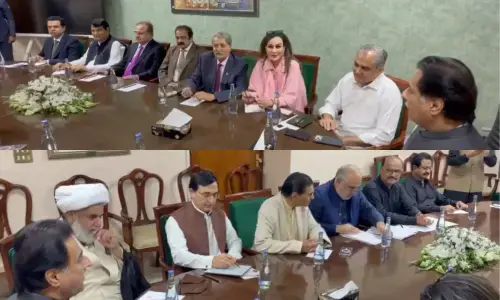
DHAKA: Bangladesh’s most influential political parties signed a “July Charter” on Friday, intending to promote democratic reforms after the upcoming elections, yet the event was marred by street violence and the absence of a key group due to their boycott.
The charter seeks to reshape the country’s politics and institutions and give constitutional recognition to the 2024 uprising that forced Sheikh Hasina, a long-time prime minister, to flee to India. Since then, the South Asian country of 170 million has been in political turmoil.
Nobel Peace laureate Muhammad Yunus, the head of Bangladesh’s interim government, has championed the document as his legacy, saying he inherited a “completely broken down” system and that reforms are needed to prevent a return to authoritarian rule.
“This is the moment we are ushering in a new Bangladesh,” Yunus, 85, told the ceremony, held in front of parliament in Dhaka. “We have been reborn.”
The document, dubbed the “July Charter” after last year’s uprising, has sparked intense arguments between parties jostling for power ahead of polls slated for February.
Yunus, who has pledged to step down after elections, says it will strengthen checks and balances between the executive, judicial and legislative branches. It includes proposals for a two-term limit for prime ministers and expanded presidential powers and aims to enshrine the recognition of Bangladesh as a multi-ethnic and multi-religious nation.
However, the National Citizens Party, formed by the leaders of last year’s movement and four left-leaning parties, did not attend, saying it stayed away due to the lack of a legal framework or binding guarantee for implementing the commitments made in the charter.
“The signing of the July Charter by a few political parties does not constitute national unity,” NCP convener Nahid Islam said.
Published in Dawn, October 18th, 2025