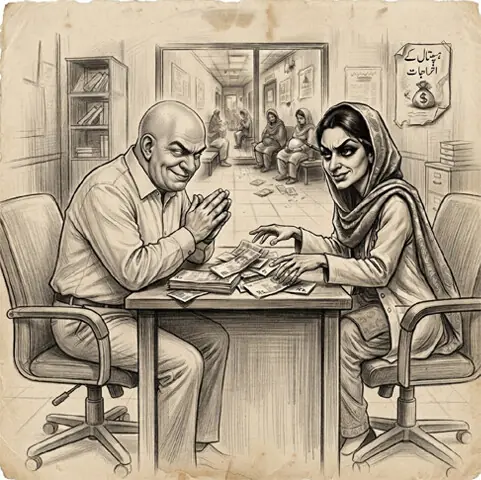
THE Benazir Income Support Programme (BISP) often attracts the anti-corruption spotlight because of alleged misuse of billions of rupees intended for underpr-ivileged and needy women. Established in 2008, the BISP is Pakistan’s most significant social support initiative. It was designed to empower women of low-income groups to meet their household needs. Presently, 9.9 million beneficiaries are being supported under the programme, with Rs716 billion having been allocated for it during the current financial year.
In a country like Pakistan where poverty level stands around 45 per cent, any allegation of misuse of funds intended as targeted subsidies to the poorest of the poor is a matter of grave concern. In order to make BISP a useful tool to support the vulnerable segment of society, a transparent system for the selection of beneficiaries, proper checks regarding their eligibility, error-free digital verification, strict monitoring, introduction of a grievance redressal mechanism, accountability measures, and deletion of ineligible beneficiaries are needed. Besides, the role of middlemen working as agents must be rooted out.
An essential component of the programme requires in-depth studies to ascertain the impact on the lives of the beneficiaries who have been recipients of the grant for the last at least 10 years. The most important aspect is that continuous cash transfers have fostered a culture of dependence rather than self-reliance among the masses. Some thought should be given to this aspect of the scheme as well.
Shams Jafrani
Karachi
Published in Dawn, October 14th, 2025