Pakistan’s investment climate is primarily dominated by mining, tourism or energy ventures, mostly under the China-Pakistan Economic Corridor (CPEC). However, hidden right under our noses, in the livestock sector, lies an unexpected opportunity that has caught the attention of policymakers, Chinese investors, and entrepreneurs alike: donkey farming.
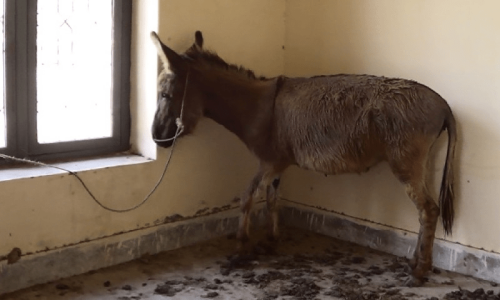
Once viewed only as a beast of burden, the donkey today stands at the centre of a growing international market. This shift is driven largely by Chinese demand for donkey hides, used in producing ‘ejiao’, a traditional medicine believed to carry health benefits. For Pakistan, which has around 5.9 million working donkeys, this presents an unconventional but potentially lucrative economic avenue.
Until recently, the idea of developing a formal donkey industry in Pakistan would have been unimaginable. In 2015, the Economic Coordination Council imposed a ban on donkey hide exports after revelations that donkey meat was being sold as beef and mutton in local markets. That policy, however, has now been reversed.
The government has authorised the resumption of donkey hide exports, albeit under strict conditions. A notification dated October 02, 2025, amended the Export Policy Order to allow exports only through designated slaughterhouses in the Gwadar Free Zone (GFZ). By restricting exports to a regulated zone, the authorities aim to balance oversight with economic and investment opportunity.
The blooming industry could become an unexpected contributor to export diversification, rural incomes, and stronger economic ties with China
Chinese interest in this sector is not speculative. Last month, the China-Pakistan Donkey Industry Development Forum was held in Islamabad under the theme of ‘Creating Opportunities Together, Winning the Future Together’.
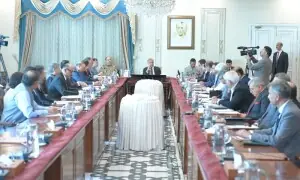
The event drew many participants, including government officials, scholars, and businessmen from both countries. Several agreements were signed, including a Letter of Intent between the Pakistan Agricultural Research Council and Sangyang Industrial; the company has already outlined plans to introduce a contract farming model for the development of the donkey industry in Pakistan.
A review of Pakistan’s regulatory landscape suggests that the groundwork for this industry is already in place. Companies can be incorporated under the Companies Act; customs exemptions and investor incentives are available in the GFZ and Export Processing Zones, and sanitary and quarantine rules govern livestock slaughter and processing.
Moreover, provincial food authorities and environmental protection agencies oversee licensing and compliance. This means that donkey farming, while unconventional, does not exist in a regulatory vacuum. The challenge is less about legality and more about coordination, efficiency, and transparency.
The economic promise is considerable. For rural communities, donkeys are often undervalued assets, associated with survival rather than economic gain. A contract farming model backed by Chinese investment could turn them into income-generating resources.
Donkey meat and hides, if processed under hygienic and certified conditions, could provide Pakistan with a steady stream of exports to China. The sector could also generate employment in breeding, logistics, veterinary services, and processing, while fostering collaboration between Pakistani universities and Chinese research institutions on animal genetics, selective breeding, and feed efficiency.
Beyond this, the sector could integrate into Pakistan’s wider investment facilitation ecosystem. With initiatives like the Special Investment Facilitation Council and the Business Facilitation Centre in Islamabad already tasked with fast-tracking projects, donkey processing could be folded into the national investment agenda, much like agriculture, mining, and information technology.
Yet the risks are equally real. Welfare advocates have raised concerns about sustainability, noting that of the world’s 55 million donkeys, an estimated 6m are slaughtered annually for their skins. In Pakistan, where donkeys remain vital to the daily survival of poor households, carrying water, fuel, and goods, large-scale commercialisation could place additional strain on vulnerable communities.
Cultural sensitivities add another dimension; donkey meat already carries a stigma in Pakistan and is often linked to fraud or illegality. Public perception of a donkey industry is fraught with scepticism, and mishandling this narrative could quickly spiral into political backlash, undermining both investor confidence and government credibility.
The government’s decision to restrict exports to approved slaughterhouses in the GFZ is a start, but it is only a start. Transparency, traceability, and strict sanitary standards must be enforced to prevent illegal trade and to reassure both domestic and international buyers.
Safeguards will be needed to ensure that commercialisation does not come at the expense of small-scale farmers who rely on donkeys for their survival. Breeding programmes, welfare standards, and equitable contract arrangements should be the backbone of any long-term strategy.
Whether donkey farming becomes a viable sector for Pakistan’s economy will depend less on the size of Chinese demand — an already proven market — and more on Pakistan’s ability to design a regulatory model that is transparent, enforceable, and publicly acceptable.
Handled carefully, it could become an unexpected contributor to export diversification, rural incomes, and stronger economic ties with China. Handled poorly, it risks reinforcing the very stereotypes of short-term opportunism and mismanagement that have long plagued Pakistan’s economic story.
The donkey may not be glamorous, but it may yet carry Pakistan’s economy a little further.
The writer is a lawyer based in Islamabad
Published in Dawn, The Business and Finance Weekly, October 13th, 2025