‘It’s not too late to stop poisoning ourselves’


 0
0

• DawnMedia moot ‘The Air We Breathe’ brings together govt ministers, experts from around the world to discuss solutions to air pollution
• Ahsan Iqbal terms urban centres drowning in pollution ‘health emergency’; calls for access to cutting-edge green tech, urgent delivery of climate finance
• Musadik Malik says toxic air kills over 100,000 Pakistanis every year
• UN Pakistan chief says smog doesn’t respect national boundaries; trans-boundary pollution necessitates international cooperation
LAHORE: No matter where you live in Pakistan, the air you breathe is no longer clean, but a toxic cocktail. Fortunately, it is not too late to limit the damage, and if the government joins hands with the private sector and civil society, a return to the pristine environs of yore is very much still possible.
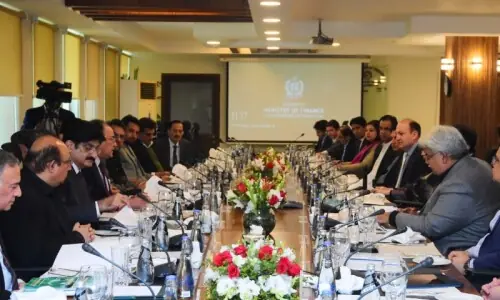
This was the consensus at ‘The Air We Breathe’, a DawnMedia conference held on Saturday under the umbrella of the Breathe Pakistan initiative.
The one-day conference, held at the Expo Centre, brought together several leading national and international climate experts, government ministers and officials, and other stakeholders.
In the words of Dawn CEO Nazafreen Saigol-Lakhani, the conference was “a critical gathering focused on one of the most urgent challenges... focusing on practical, tangible measures to tackle air pollution”.
“We are helping to weave a living network of collaboration to ensure shared commitments … I hope today’s discussions will inspire collective action and send a strong message that the health of people and the future of Pakistan are not policy points, but our priorities,” she said.
The conference witnessed a wide variety of discussions across eight different sessions, covering topics such as the the drivers of air pollution, the role of the judiciary, the importance of greater financing for building resilience, and the trans-boundary nature of this problem.
Toxic cocktail
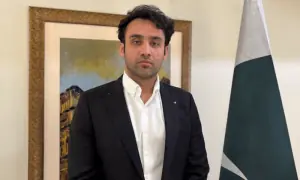
One of the most prescient speeches at the event came from Ahsan Iqbal, the federal minister for planning and development, who bluntly said: “We did not start the fire, but we are being burned by it.”
Assailing the inaction of the world’s biggest polluters, i.e. the developed nations of the West, Mr Iqbal decried what he called “grand announcements at COP after COP”.

“As of yesterday, our air was not just poor, it was a toxic cocktail, a public health emergency. Lahore’s AQI at 400 is a red alert for our nation,” the planning minister pointed out, saying that the very air we breathe had now become our enemy.
“Let’s be clear; this is not just Lahore’s problem. Karachi, Faisalabad, Peshawar, almost all our urban engines are drowning in pollution.”
Pakistan, he said, bears a burden it did not create. “We are on the frontlines of a war we did not start. We are doing our part with limited resources,” Mr Iqbal said.
He called for access to cutting-edge green technology on preferential terms, as well as the urgent delivery and scaling up of climate finance.
“We have seen the press releases and the photo ops. But where is the action? This inaction is fuelling the storms that drown our children. Your emissions are the poison in our lungs… Now, we ask the developed world to do more.”
Standing in the way of success
Federal Minister for Climate Change Musadik Malik, who addressed via video link, pointed out that pollution and environmental hazards “stand in the way of our success” as a nation.
Citing a study, he said that five to eight years of a person’s life was being cut short owing to smog. “We probably do not associate this with the grief and mortality that comes ahead of us because of smog or air pollution,” he said. According to some estimates, 128,000 premature deaths occur in Pakistan every year, he said.
The minister recalled how, 10-15 years ago, Lahore and New Delhi were not mentioned among the most polluted cities. “The names mentioned [at the time] were Beijing and Shanghai, and now they are providing 60-75pc of the world’s solar technology. Not only did they fix their cities, but they also led the solar revolution throughout the world to counter the problem they were facing.”
Hailing the “amazing initiatives” being carried out under CM Maryam Nawaz, Malik said 8,000 to 10,000 electric bikes had been distributed, 500 to 600 e-buses were on the roads or would be launched, and anti-smog guns had been installed. “We will keep bringing higher standards for fuel. We’ve made a policy to update our old refineries,” the minister said.
Since air pollution was a man-made phenomenon, Mr Malik said it was also up to us to fix it. He noted that while climate change and environmental issues were not major priorities in the past, a lot of hard work was being carried out today to address this lapse.
A global siege
According to Mohamed Yahya, the UN Resident and Humanitarian Coordinator for Pakistan, around $6 trillion annually, which is equivalent to around about 5pc of the entire global GDP, is lost to pollution.
Recalling the smog cloud that engulfed South Asia last year, he said the stain on our planet was so profound that it was visible from space.
“The science is clear. The numbers should shake everyone,” he said, citing WHO estimates and pointing out that “99pc of us in this room and 99pc of humanity breathes air that is unsafe”.
“Let that number be something that galvanises us. This is not a distant threat. It’s a global siege... the single greatest environmental risk of our lives and a silent pandemic,” he warned.
Alluding to the trans-boundary nature of the challenge, he said that smog does not respect national boundaries. ‘‘The genius of Breathe Pakistan was to realise early on… that Pakistan cannot deal with this issue alone. If there is anything that can encourage cooperation and coming together, it is the issue of air pollution and climate change,’’ he noted.
Published in Dawn, October 12th, 2025
Zulqernain Tahir is a reporter for Dawn with over 20 years of experience, currently covering political and governance issues with a focus on uncovering financial scams. He can be found on X at @zulqerr.

Mansoor Malik is a reporter for Dawn with three decades of experience covering politics, governance, legislation, education, and health. He can be found on X at @mansoor691.