0
0


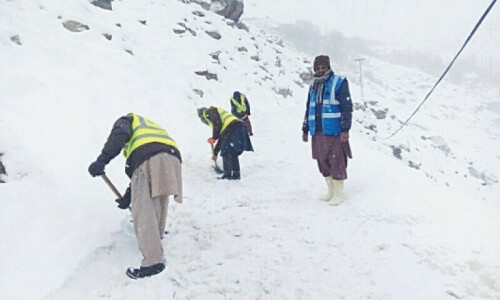
GILGIT: The upper areas of Gilgit-Baltistan on Saturday received the first snowfall of the season, which is seen as a positive sign after years of delayed snowfall linked to climate change that has disrupted the fragile ecosystem and worried local communities.
The lower areas received scattered rain on Friday and Saturday, bringing a noticeable drop in temperature. According to locals, the areas situated above 12,000 feet, including Khunjerab Top and Babusar Top, received the first snowfall of the season. The snow-covered landscape pushed temperatures below freezing.
Tourist police said traffic at Babusar Top had been closed at night due to fears of slippery conditions. The Babusar Road, which usually remains open from June to November, is a key route for tourists and local passengers travelling between Gilgit-Baltistan and other parts of the country.
Similarly, the Khunjerab Top area also received up to three inches of snowfall, disrupting travel for vehicles moving between Pakistan and China through the Khunjerab Pass. Many areas of Gilgit, Hunza, Nagar, Diamer, Astore and Baltistan divisions received scattered rain, forcing residents to wear warm clothes and make heating arrangements at homes.
Gilgit-Baltistan experienced devastating floods this summer caused by rapid glacier melt, glacial lake outburst floods (Glofs), cloudbursts, and landslides. Over 50 people, including tourists, lost their lives, while infrastructure, agricultural land, forests, and private properties worth billions of rupees were destroyed.
In July, temperatures in Chilas soared to 48.5°C — the highest since July 17, 1997, when it reached 47.7°C. In Bunji, the temperature hit 46.1°C, the highest since 1971. Experts believe that the region, one of the most environmentally sensitive in the world, has been experiencing severe climate change impacts in recent decades. Over the past decade, snowfall in GB has been delayed until late December or even March.
Experts warn that this shift in weather patterns prevents snow from compacting into stable ice, and with the onset of heatwaves, unstable snow melts rapidly, triggering flash floods and Glof events.
Gilgit-Baltistan Environmental Protection Agency (GBEPA) Director Khadim Hussain told Dawn that climate change has severely affected the fragile ecosystem of GB, home to over 8,000 glaciers, 30,000 glacial lakes, countless mountains, and vast pastures.
He said unplanned development, rapid tourism, and construction in forested and green-belt areas are damaging the region’s environment. He stressed GB’s vulnerability to climate change and its crucial role as Pakistan’s “water tower,” feeding the Indus River, which supports 70 per cent of the country’s agriculture and 40pc of its hydropower.
Published in Dawn, October 5th, 2025